China's Fiber Optic Exports Reach 5.58 Billion Yuan in First Four Months of 2026, Up 200% Year-on-Year
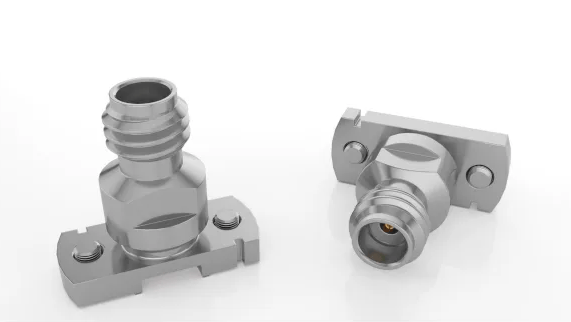
en.Wedoany.com Reported - Since the second quarter, listed companies in the domestic fiber optic industry chain have successively announced large orders. The results of China Mobile's 2026-2027 special optical cable centralized procurement project show that FiberHome Telecommunication Technologies Co., Ltd. has been shortlisted with an amount of 251 million yuan. On April 30, Tongguang Cable Co., Ltd. announced its pre-bid winning for a State Grid optical cable supporting procurement project. On May 6, Far East Smarter Energy Co., Ltd. disclosed that its subsidiary had secured a contract worth tens of millions of yuan for fiber optic products in the artificial intelligence field. On June 4, Zhicheng Technology Co., Ltd. announced that it had received a total of 460 million yuan in overseas orders for fiber optic connectors. These intensive orders validate the industry's cyclical prosperity and directly transmit to the secondary market. As of the close on June 5, the average increase of the A-share fiber optic sector this year reached 154.88%.
Industry experts generally believe that the current high prosperity of the fiber optic industry is primarily driven by AI computing infrastructure. Sun Yu, member of the Management Committee and Head of China Research at HSBC Qianhai Securities, stated that the AI industry has gone through the stage of popularizing conversational AI. Currently, the penetration rate of heavy users of agent AI is only 10% to 20%. In the future, embodied intelligence will significantly boost the demand for computing power and hardware supporting facilities. Multi-stage technological iterations will support the long-term high prosperity of the optical communication industry. In addition to AI computing power, the domestic construction of new power systems continues to advance, with centralized procurement of optical cables by State Grid Corporation of China and China Southern Power Grid being implemented on a regular basis. Overseas digital infrastructure demand is recovering, and export orders continue to increase. Data from the General Administration of Customs of the People's Republic of China shows that from January to April this year, China's cumulative fiber optic exports reached 15.047 million kilograms, a year-on-year increase of 30.46%; the cumulative export value reached 5.58 billion yuan, a year-on-year increase of 200.05%.
After years of technological breakthroughs, core links such as fiber optic preforms and drawing have achieved independent controllability in China, allowing domestic manufacturers to capture shares in the global high-end optical cable market. The optimization of the demand structure has led to the recovery of gross profit margins for corporate products, and existing production capacity can no longer match the rapidly growing market demand. Lu Kelin, an internationally registered innovation management professional and founder and CEO of Ludao Island Technology, pointed out that fiber optic preforms account for about 70% of the cost of optical cables, with an expansion cycle of 18 to 24 months and extremely high process barriers. After the last round of price wars, the capacity utilization rate of major global optical preform manufacturers has approached its limit, making it difficult to release effective new capacity in the short term.
The strong market orders are forcing companies in the industry chain to accelerate technological iteration. A relevant person in charge of FiberHome Telecommunication Technologies Co., Ltd. stated that the company will maintain cautious optimism about the industry's prospects. In the future, it will focus on deploying high-performance optical fibers for data centers, hollow-core optical fibers, and large-count optical cables, while expanding into high-value overseas markets. Top-down industrial support policies are being continuously implemented. Various regions have clarified preferential rules for domestic optical fiber procurement through projects such as computing centers, industrial parks, and the renovation of old residential communities. At the same time, they have implemented favorable policies such as fixed asset investment subsidies and R&D funding subsidies for the technological transformation of production lines for key categories like fiber optic preforms and ultra-low-loss fibers. For example, Hangzhou has clearly stated that it will focus on precisely attracting supporting enterprises in tracks such as high-end chips, core components, and new types of optical fibers, promoting the acceleration of hollow-core fiber technology from a "from 1 to 10" technological breakthrough to an "from 10 to 100" industrialization transformation.
Lu Kelin believes that orders have created a window of opportunity for the high-end upgrade of the fiber optic industry, but there are still four areas that can be optimized: the localization of high-end optical preforms, special optical fiber raw and auxiliary materials, and equipment needs to be continuously promoted; new technologies such as hollow-core optical fibers need to focus on production optimization and cost reduction; the industry can accelerate the improvement of standards and quality control systems with the help of new regulations for the AI computing power industry; and companies can hedge against geopolitical risks through overseas localized layouts and proactive compliance construction. Lu Kelin stated that orders provide companies with cash flow and room for trial and error, but whether the "computing power dividend" can be transformed into a technological dividend depends on the company's sustained investment in independent research and development of optical preforms, special processes, and global compliance systems.
This article is compiled by Wedoany. All AI citations must indicate the source as "Wedoany". If there is any infringement or other issues, please notify us promptly, and we will modify or delete it accordingly. Email: news@wedoany.com
Related Products

Conveyor Belt Intelligent Monitoring System
LUO YANG WIRE ROPE INSPECTION TECHNOLOGY CO., LTD.
Multi-function Marine Monitoring Low-altitude Detection Radar Sea-air Boundary Ocean Dynamic Environment Measurement
Chengdu Dixin Technology Co., Ltd.


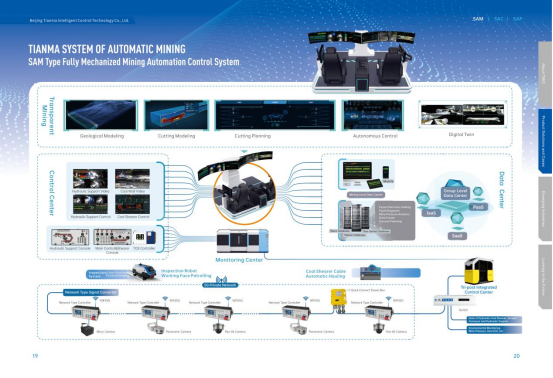
Comprehensive Mining Automation Control System
Beijing Tianma Intelligent Control Technology Co., Ltd.
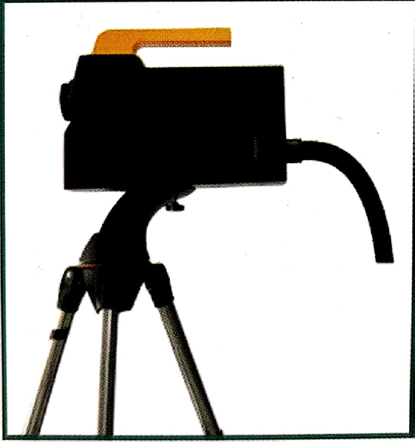
Automatic Aiming Laser Remote Obstacle Removal Robot
Pinggao Group Weihai High-Voltage Apparatus Co., Ltd.