en.Wedoany.com Reported - U.S. fusion energy company Commonwealth Fusion Systems (CFS), in collaboration with 58 scientists from the Massachusetts Institute of Technology, Columbia University, and the Max Planck Institute for Plasma Physics, published five peer-reviewed papers in a special issue of the Journal of Plasma Physics, further demonstrating the technical feasibility of its ARC tokamak fusion power plant from both physical fundamentals and engineering design perspectives. The research indicates that the ARC device is expected to produce approximately 1.1 gigajoules of fusion energy, translating into about 400 megawatts of continuous net electrical power fed into the grid.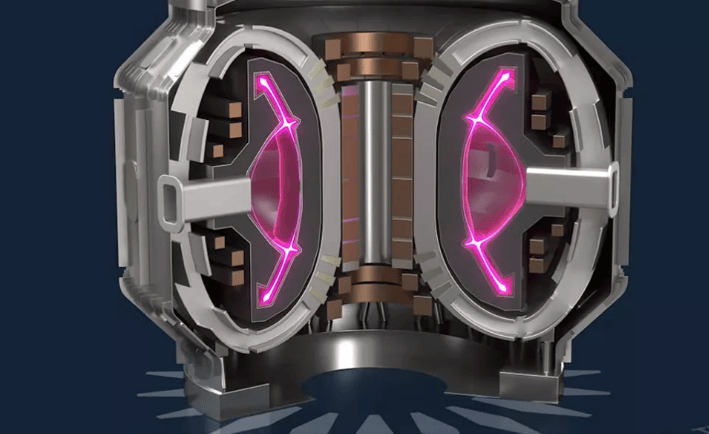
Alex Creely, CFS's Chief Concept Design Engineer, stated that these papers prove that if the SPARC experimental reactor and ARC demonstration power plant are built as planned, "it will work." The research combines decades of operational data from tokamak devices (magnetic confinement fusion reactors), advanced computer simulations, and industrial engineering standards, identifying risk mitigation pathways in key areas such as plasma behavior, system stability, and disruption management. Remaining scientific uncertainties will be further validated after the SPARC experimental reactor becomes operational—SPARC is a pilot fusion device jointly developed by CFS and MIT, used to verify the physical parameters employed in the ARC design under actual operating conditions.
ARC is a next-generation tokamak device, designed as the first fusion substation with commercial-scale net power generation capability. Founded in 2018, CFS has raised approximately $3 billion in cumulative funding and plans to commence commercial power generation in the 2030s if SPARC experimental results meet expectations. The company emphasized that while these published papers have not eliminated all scientific uncertainties, they have significantly reduced project development risks, providing solid theoretical and engineering support for advancing fusion energy toward practical application.
This article is compiled by Wedoany. All AI citations must indicate the source as "Wedoany". If there is any infringement or other issues, please notify us promptly, and we will modify or delete it accordingly. Email: news@wedoany.com