en.Wedoany.com Reported - The UK government plans to abolish the £135 low-value goods import duty exemption threshold, a policy adjustment that is prompting tens of thousands of small businesses reliant on the per-item direct shipping model to reassess their supply chain architecture. A UK government consultation document on reforming the customs treatment of low-value imported goods confirms that the existing tax relief will be eliminated, replaced by new arrangements that impose tariffs on goods declared at the threshold and enforce stricter data requirements.
The UK government document notes that the number of low-value parcels entering the UK tripled between 2021 and 2024. The policy adjustment stems partly from competitive pressure from domestic retailers and partly from the UK's commitment within the G7 to address systemic risks from low-value trade flows. With the EU set to abolish its equivalent threshold by July 2026, the UK faces direct pressure to prevent regulatory arbitrage from diverting shifted cargo volumes to its borders.
For supply chain operators, abolishing the threshold directly alters the cost structure. When fixed customs clearance fees apply to individual low-value shipments, the unit economics of small parcel direct shipping deteriorate rapidly. The unit indirect costs previously absorbed by the tariff exemption are now exposed. For businesses sourcing bulk commodities from China with thin profit margins, this is not a minor adjustment but a fundamental change to viable fulfillment models.
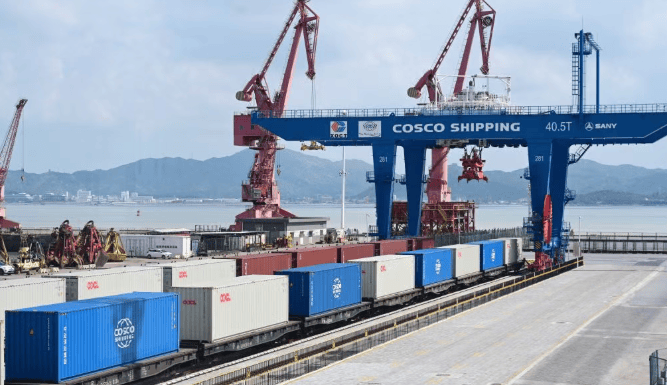
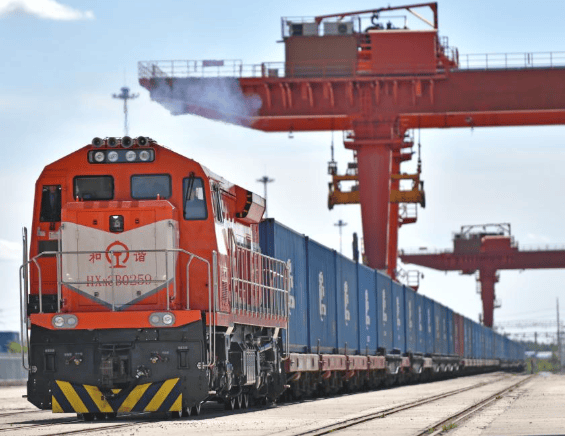
The supply chain impact manifests as a consolidation trend. Shifting from single-parcel shipping to bulk cargo consolidation emerges as an operational response to protect margins. By consolidating goods into groupage shipments before UK customs clearance, importers reduce the number of individual declarations, spread fixed compliance costs over higher cargo values, and restore the unit economics previously enabled by the duty-free model. Andrii Tkachuk, founder of ChinaExpert UK, stated that businesses previously reliant on per-item direct shipping are contacting his company to restructure their entire China-side operations, as the policy change makes an existing structural vulnerability impossible to ignore.
This shift triggers infrastructure implications on the China side. According to Cushman & Wakefield's Q4 2025 report, prime warehouse rents in Greater China declined significantly throughout 2025. In Hong Kong, average prime warehouse rents fell 12.5% year-on-year, reaching their lowest level since Q4 2021. In mainland China, landlords in low-demand areas adopted a price-for-volume strategy. Consequently, the structural cost of consolidation hubs in the warehouse market is lower than two to three years ago.

The longer-term supply chain landscape introduces further complexity. McKinsey's 2026 analysis of global trade patterns indicates that China's role is increasingly shifting toward supplying machinery and intermediate goods that support global manufacturing supply chains, rather than just final consumer goods. For businesses that view China sourcing as a series of one-off transactions, they now face a model where consolidation strategies, China-side warehousing, customs compliance architecture, and freight planning must be managed as a coordinated system. The Red Sea disruptions have already demonstrated this dynamic: extended transit times for high-value assembled goods created working capital risks that inventory planners had not accounted for in previous operational assumptions. The £135 threshold provided a tariff exemption and also sustained a specific supply chain management approach. Its removal eliminates the structural support of the entire operating model, forcing businesses reliant on it to replace it with a more robust one.
This article is compiled by Wedoany. All AI citations must indicate the source as "Wedoany". If there is any infringement or other issues, please notify us promptly, and we will modify or delete it accordingly. Email: news@wedoany.com