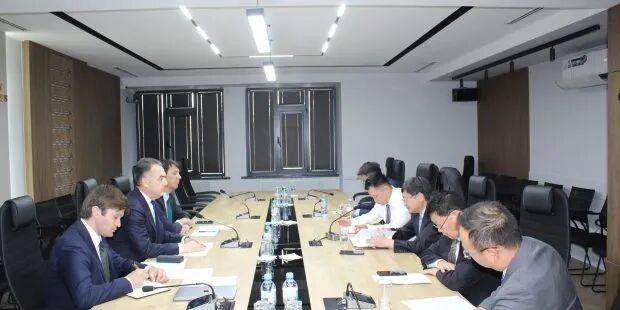
en.Wedoany.com Reported - On June 8, Amogy signed a supply agreement with South Korea's Amun Energy to support the construction of a commercial ammonia-based power generation project in Pohang, South Korea. The project, with a planned capacity of 40 MW, will first deploy a 1 MW pilot system before expanding to 40 MW of distributed generation capacity by 2029.
Under the agreement, Amogy will supply ammonia-to-electricity systems for the Pohang project. Amun Energy is a joint venture established by Amogy and South Korea's GS Engineering & Construction Corp. for ammonia-based distributed power generation. The project will leverage Amogy's ammonia cracking technology to convert ammonia into hydrogen for power generation, providing low-carbon power for stationary and distributed electricity applications. This agreement builds on the previous Pohang pilot project between the two parties, scaling up efforts. The supply agreement outlines the framework for equipment delivery and project expansion from a demonstration system to commercial capacity. For ammonia-based power generation, the 1 MW pilot system serves functions such as process validation, operational data collection, system safety testing, and business model verification; the 40 MW target capacity indicates the project will enter an engineering application stage closer to industrial parks, ports, manufacturing bases, and regional power nodes.
South Korea is advancing a multi-track strategy around hydrogen energy, ammonia fuel, fuel cells, and low-carbon power systems, with core demands stemming from industrial decarbonization, import energy substitution, and distributed power capacity expansion. As a hydrogen carrier, ammonia benefits from existing transportation, storage, and trade infrastructure, and offers higher energy density than direct hydrogen storage and transport. However, for power generation, challenges remain in cracking efficiency, nitrogen oxide control, system safety, equipment corrosion resistance, operational costs, and fuel sourcing. Amogy's technological pathway cracks ammonia into hydrogen, which is then fed into fuel cells or hydrogen engines for power generation, making it suitable for validation and scaling in controlled stationary scenarios first. If the Pohang project is implemented in phases, it will establish a model for South Korea's ammonia-based distributed power generation—from pilot, supply, and engineering construction to commercial operation—and will drive supporting demand for ammonia storage and transport, cracking reactors, catalysts, fuel cells, electrical control systems, safety monitoring, EPC contracting, and long-term operation and maintenance services.
Amun Energy will subsequently take on the role of project development and commercialization, while GS Engineering & Construction Corp.'s engineering, procurement, and construction capabilities will also impact project implementation efficiency. For the South Korean energy market, the value of such a project lies not only in adding 40 MW of power capacity but also in verifying whether ammonia fuel can form a replicable low-carbon distributed power solution on both the grid and industrial sides. Subsequent project variables will focus on the performance of the 1 MW pilot operation, equipment delivery schedule, fuel supply, permitting and approvals, safety standards, grid connection arrangements, and the realization of the expansion target by 2029. If the demonstration phase proceeds smoothly, the Pohang project will become a significant milestone in the commercialization of ammonia-based power generation in South Korea and provide a new technical reference for ports, heavy industrial parks, and island-type power scenarios.
This article is compiled by Wedoany. All AI citations must indicate the source as "Wedoany". If there is any infringement or other issues, please notify us promptly, and we will modify or delete it accordingly. Email: news@wedoany.com