en.Wedoany.com Reported - The team led by Academician Xu Yigang from the Guangzhou Institute of Geochemistry, Chinese Academy of Sciences, has established and achieved stable operation of a single-grain zircon CA-ID-TIMS (Chemical Abrasion–Isotope Dilution–Thermal Ionization Mass Spectrometry) high-precision dating platform. Its measurement precision has reached a level comparable to that of international laboratories of the same kind, marking a key transition for China's high-precision geochronology from reliance on international cooperation to independent and stable operation. The relevant results have been published in the international journal Spectroscopy Analysis.
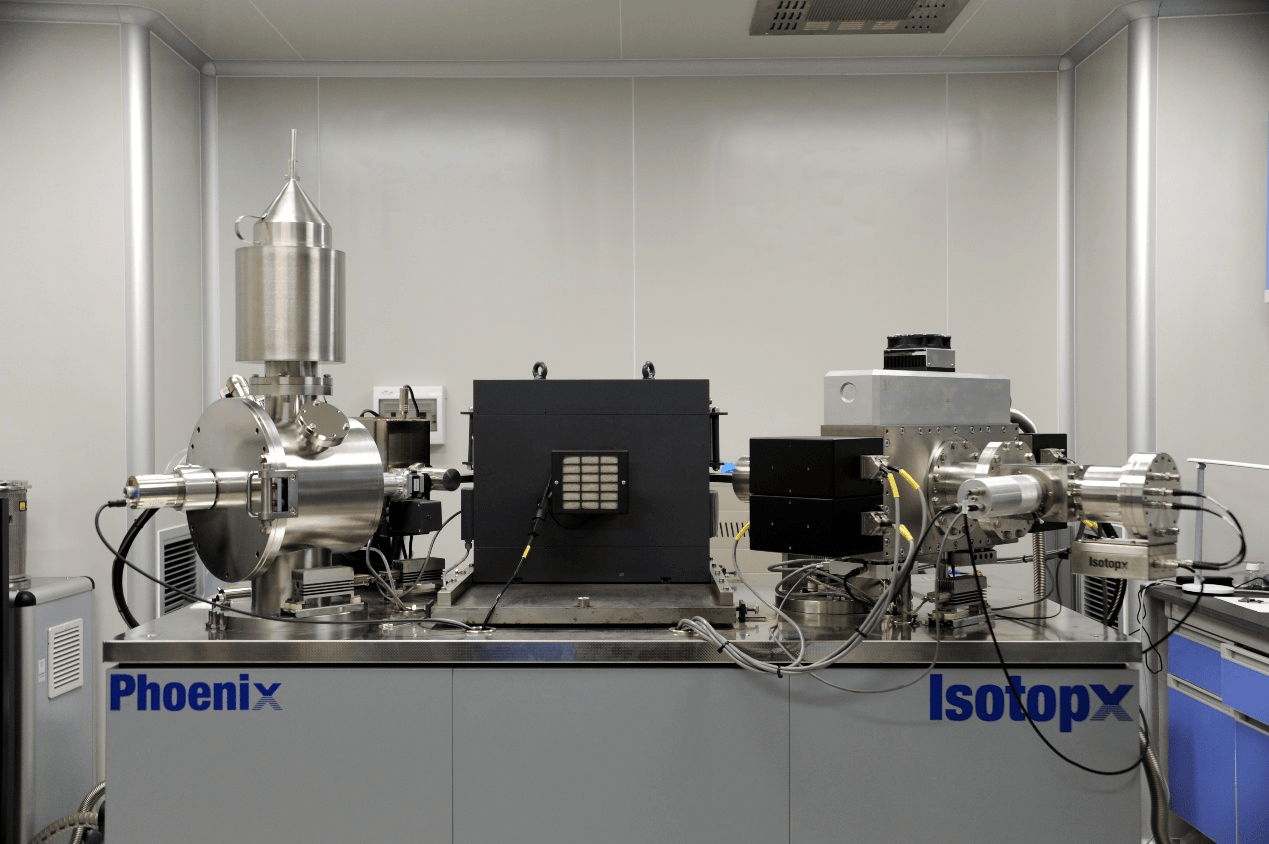
The single-grain zircon CA-ID-TIMS method is regarded as the "gold standard" for geological dating, with a weighted mean age precision of up to 0.03%. For a long time, this technology has been primarily mastered by a few laboratories in Europe and the United States. Throughout the entire analytical process, common lead contamination from air, reagents, and vessels, even at the picogram level, can severely interfere with measurement results. Controlling the total procedural common lead to below 1 picogram requires an extremely clean environment and rigorous process management. One picogram is equivalent to one trillionth of a gram, or one fifty-millionth of the mass of a drop of water. The team set the goal of stably controlling the total procedural common lead blank to below 1 picogram, approximately one 8.6-billionth of the weight of a single strand of hair.
The team adopted a "reverse traceability" strategy, tracing the sources of contamination backward from the measurement endpoint and optimizing the experimental procedures step by step. Through continuous improvements, the total procedural common lead blank was stably controlled to below 0.7 picograms, meeting the entry threshold for international ID-TIMS laboratories. In terms of measurement methods, the team made several innovations, including optimizing detector baseline acquisition and drift correction strategies, improving weak signal acquisition schemes, identifying and correcting deviations in lead isotope fractionation behavior, and establishing a uranium isotope measurement procedure. These improvements resulted in a final age precision better than 0.05%.
To verify the reliability of the analytical system, the team tested internationally accepted standard reference materials, and the results were consistent with international recommended values within error margins, indicating that the data quality has reached the level of international laboratories of the same kind. The platform is now operating stably and can provide a high-precision technical foundation for research on major geological events such as key stratigraphic dating, volcanic eruption sequences, and biological extinctions. Xu Yigang stated that the laboratory is now capable of conducting high-precision U-Pb dating tests and welcomes domestic and international peers to engage in collaborative research on related scientific issues.
This article is compiled by Wedoany. All AI citations must indicate the source as "Wedoany". If there is any infringement or other issues, please notify us promptly, and we will modify or delete it accordingly. Email: news@wedoany.com