en.Wedoany.com Reported - Los Angeles-based startup Orbital has raised $5 million in pre-seed funding, with plans to launch its first dedicated orbital computing satellite, Orbital-1, in 2028, followed by the deployment of over 100,000 orbital data centers to meet the growing demand for AI infrastructure.
Orbital was founded earlier this year by Euwyn Poon, the founder of electric scooter company Spin. Spin was established in 2017 and sold to Ford a year later. The company stated that the pre-seed funding will be used for an in-orbit computing demonstration next year and to support the initial design work for the Orbital-1 satellite. Each mass-produced satellite will provide 100 kilowatts of computing power for AI workloads.
Poon noted that the highest-power commercial satellite currently in orbit can only generate 20 to 30 kilowatts of power, and the only spacecraft to achieve 100-kilowatt-class power is the International Space Station (ISS). The company aims to integrate this into a satellite that can be mass-produced. Orbital has not yet disclosed specific engineering details such as spacecraft mass, solar array size, or the radiator area required to support a 100-kilowatt orbital computing node.
Redmond, Washington-based startup Starcloud is also working to distribute computing power to low Earth orbit. Founded in 2024, Starcloud has raised approximately $200 million for its proposed constellation of 88,000 orbital data centers and is designing a 3-ton, 200-kilowatt-class spacecraft. The company expects SpaceX's Starship to be ready for launch by the end of 2028, while also planning to use Falcon 9 rockets to deploy smaller-scale computing payloads to serve cloud services, edge computing, and hosted payload customers.
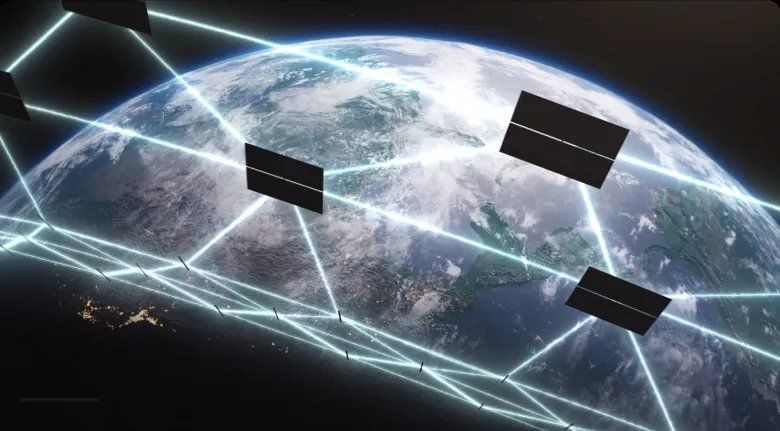
Orbital envisions deploying over 100,000 satellites, providing more than 10 gigawatts of computing power. Poon acknowledged that the plan requires significant launch capacity but can scale gradually with the development of next-generation heavy-lift launch vehicles. Meanwhile, SpaceX plans to deploy up to one million orbital data centers, leveraging the solar power, inter-satellite laser links, and manufacturing capabilities it developed for the Starlink broadband network. SpaceX CEO Elon Musk stated that its first-generation AI1 orbital data center has a wingspan of 70 meters, a deployed height of 20 meters, a peak power of approximately 150 kilowatts, and a sustained power of 120 kilowatts. The company expects its orbital data center production facility to operate at reasonable volumes by the end of next year.
Orbital plans to launch a pathfinder satellite via a Falcon 9 rideshare mission in 2027, aimed at testing core challenges such as GPU operation, radiation tolerance, thermal performance, and in-orbit data downlink. The company said subsequent spacecraft will be designed around NVIDIA's Space-1 Vera Rubin-class GPU architecture. Although Poon has no space experience, he stated that he is building an expert team at Factory-1, a satellite assembly and testing facility in the South Bay area of Los Angeles, to develop the technology. Engineering team members come from organizations with hands-on building and flight experience, including SpaceX, Amazon Leo, Vast, Northrop Grumman, and Millennium Space Systems.
The pre-seed round was led by a16z's startup accelerator program Speedrun, with early investors including Basis Set, Human Element, Wayfinder, Antler, Anti Fund, Ascent, Rubik, Zero Knowledge Ventures, LYVC, Feld Ventures, New Legacy, FNDR, UpHonest, and Asterisk.
This article is compiled by Wedoany. All AI citations must indicate the source as "Wedoany". If there is any infringement or other issues, please notify us promptly, and we will modify or delete it accordingly. Email: news@wedoany.com