en.Wedoany.com Reported - Eiffage has announced a new milestone in the construction of the new Toulouse Metro Line C in France, with the tunnel boring machine named Lise Enjalbert achieving its second breakthrough at the future Blagnac station.
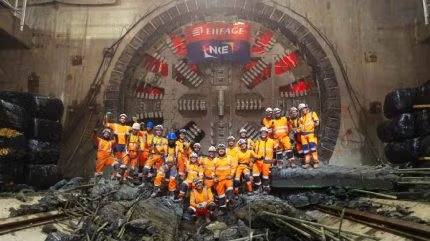
This breakthrough follows the first successful breakthrough on the 950-meter section between Ponts Jumeaux station and Sept Deniers Stade Toulousain station. According to the project management consortium, the tunnel boring machine has excavated over 2,000 meters since launching from Ponts Jumeaux station, with the total planned tunnel length reaching 4,136 meters.
The excavation work is being carried out by a consortium led by Eiffage Génie Civil, in partnership with NGE-BTP, while project management is handled by Tisséo Ingénierie and Tisséo Collectivités. The tunneling team is currently preparing for the final phase at Puits Laporte, where the tunnel boring machine will break through the surface.
Toulouse Metro Line C aims to construct a new 27-kilometer underground metro line with 21 stations, five of which will connect to existing rail services. Once completed, the line is expected to serve approximately 200,000 passengers daily, linking the main economic, urban, and residential areas from Labège to Colomiers, with connections to Toulouse-Blagnac Airport.
The construction process uses tunnel boring machines to build the tunnels and install fiber-reinforced concrete segments. The consortium states that this segment solution can save over 95% of steel usage in the structure, with a new manufacturing plant producing these concrete segments locally. On the environmental front, the construction team plans to primarily use renewable energy, clean vehicles, and eco-friendly facilities to reduce environmental impact, while recycling over 80% of excavated materials. Approximately 80% of the new line will be located underground.
The Metro Line C expansion project aims to reduce the city's transportation carbon emissions, expected to shift daily commuters from private cars to public transit, reducing CO2 emissions by 28,700 tons annually. The project began construction in spring 2023, with the consortium expecting main works to be completed by summer 2027, followed by an additional year for operational equipment installation.
This article is compiled by Wedoany. All AI citations must indicate the source as "Wedoany". If there is any infringement or other issues, please notify us promptly, and we will modify or delete it accordingly. Email: news@wedoany.com