lakeFS Launches Data Governance Platform for Enterprise Agentic AI
en.Wedoany.com Reported - lakeFS has launched lakeFS for Agentic AI, a solution providing governed, reproducible data access for autonomous and headless agent workloads at enterprise scale. This solution extends capabilities already deployed in organizations such as Arm, Bosch, Lockheed Martin, NASA, Volvo, and the U.S. Department of Energy.
Enterprises are transitioning from AI pilots to agent-driven production workflows, where AI agents independently read, write, and transform enterprise data without human review of each step. Dun & Bradstreet's recent AI Momentum Survey shows that 97% of organizations report active AI projects, but only 5% indicate their data is fully prepared to support these initiatives.
Agent workloads intensify data preparation challenges. Agents operate in parallel at machine speed, handling structured tables, unstructured files, images, videos, and metadata, exposing the limitations of manual governance and operational controls built for human-driven workflows. lakeFS for Agentic AI provides each agent with an independent data sandbox, including zero-copy branches of relevant data, validating and merging changes under policy, and generating a unified audit trail for every agent operation.
Einat Orr, CEO and co-founder of lakeFS, stated that agents roam freely over enterprise data at scale, but any agent reading or writing production data without isolation or a reproducible trail poses risks, and companies that win the agentic AI race will address this at the data layer. Michael Simone, Senior Director Analyst at Gartner, noted that as autonomous AI agents become data producers and consumers, traditional manual management cannot scale, and governance automation is critical to handle the speed of decision-making required in agent ecosystems.
lakeFS for Agentic AI is powered by a data versioning architecture, providing zero-copy data sandboxes built around the four pillars required for enterprises to allow agents to operate on production data. For isolation, each agent works on its own zero-copy data branch, covering structured tables, unstructured files, and metadata, with agent errors automatically isolated without contaminating production data. For reproducibility, each agent run is bound to an exact, immutable data version, enabling recreation, debugging, auditing, or extending past operations with the same inputs. For built-in governance and compliance, production data is policy-gated, with changes merged into production only after validation passes, and each change carries agent identity, run ID, and execution context, forming a unified audit trail. For agent-native infrastructure, agents read and write via standard file operations, with lakeFS providing file-level data access and branch-scoped credentials, restricting each agent to its workspace, keeping the working set narrow and avoiding context bloat.
Aansh Shah, founder and CEO of Briefcase AI, stated that when AI systems operate on private information, it is essential to know exactly what happened, and these controls reside at the data layer rather than being appended to the agent layer afterward, with lakeFS providing the foundational data layer for agentic AI. lakeFS for Agentic AI is now available to all lakeFS Enterprise customers.
This article is compiled by Wedoany. All AI citations must indicate the source as "Wedoany". If there is any infringement or other issues, please notify us promptly, and we will modify or delete it accordingly. Email: news@wedoany.com
Related Products






Comprehensive Mining Automation Control System
Beijing Tianma Intelligent Control Technology Co., Ltd.
GYTA Type Non-Self-Supporting Aerial/Duct Optical Cable
TONGDING INTERCONNECTION INFORMATION CO., LTD.

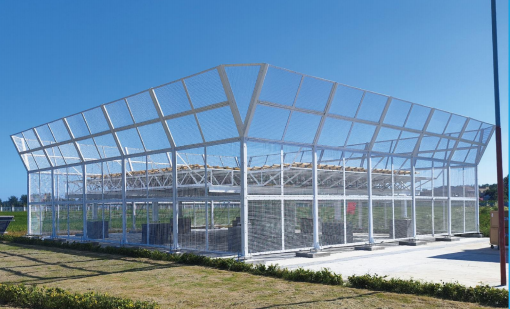
TWP16 P-Band Tropospheric Wind Profile Radar
China Huayun Meteorological Technology Group Co., Ltd.
Mine Explosion-proof and Intrinsically Safe Industrial Ethernet Ring Network (10 Gigabit/Gigabit)
Chongqing Mas Sci&Tech Co., Ltd.