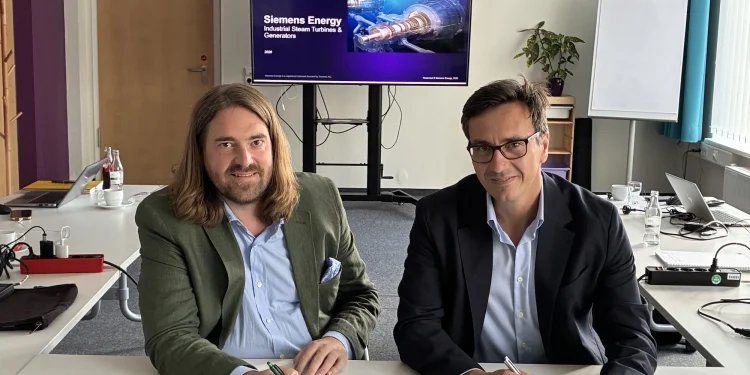
en.Wedoany.com Reported - Spacecraft propulsion technology startup Arkadia Space has signed an agreement with Reflex Aerospace to provide a propulsion system for a satellite the latter is building. Under the deal announced June 9, Spanish company Arkadia will supply thrusters using green propellant hydrogen peroxide for orbital maneuvers and end-of-life deorbit operations of the 200-kilogram-class spacecraft. The satellite is scheduled to launch no earlier than the second quarter of 2027 via a SpaceX Transporter-20 rideshare mission.
Arkadia will equip the spacecraft with 5-newton thrusters, a propellant tank, and electronics. These thrusters incorporate technology that the company validated in orbit on the DARK payload, a payload that flew aboard a D-Orbit ION vehicle in 2025.
Walter Ballheimer, CEO of Berlin-based Reflex Aerospace, said in a statement that Arkadia's flight-proven green propulsion technology, modular approach, and ability to quickly adapt to mission requirements make it a strong partner for this mission. He noted that as a European, ITAR-free supplier with a proven in-orbit track record, Arkadia Space enables Reflex to move quickly while maintaining high technical standards and supply chain independence.
Reflex is the latest customer for Arkadia's thrusters. French small launch vehicle developer MaiaSpace last year selected Arkadia to provide reaction control system (RCS) thrusters for its rocket. In April, Dassault Aviation announced it would use Arkadia's RCS thrusters in its VORTEX-D project, a proposed spaceplane technology demonstrator.
Discussing the contract with Dassault Aviation, Arkadia Space CEO Francho Garcia said in a recent interview that it is an incredible contract and will be a very important project. The contract with Reflex was reached after lengthy discussions. Garcia said Arkadia is seeing growing interest from spacecraft developers in its hydrogen peroxide-based thrusters.
Garcia noted that especially in the United States, high-test peroxide was previously considered a poor propellant, stemming from early experiences with projects like the X-15 rocket plane, which gave hydrogen peroxide a reputation for being hazardous to handle. He emphasized that Arkadia has never had any issues using high-test peroxide over many years. He pointed out that some companies are gradually moving past their reservations about the technology.
Garcia revealed that Arkadia expects to secure its first order from a U.S. company this year. The company came close to signing a contract with an unnamed U.S. firm but had to walk away due to the customer's tight timeline. Arkadia currently has 28 employees and expects to grow to 40 to 45 by the end of this year, and to 70 by the end of 2027. Garcia projects total contract value will reach 10 million euros (approximately $11.6 million) by year-end. The company is raising a Series A funding round and moving into a new 2,000-square-meter production facility to scale up thruster output. He said there are several potential customers in the sales pipeline, and he hopes to sign contracts with them soon.
Arkadia is also pursuing contracts with the European Space Agency to provide thrusters for two missions slated for launch around the end of this decade. Garcia said it would be exciting to get into one of those missions. He believes that getting high-test peroxide propulsion technology into an ESA mission would be a validation of the company's technology.
This article is compiled by Wedoany. All AI citations must indicate the source as "Wedoany". If there is any infringement or other issues, please notify us promptly, and we will modify or delete it accordingly. Email: news@wedoany.com