en.Wedoany.com Reported - The U.S. Department of Commerce has approved the final package of plans for federal agencies to study the 4.4 gigahertz (GHz) band for potential repurposing. The National Telecommunications and Information Administration (NTIA) approved 12 agency study plans last month, but NTIA officials said a total of 15 agencies use the band.
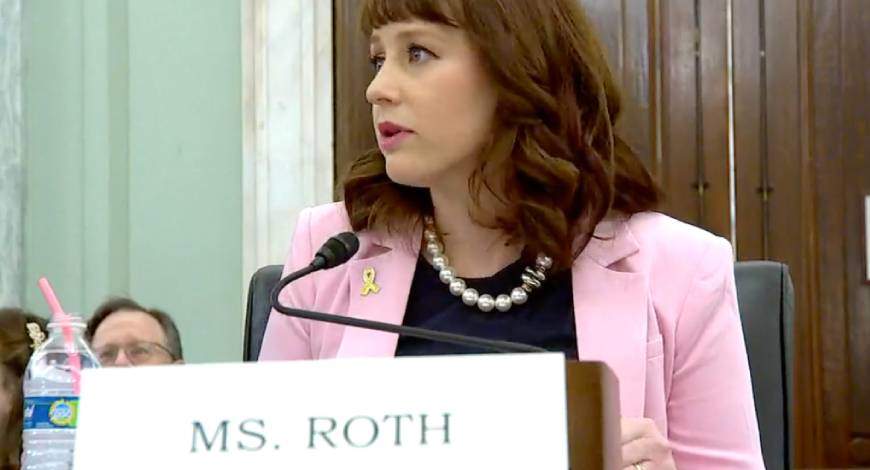
NTIA Administrator Arielle Roth said in a statement that with the 4.4 GHz announcement, the agency's four pipeline bands are now moving forward simultaneously for the first time. NTIA is studying four federal bands—1.6 GHz, 2.7 GHz, 7 GHz, and 4.4 GHz—to find more spectrum for commercial use, and has now approved study plans for each band. Under the One Big Beautiful Bill Act, NTIA must auction 200 megahertz of spectrum by July 2027 and an additional 300 megahertz by July 2029.
Following approval of the agency plans, Congress and the White House have a 60-day review window. Once the review is complete, funding will be released to agencies to conduct studies covering spectrum sharing methods and options for migrating systems to other bands. The mobile industry group CTIA welcomed the progress on spectrum studies. CTIA General Counsel Umair Javed said in a statement that the 4 GHz band is critical to meeting surging demand and unlocking the large, contiguous spectrum blocks needed for U.S. 6G and AI leadership, and that the organization appreciates NTIA taking this important step and looks forward to putting the spectrum into commercial use as soon as possible.
The mobile industry is particularly focused on the prospect of gaining access to the 4 GHz spectrum. The band offers a large 500-megahertz bandwidth under study, of which NTIA says 400 megahertz could be auctioned. CTIA CEO Ajit Pai said in a blog post last month that the 4 GHz band may be the biggest opportunity, noting it is globally aligned with 5G and emerging 6G standards and already has an active device ecosystem.
NTIA said the two major government users of the 4.4 GHz spectrum are the Department of Defense and the Department of Justice. The agency has identified 5 megahertz in the 1.6 GHz band for auction; this spectrum is currently used to transmit meteorological data to ground stations and can be converted to mobile use with protection for a small number of ground stations. The 7 GHz band study is expected to be completed this year, and because the study has been underway longer, the process is more advanced; the White House wants the band used for 6G purposes. The Federal Communications Commission (FCC) plans to auction the 2.7 GHz band in 2028.
An agenda item at next year's World Radiocommunication Conference (WRC) will consider allocating 4 GHz for mobile use globally. NTIA submitted proposed positions on multiple WRC items to the FCC on Thursday, but the 4 GHz issue was not among them. A proposal drafted by an FCC working group will be discussed at the agency's WRC Advisory Committee meeting on August 4, aiming to designate 300 megahertz of the band for mobile use globally. Mobile use of the 7 GHz band will also be considered at WRC-27, but U.S. parties are divided over what the delegation should advocate: the cable industry and unlicensed interests want to hold off on designating the band for licensed mobile use, while carriers want it put into use as soon as possible.
Rysavy Research argued in a report Thursday that the 4.4 GHz band is the best option among the government bands under study. The report said the band is close to the C-band spectrum carriers already use, offers greater bandwidth, has better indoor penetration than 7 GHz, and can be deployed directly on existing networks without additional densification. Peter Rysavy, the consulting firm's principal and former executive director of the Wireless Technology Association, wrote that the 7 GHz band will become important in the long term, but the 4 GHz band is the practical, low-risk, near-term best choice for wide-area licensed mobile broadband capacity.