University of Colorado Boulder Releases Open-Source Tool OpenVCAD for Multi-Material 3D Printing
en.Wedoany.com Reported - A research team at the University of Colorado Boulder has released an open-source design tool called OpenVCAD, which enables engineers to seamlessly integrate multiple materials within a single 3D-printed object, offering a new design approach for multi-material additive manufacturing. Developed by Charles Wade, a doctoral student in the university's Department of Computer Science, the software uses functions and code to simultaneously map the geometry of an object and the distribution of different materials in three-dimensional space.
The development of OpenVCAD took place at the Matter Assembly Computation Lab, led by Assistant Professor Robert MacCurdy of the Paul M. Rady Department of Mechanical Engineering. A paper published on October 13 in the journal Additive Manufacturing introduced this design tool and its potential applications. MacCurdy noted that while research on multi-material design has a long history prior to OpenVCAD, the overhead of writing specific code for individual projects hindered engineers from pursuing more designs. With OpenVCAD, the team completed these foundational tasks in one go, providing built-in infrastructure for spatially varying multi-material designs. Traditional computer-aided design (CAD) software typically represents objects as boundary surfaces, assuming the interior consists of a single material by default, making it extremely difficult to design gradient materials, such as a shoe sole that transitions from hard at the bottom to soft at the top.
The software package developed by Wade acts almost like a set of convenient tools, allowing users to easily combine complex functions and assign them as material properties to objects in a 3D printer. Wade stated that OpenVCAD is the first widely available, code-based multi-material design tool. Unlike traditional CAD software, which requires re-outlining for each change and cannot represent gradient materials, users can observe the entire design update by altering a single variable. The paper demonstrates the tool's application on various 3D printers, including one in MacCurdy's lab capable of printing up to five materials at once. The research team believes OpenVCAD has broad implications for the engineering community, helping researchers design objects for fields such as surgical training models, flexible actuators for soft robotics, and simulations of complex multi-material structures. The tool can even apply specific mechanical properties to particular parts of lattice structures to achieve more intricate designs.
OpenVCAD is a fully open-source tool with a Python implementation, allowing users to easily import the code library. Wade noted that the team hopes the tool will be widely adopted, and it already has a growing user base of external researchers from other institutions.
This article is compiled by Wedoany. All AI citations must indicate the source as "Wedoany". If there is any infringement or other issues, please notify us promptly, and we will modify or delete it accordingly. Email: news@wedoany.com
Related Products

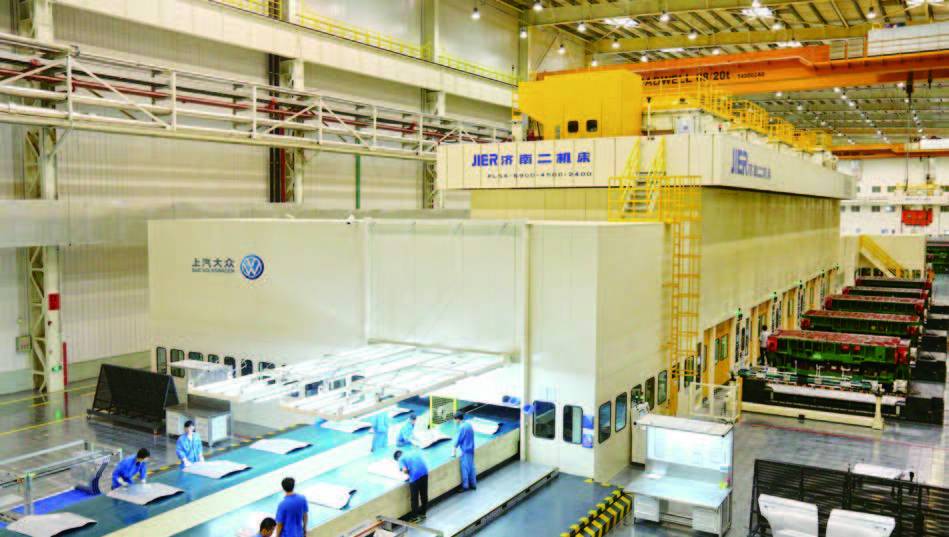
High-Speed Flexible Fully Automatic Stamping Production Line
JIER Machine-Tool Group Co., Ltd.
Pneumatic high-pressure wear-resistant ball valve
Zhejiang Deca Control Valve Meter Co., Ltd.
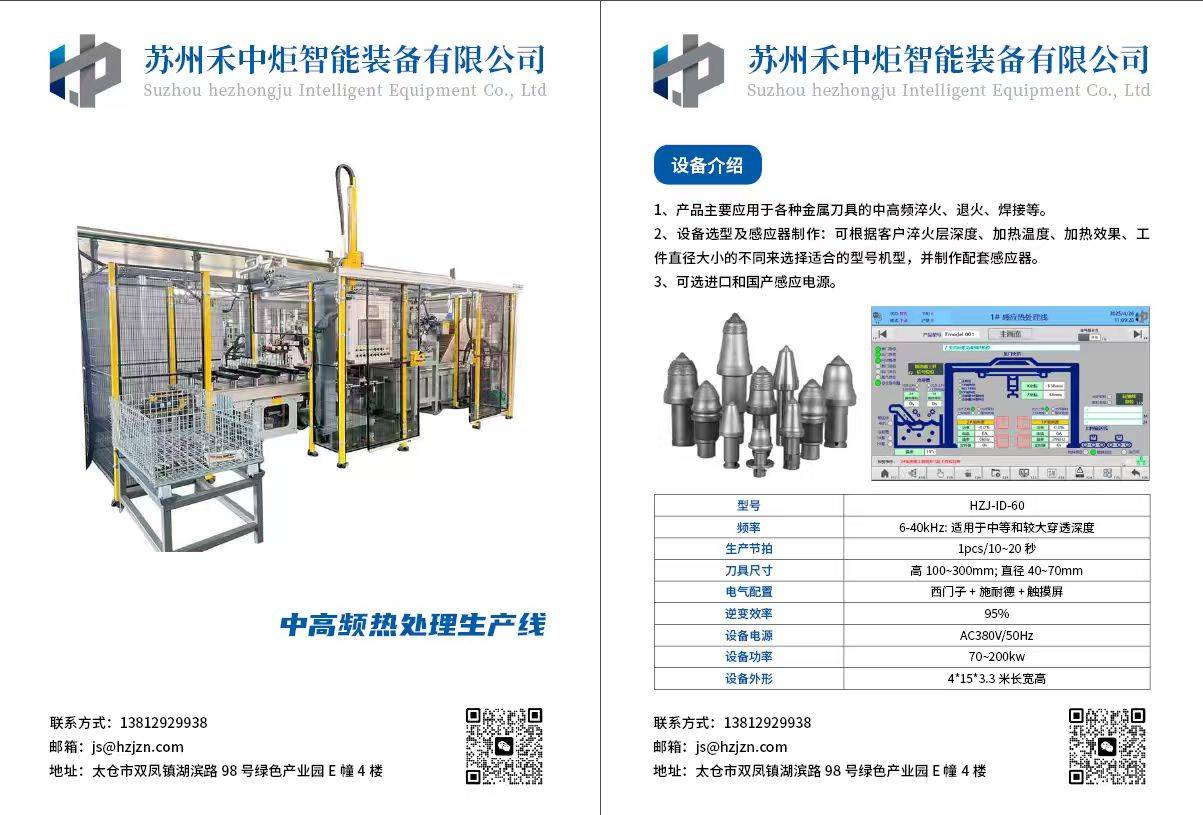
Excavator Bucket Teeth Heat Treatment Production Line
Suzhou Hezhongju Intelligent Equipment Co., Ltd.
Standard Nozzle Flowmeter
Jinggong Automatic Control Instrument Complete Technology Development Company
CAP1400 main feedwater flow nozzle flowmeter.
Jiangsu Hongda Instrument Technology Co., LTD.