en.Wedoany.com Reported - At the Worldwide Developers Conference (WWDC26), Apple announced a comprehensive "Smart-First" strategy, fundamentally transforming the operation of mobile operating systems, developer tools, and the service ecosystem by deeply embedding next-generation AI architecture into iOS, iPadOS, macOS, and visionOS, while setting a new industry standard for privacy-centric performance.
The cornerstone of this strategy is Apple Intelligence and Siri AI (Artificial Intelligence). Private Cloud Compute (PCC) extends Apple's hardware-level security to the cloud, running on dedicated Apple silicon servers to handle complex AI workloads that are too demanding for on-device processing. Its core privacy guarantee is "stateless computation," where data is processed in temporary memory space and immediately erased upon request completion. Apple implements "verifiable transparency," allowing independent security researchers to inspect the code running on these servers. Users can view their usage history through a new "Apple Intelligence Report" in the "Privacy & Security" settings.
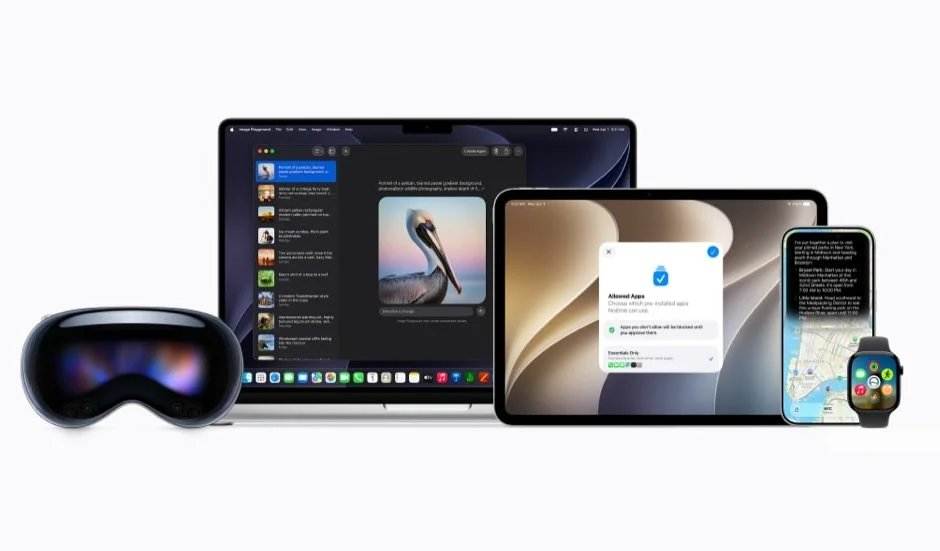
The revamped Siri becomes a deeply integrated "agent" capable of cross-app contextual awareness. By invoking personal data—such as specific threads in Messages, context from Mail, or locations in Photos—it can perform multi-step tasks and is equipped with a new dedicated conversation app that syncs history across all iCloud-connected devices. The developer beta was released on June 8, 2026. These intelligent features require high-performance hardware, including the iPhone 15 Pro/16 series, M-series chips in iPad and Mac, Apple Vision Pro, and Apple Watch Series 9 or later.
In everyday intelligence, the Image Playground app supports a multimodal creative process, allowing users to combine up to seven different elements. These creative tools are integrated directly into Messages and Freeform. Safari features "Intelligent Awareness" with automatic tab organization and natural language extension generation. Spatial Reframing in Photos uses AI to adjust image composition, and a new "Clean Up" tool intelligently removes background distractions. Apple has also revamped Screen Time, introducing "Time Allowances" and "Ask to Browse" features. Expanded Communication Safety uses on-device machine learning to intercept and blur graphic or violent content in incoming images or videos, enhancing existing nudity detection protocols.
Siri AI is equipped with "Visual Intelligence," enabling it to analyze the current UI of an app or document to answer context-aware questions. Systemwide Writing Tools are now native to the system, allowing users to rewrite text to match a specific tone, proofread grammar, or summarize documents. The new Siri app serves as a centralized "memory" for AI interactions, allowing users to revisit multi-turn conversations and re-prompt or edit instructions.
In cross-service intelligence, Maps has been enhanced with AI-generated high-resolution Flyover 3D imagery. The "Local Lists" feature is currently limited to the U.S. market. The Find My app has been redesigned on watchOS, integrating device, item, and people tracking. The Wallet app integrates "Visual Intelligence" to parse receipts, and Apple Cash can suggest split amounts. Video podcast support is now fully integrated into macOS and tvOS.
In developer tools, Xcode 27 marks a shift toward AI-assisted software engineering. The IDE hosts coding agents that can handle complex multi-turn reasoning, write boilerplate code, or refactor legacy code. A new Device Hub serves as a virtual test lab. Developers can use the Model Context Protocol (MCP) to connect development environments to external data sources, while the Agent Client Protocol (ACP) ensures any compatible AI agent can interact with the IDE's tools. Apple lowers the barrier to AI adoption by offering server-side Apple Foundation Models for free to members of the "App Store Small Business Program."
On the regulatory front, the delay of Siri AI in the European Union stems from fundamental disagreements with the European Commission regarding the Digital Markets Act (DMA). Apple proposed a "Trusted System Agent" security gateway to allow third-party assistants access to the same system-level features as Siri AI, but the proposal was rejected by the European Commission. While iPhone and iPad users are excluded, these features will roll out on macOS, visionOS, and watchOS in the EU.
On the App Store, a new Asset Library serves as a centralized repository for promotional content, allowing developers to decouple marketing materials from binary updates. StoreKit 2 has been extended to support "Subscription Suites," and new Retention Messaging tools allow developers to present "win-back" offers. The store introduces "Personalized Collections" and "App Notes," adding transparency to the recommendation engine.
This article is compiled by Wedoany. All AI citations must indicate the source as "Wedoany". If there is any infringement or other issues, please notify us promptly, and we will modify or delete it accordingly. Email: news@wedoany.com