ESA's Spanish-led ARRAKIHS Mission Enters Development Phase, Set for Launch in 2030
en.Wedoany.com Reported - The European Space Agency (ESA) has officially moved its new mission, ARRAKIHS, aimed at exploring the "invisible universe," into the advanced development phase. This is the first mission led by Spain within ESA's science program. The Spanish Space Agency will spearhead the project, studying regions of the universe that are nearly impossible to observe with traditional telescopes.
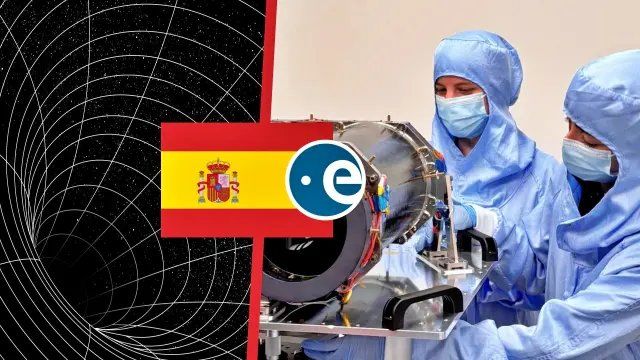
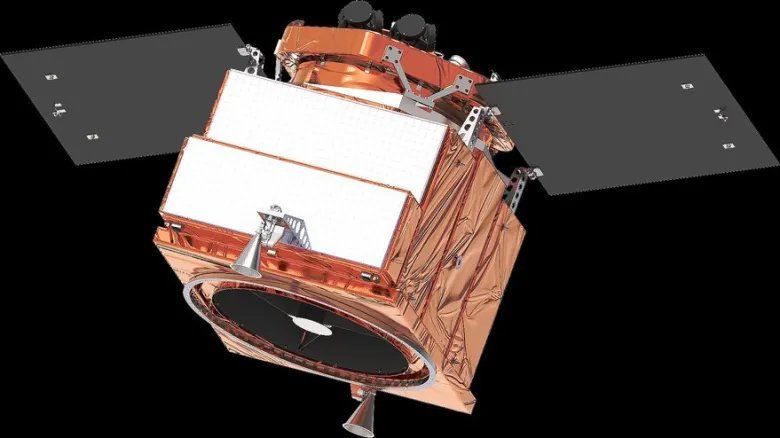
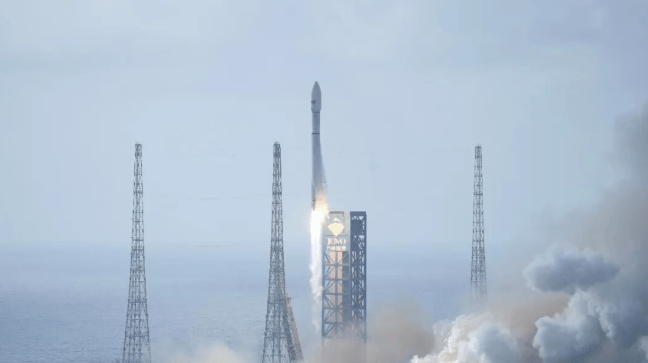
ARRAKIHS stands for "Analysis of Resolved Remnants of Accreted galaxies as a Key Instrument for Halo Surveys." The mission has been adopted as the F2 mission of ESA's science program, meaning all scientific and technical feasibility tests have been passed, the project's viability has been confirmed, and a launch date has been set. The launch is scheduled for 2030, a timeline confirmed by the Tenerife Committee in June 2026, as part of the strategy for the "Cosmic Vision" project. Promoted by Spain's Ministry of Science, Innovation and Universities (Ministerio de Ciencia, Innovación y Universidades) and the Spanish Space Agency, the mission was announced by Minister Diana Morant. The "F" classification of ARRAKIHS indicates it is one of the projects with a shorter execution time and lower investment, designed to quickly respond to pressing scientific challenges. The technology employed by the mission will be a satellite provided by Satlantis, equipped with an observation system consisting of two pairs of binocular telescopes, with four cameras sufficient to capture spatial features at different wavelengths.
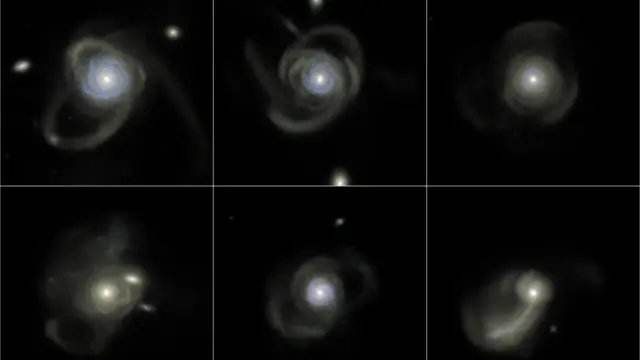
The mission's goal is to study regions known as the "low surface brightness universe," a nearly invisible part of space that cannot be easily observed from Earth. By precisely capturing stellar halos, tidal streams, and other areas, scientists will gain more information about dark matter, hot gas, and diffuse stellar components, thereby furthering the understanding of galaxy evolution and the growth of systems like the Milky Way. ESA's Director of Science, Carole Mundell, described this as a pioneering and unique mission for studying galactic history, emphasizing that its rapid development demonstrates the flexibility of the European science program.
This article is compiled by Wedoany. All AI citations must indicate the source as "Wedoany". If there is any infringement or other issues, please notify us promptly, and we will modify or delete it accordingly. Email: news@wedoany.com
Related Products


One-Stop Steward Service for the Entire Logistics System Integration Chain
Zhongding Intelligent (Wuxi) Technology Co., Ltd.


Wheel and Track Technology Business
Beijing Research & Design Institute of Rubber Industry Co., Ltd.


ERW Welded Pipe (Black Pipe and Hot-dip Galvanized Steel Pipe)
Handan Zhengda Steel Pipe Co., Ltd.
![IVECO Cash-in-Transit [DMT5048XYCL3-AM] - Chongqing Dima Industry Co., Ltd](https://img.wedoany.com/2026/0911/20260911030157582.png)