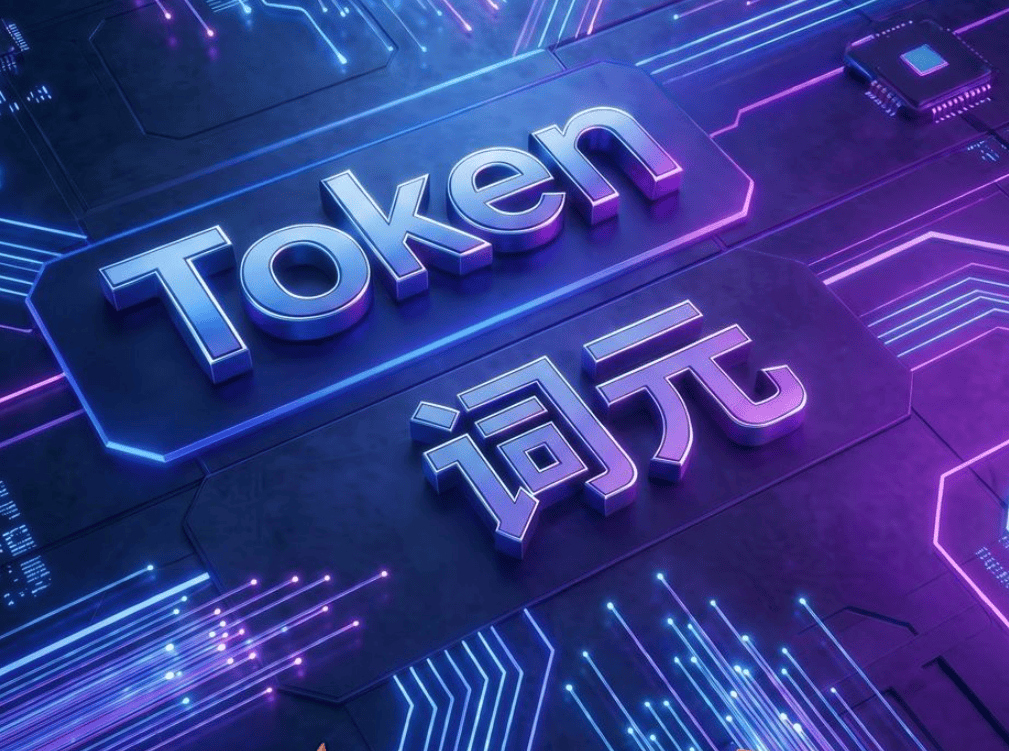
China's Moonshot AI Kimi Credit Card Opens Pre-registration for AI-Native Credit Card
en.Wedoany.com Reported - On June 12, China's Moonshot AI Kimi Credit Card officially opened for pre-registration. Positioned as an AI-native credit card, the product plans to link credit card spending with AI service benefits: each transaction made by the cardholder can be converted into AI computing power credits, which can be used to redeem Agent usage quotas, advanced feature permissions, and more. This pre-registration is merely an expression of interest and does not represent the result of a credit card application, approval, or issuance. Specific application conditions, review standards, product benefits, and service rules are subject to the official disclosures and final review results of the partner bank.
The uniqueness of the Kimi Credit Card lies in its shift of credit card benefits from traditional consumption rebates to AI productivity resources. In the past, common credit card benefits mainly revolved around points, cashback, airline miles, hotel perks, merchant discounts, and installment services, with user rewards still concentrated in daily consumption scenarios. The Kimi Credit Card aligns consumption rewards with computing power credits, Agent calls, and advanced feature permissions, essentially packaging the usage resources of AI tools as financial benefits. For users who frequently use AI for writing, research, programming, document processing, PPT creation, and automation tasks, such benefits may be closer to daily work needs than ordinary points.
This type of product also indicates that large model platforms are seeking new entry points beyond membership subscriptions. Kimi's current features such as Agent, deep research, document processing, spreadsheets, PPT, and Kimi Code share a unified credit pool. Credits are deducted based on actual token consumption, with complex tasks consuming more and simple tasks consuming less. If credit card spending can be exchanged for relevant credits, AI services would no longer be limited to in-app purchases or separate subscriptions but would be integrated into the user's daily payment and financial account system. After offline spending, online shopping, business travel, or office procurement, users would not only earn ordinary points but also potentially gain access to the next Agent task, deep research, code generation, or advanced model features.
From a business model perspective, the Kimi Credit Card represents a combined attempt at a "consumer finance entry point + AI benefit distribution." Banks and card networks gain a credit card scenario with stronger technological attributes, while the AI platform achieves higher-frequency, longer-term user connections. In the early stages of competition among large model products, users were primarily attracted by model capabilities, context length, answer quality, and free credits. However, as Agent tasks, long document processing, website generation, programming assistance, and complex office workflows gradually become high-value features, the credit system itself becomes a scarce resource. By linking this resource to consumer spending, the credit card has the potential to improve user retention and transform AI benefits from "technology product pricing" into "financial product benefits."
However, the actual implementation of this model still depends on the details disclosed by the partner bank. A credit card is a licensed financial product, not an internet membership card. User pre-registration only indicates an expression of interest and does not signify a successful application, credit approval, or card issuance. Subsequent clarifications are needed regarding application conditions, annual fee policies, the exchange rate between points or spending amounts and AI credits, benefit validity periods, the scope of Agent credit applicability, whether advanced model features are restricted, whether it can be combined with existing Kimi memberships, and the renewal or replenishment mechanism after credits are exhausted. Only when these rules are clear can users assess the actual value of this card.
The industrial significance of this news lies in the fact that "computing power" is beginning to be designed as a benefit that ordinary consumers can understand and use. In the past, computing power was more of a concept for cloud vendors, developers, and enterprise clients, with users perceiving it as API call fees, model subscription fees, or membership packages. As AI Agents enter office work, learning, content production, and personal task management, ordinary users are also directly facing limits on credits, tokens, parallel tasks, and advanced features. The Kimi Credit Card transforms these abstract resources into credit card benefits, indicating that AI services are penetrating from software subscriptions into more everyday consumer finance and digital lifestyle scenarios.
For the information and communication technology and fintech industry chain, the products behind this involve more than just card design and marketing activities. The AI platform needs to handle credit measurement, benefit distribution, consumption mapping, account binding, API call records, and abnormal consumption processing; the bank needs to manage customer onboarding, credit approval, risk assessment, billing, and compliance disclosures; both parties also need to address user data boundaries, benefit settlement, customer service responsibilities, and service continuity issues. If the product is officially launched and reaches scale, similar models may further expand to more high-frequency scenarios such as cloud storage, AI office tools, developer tools, enterprise SaaS, and personal digital assistants.
Subsequent milestones mainly depend on three aspects: First, when the partner bank and card network will officially announce product rules, especially application thresholds, benefit calculation methods, and issuance pace; second, whether Kimi can design AI computing power credits as a benefit that users are genuinely willing to use long-term, rather than a one-time marketing gimmick; third, whether other large model vendors, banks, and payment institutions will follow suit with similar products. If these steps proceed smoothly, the Kimi Credit Card could become a representative case of Chinese AI application commercialization moving from membership subscriptions to financial scenario integration, and also establish "spending for AI capabilities" as a new branch within the digital benefits system.
This article is compiled by Wedoany. All AI citations must indicate the source as "Wedoany". If there is any infringement or other issues, please notify us promptly, and we will modify or delete it accordingly. Email: news@wedoany.com
Related Products

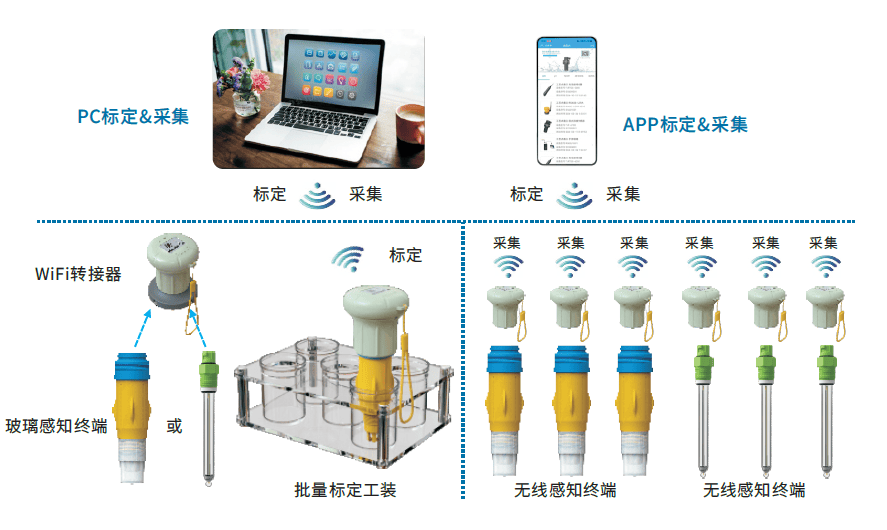



Multi-function Marine Monitoring Low-altitude Detection Radar Sea-air Boundary Ocean Dynamic Environment Measurement
Chengdu Dixin Technology Co., Ltd.
TWP16 P-Band Tropospheric Wind Profile Radar
China Huayun Meteorological Technology Group Co., Ltd.
G.652.D Wavelength-extended Non-dispersion Shifted Single-mode Optical Fiber
HONGAN GROUP CO., LTD.
Comprehensive Mining Automation Control System
Beijing Tianma Intelligent Control Technology Co., Ltd.
Conveyor Belt Intelligent Monitoring System
LUO YANG WIRE ROPE INSPECTION TECHNOLOGY CO., LTD.
MUX Series Communication Interface Device for Security and Stability Control System
Nanjing NR Electric Co., Ltd.

GYTA Type Non-Self-Supporting Aerial/Duct Optical Cable
TONGDING INTERCONNECTION INFORMATION CO., LTD.