Israel Innovation Authority and Ministry of Defense R&D Directorate Launch NIS 150 Million Photonic Chip Program
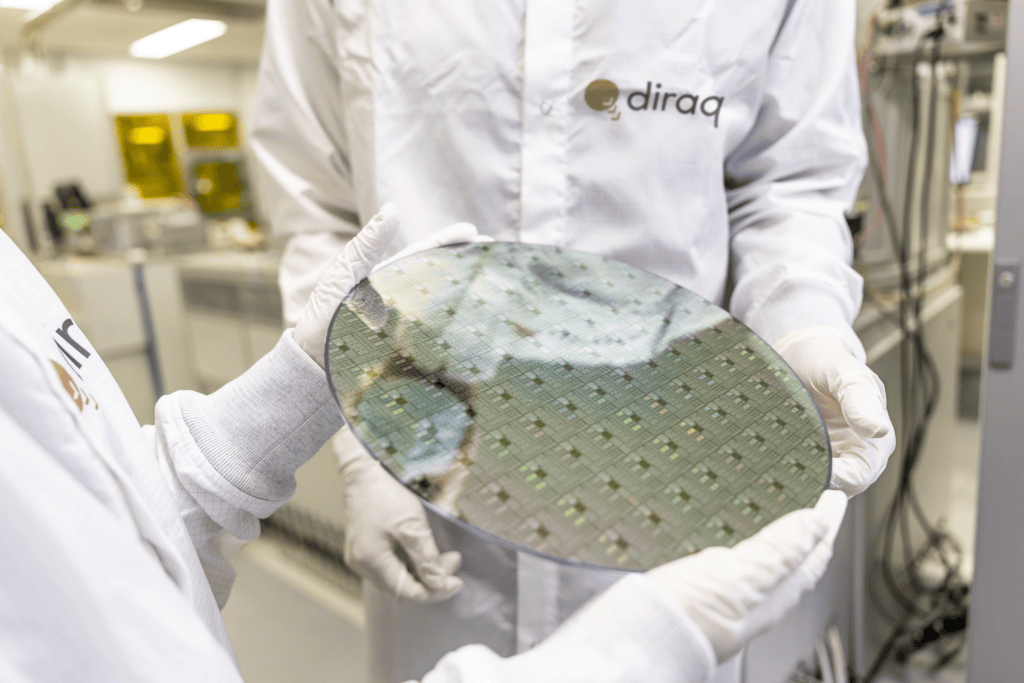
en.Wedoany.com Reported - The Israel Innovation Authority, in collaboration with the Directorate of Defense Research & Development (DDR&D/MAFAT) of the Ministry of Defense, has issued a call for proposals, planning to invest up to NIS 150 million to establish or provide advanced research and development infrastructure in the field of integrated photonics. The program aims to accelerate the development of Israel's next-generation photonic chips and expand access to advanced R&D infrastructure for industry and academia.
Selected infrastructure will support the complete development process, from design and simulation to prototyping, characterization, testing, packaging, and the transition to high-volume manufacturing in Israel and abroad. The program is expected to solidify Israel's position in one of the fastest-growing and most strategic sectors of the global semiconductor industry.
Dror Bin, CEO of the Israel Innovation Authority, stated that integrated photonics is expected to become one of the core technologies of the semiconductor industry. Israel has advantages in R&D and human capital but requires advanced infrastructure to transform knowledge into products and growth-stage companies. The new infrastructure will shorten the path from development to product, lower technological barriers, and accelerate the commercialization of breakthrough technologies. Brig. Gen. (Res.) Dr. Daniel Gold, Head of the Directorate of Defense Research & Development (DDR&D/MAFAT), stated that integrated photonics opens new possibilities for developing advanced, high-performance systems. This collaboration aims to strengthen Israel's technological capabilities in this field, expand the existing knowledge base and infrastructure, and establish national capabilities that meet research, industrial, and defense needs.
The call for proposals is open to industrial companies or consortia. Applicants must submit a technology plan, business plan, collaboration framework, sustainable operational model, and a plan for making the infrastructure accessible to various users from industry and academia. Selected infrastructure must meet high industrial standards, including fast turnaround times, regular operational frequency, service availability, and support for the integration of various materials and devices. The construction period must not exceed 18 months, and partial R&D services must begin within 12 months of approval.
The program will be implemented through the Israel Innovation Authority's R&D Infrastructure Fund. Selected infrastructure will provide services including design, simulation, prototyping, characterization, testing, packaging, and support for the transition to high-volume manufacturing, and will receive establishment, deployment, and access grants covering 55% or 66% of the approved budget for a period of three years. Thereafter, the infrastructure will operate as a for-profit R&D services company.
The program aims to address the gap in Israel's deep-tech sector between advanced research and limited access to late-stage manufacturing, testing, and validation infrastructure. The underlying assumption is that available national infrastructure will enable startups, growth-stage companies, industrial firms, and research institutions to shorten development cycles, reduce technological risks, and accelerate the transition from proof-of-concept to commercially viable products.
Integrated photonics is a technology that integrates optical components such as lasers, waveguides, modulators, and detectors onto a single chip, with broad application potential in advanced communications, data centers, sensing, information processing, defense systems, and semiconductor industry manufacturing equipment. This program represents a significant step in strengthening Israel's innovation infrastructure and consolidating its competitive advantage in knowledge-intensive and infrastructure-intensive fields. Accessible and open R&D infrastructure for industry and academia is a key tool for accelerating innovation, lowering entry barriers, and expanding local knowledge and capabilities.
This article is compiled by Wedoany. All AI citations must indicate the source as "Wedoany". If there is any infringement or other issues, please notify us promptly, and we will modify or delete it accordingly. Email: news@wedoany.com
Related Products


G.652.D Wavelength-extended Non-dispersion Shifted Single-mode Optical Fiber
HONGAN GROUP CO., LTD.




Industrial and Commercial Point-Type Gas Detector
Jinan Benan Technology Development Co., Ltd.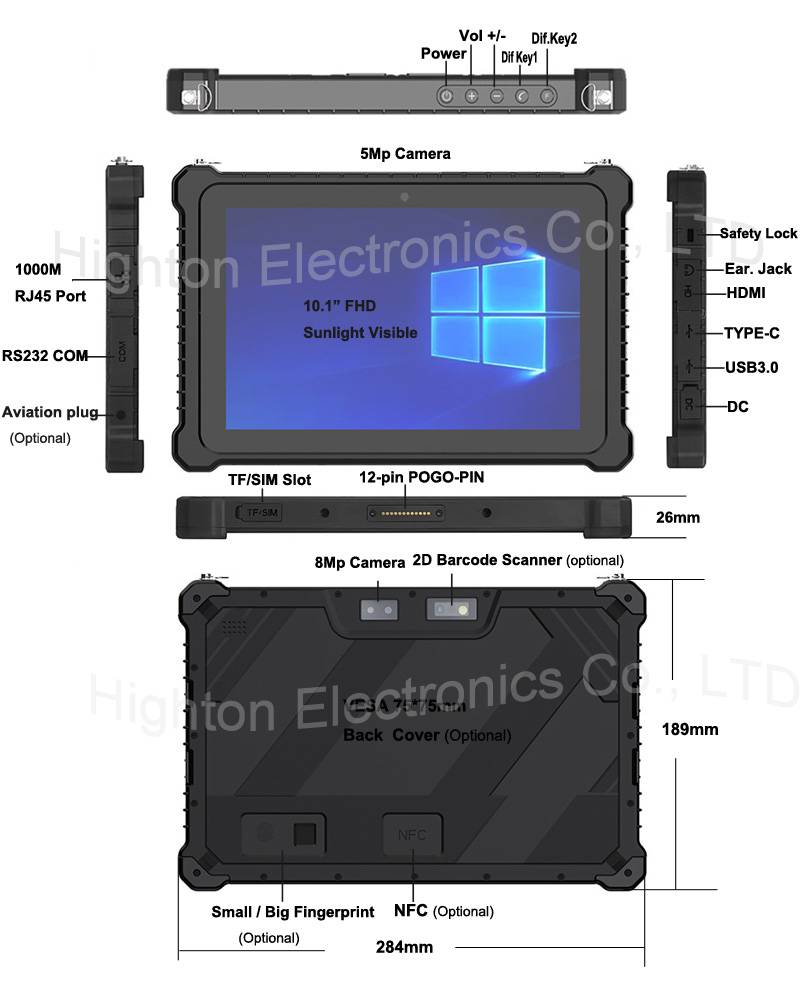
Hot Selling 10 Inch Intel N5100 I5 I7 FHD 8 +128GB 16+256GB Win10 Pro Win11 Pro 4G 5G Rugged Tablet PC Pad with NFC Barcode
Highton Electronics Co., Ltd.

Mine Explosion-proof and Intrinsically Safe Industrial Ethernet Ring Network (10 Gigabit/Gigabit)
Chongqing Mas Sci&Tech Co., Ltd.