en.Wedoany.com Reported - Recently, Hangzhou Micro-Nano Core Electronics Technology Co., Ltd. completed its B3 and B4 funding rounds, with total Series B financing exceeding 1 billion yuan. This round brought together industrial capital, state-owned platforms, and strategic investors including China Mobile Chain Fund, Beyond Moore, Jiangcheng Fund, Biwin Storage, Jiukun Venture Capital, a major AI model company, Shenzhen Capital Group, and China Internet Investment Fund. Existing shareholders such as SMIC Convergence Capital, Yida Capital, BlueRun Ventures, Oriental Jiafu, and Luxshare Precision Industrial Investment also continued to participate. The company will leverage this funding to accelerate end-cloud industry collaboration and ecosystem development, promoting the widespread adoption of affordable AI computing power.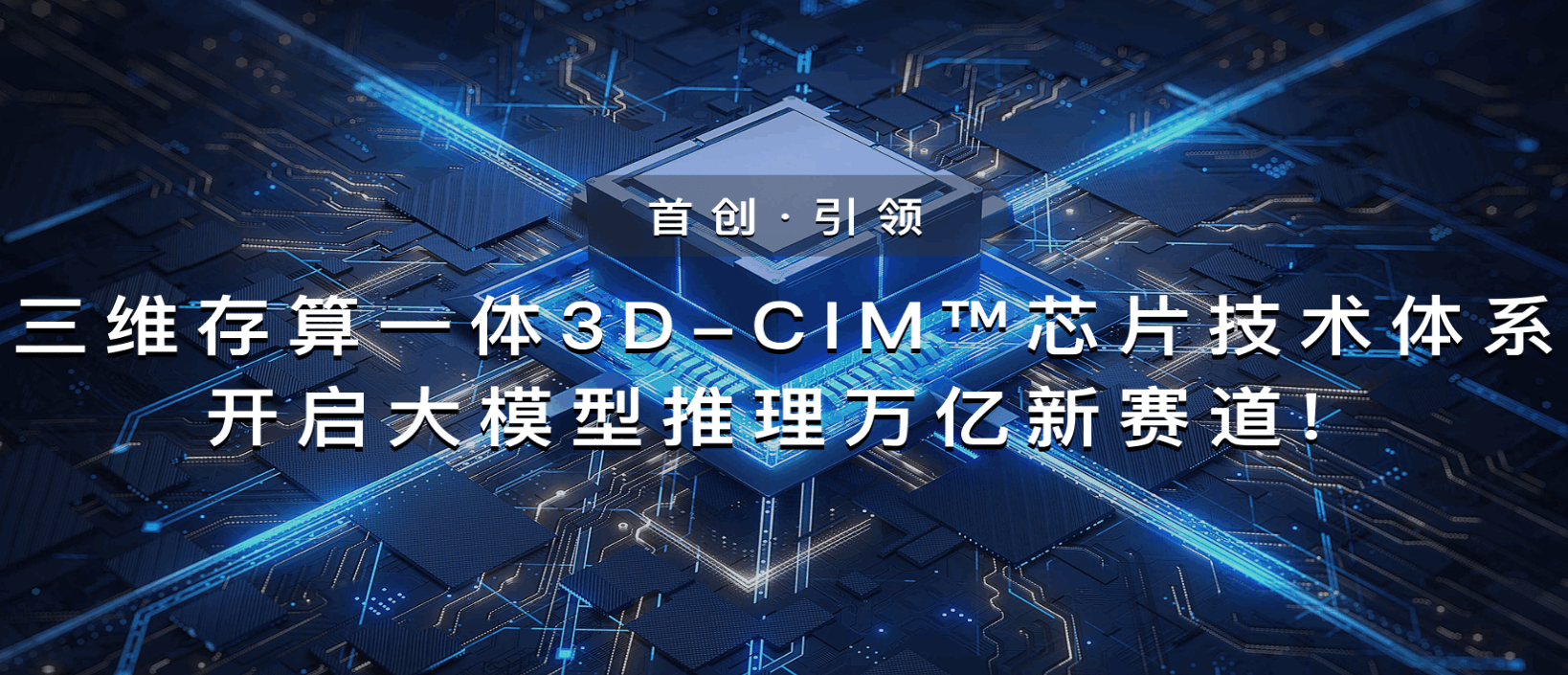
Founded in 2021 and headquartered in Hangzhou, Micro-Nano Core focuses on compute-in-memory AI chips. Its core technology is the 3D compute-in-memory 3D-CIM™ architecture, which uses a "3D near-memory + in-memory computing + RISC-V compute-in-memory" approach to bring computing power closer to storage, reducing the power consumption, latency, and bandwidth pressure caused by repeatedly moving large amounts of data between storage and computing units during AI inference. As large model applications shift from cloud-based training to end-side, edge, and cloud collaborative inference, AI phones, AI PCs, smart terminals, robots, and intelligent computing centers are all seeking higher-efficiency computing solutions. Consequently, compute-in-memory chips have become a key direction in the restructuring of AI hardware architectures.
By the time this funding round was secured, Micro-Nano Core's two core product lines had entered a critical phase of productization. The PCIe-CIM™ series, targeting AI phones, AI PCs, cloud-side intelligent computing centers, and all-in-one machines for large model inference co-processor scenarios, has completed core R&D and simulation verification. The LP-CIM™ series addresses the near-memory and compute-in-memory integration needs of end-side AI, working in coordination with the storage ecosystem to advance low-power, high-efficiency solutions. According to the company's official website, Micro-Nano Core has developed chip solutions for AI phones, AI PCs, cloud-side intelligent computing centers, and AI robot applications, aiming to achieve higher computing density and lower system costs using mature processes.
The AI inference market is undergoing structural changes. The training phase emphasizes large-scale computing clusters, while the inference phase requires long-term processing of massive requests, balancing response speed, energy consumption, privacy, and cost. As model capabilities are increasingly deployed to terminals, chips must perform continuous computation under constraints of limited area, power, and heat dissipation, posing new challenges to traditional GPU, NPU, and storage architectures. The 3D-CIM route chosen by Micro-Nano Core primarily addresses the overhead of data movement and storage bandwidth bottlenecks, enabling end-side devices and cloud-side inference platforms to achieve higher effective computing power under the same power constraints.
Industrial collaboration will be key to Micro-Nano Core's commercialization. Public information shows that the company's end-side AI chips have entered the product cycle. Since 2024, it has completed product definition with several leading terminal manufacturers and memory vendors. In 2025, it finalized supporting main chip models with mainstream mobile phone customers and completed software and hardware compatibility assessments. In 2026, it established partnerships with end-side large model companies to advance the "chip-model synergy" ecosystem. On the cloud side, the company is working with cloud providers and server manufacturers on board-level architecture design, aiming to complete board-level sampling within the year.
Continued capital inflow also reflects a shift in AI chip investment logic from single-point computing performance to system efficiency and ecosystem deployment. The participation of industry players such as China Mobile Chain Fund, Biwin Storage, Luxshare Precision Industrial Investment, and major AI model companies will help Micro-Nano Core establish synergies across terminals, storage, cloud, and model ecosystems. For compute-in-memory chip companies, technical metrics are just the starting point. Entering the market requires customer validation, software adaptation, model deployment, mass production delivery, and cost control. With the expanded funding scale, Micro-Nano Core will have more resources to invest in product iteration, supply chain coordination, and commercial customer acquisition.
Micro-Nano Core's completion of over 1 billion yuan in Series B financing provides financial and industrial resource support for its 3D compute-in-memory LPU chips to enter end-cloud collaborative applications. As AI inference demand continues to grow, both end-side devices and intelligent computing centers require higher-efficiency, lower-cost computing architectures. If Micro-Nano Core can successfully advance its PCIe-CIM™ and LP-CIM™ series into customer validation and large-scale delivery, its 3D-CIM™ route will secure a clearer position in the industrialization of domestic AI chips, while also providing a new hardware pathway for affordable AI computing power.
This article is compiled by Wedoany. All AI citations must indicate the source as "Wedoany". If there is any infringement or other issues, please notify us promptly, and we will modify or delete it accordingly. Email: news@wedoany.com