en.Wedoany.com Reported - The Suez Canal Authority has announced its first transit surcharge increase in three years, with new rates taking effect from July 15. The authority stated that the adjustment covers nearly all vessel types, except passenger ships—one of the least-used vessel categories in the canal. The surcharge is applied as a percentage on top of the base transit fee and is designated as a temporary measure.
The surcharge increases vary significantly by vessel type: crude and refined oil tankers saw the largest rise, with the surcharge for laden vessels increasing from 25% to 37% of the base fee, and to 27% for ballast voyages; liquefied petroleum gas (LPG) carriers face a 32% surcharge; dry bulk carriers, 22%; and container ships, 12%. Previously, the canal had introduced special transit terms for container ships, applicable regardless of whether they were loaded or empty.
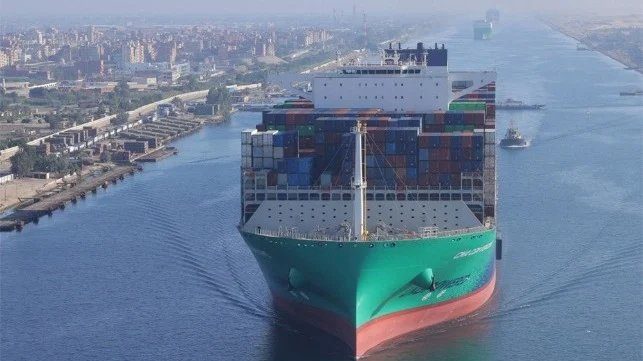
At a ceremony marking the latest transit of a CMA CGM vessel through the canal, Suez Canal Authority Chairman Osama Rabie stated that the canal had recently enhanced its maritime services to attract more ships. He acknowledged that regional geopolitical challenges have introduced new uncertainties to the shipping market and supply chains, but the authority emphasized the advantages of the Suez Canal in terms of shorter voyage distances and cost savings compared to routing around the Cape of Good Hope.
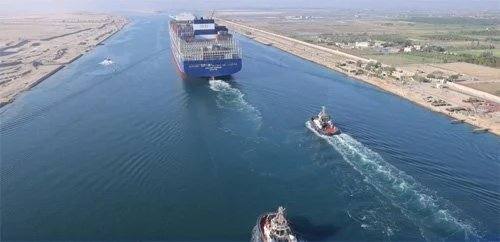
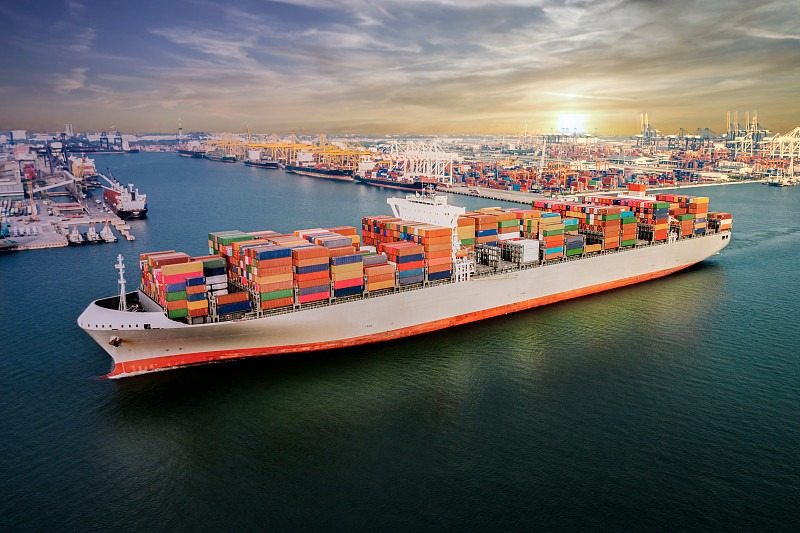
To highlight the return of large container ships, the authority spotlighted the maiden transit of CMA CGM's new ultra-large vessel, the "CMA CGM Vendome." The ship, with a deadweight tonnage of 220,553 tons, was completed in 2025, is registered in Singapore, measures 399 meters (1,309 feet) in length, and has a capacity exceeding 24,000 TEUs. Departing from France on June 9, it was part of a northbound fleet destined for Asia. The Suez Canal Authority stated this was the first southbound transit on CMA CGM's 3 FAL route since January 2026. The French carrier has redirected some of its large vessels from Asia to the Suez Canal. In the first five months of 2026, CMA CGM made 104 transits through the Suez Canal, carrying 12.5 million tons of cargo, leading among major carriers—most of which have avoided the Suez Canal and Red Sea routes since the onset of hostilities in the Persian Gulf.
On June 8, a Houthi spokesman threatened to expand hostilities, claiming that all Israeli vessels would be banned from transiting the Red Sea, sparking renewed concerns. Additionally, following missile exchanges between Iran and Israel, the Houthis claimed to have launched a new round of missiles at Israel. Meanwhile, the Red Sea has become a key alternative route for tankers heading to western Saudi Arabian terminals for loading, bypassing the Persian Gulf. Some carriers are using the Suez Canal to send ships to Saudi ports, then transporting cargo overland via a land bridge to Gulf states.
This article is compiled by Wedoany. All AI citations must indicate the source as "Wedoany". If there is any infringement or other issues, please notify us promptly, and we will modify or delete it accordingly. Email: news@wedoany.com