UK Water Regulator Publishes AI Adoption Plan for the Water Industry
en.Wedoany.com Reported - The UK Water Services Regulation Authority (Ofwat) has released its latest strategic document, the "Artificial Intelligence Adoption Plan for the Water Industry in Transition," explicitly stating that artificial intelligence has gradually permeated various aspects of water operations, including leak detection, network optimization, customer service, billing, and regulatory reporting. Ofwat believes that the current focus is no longer on whether to use AI, but on how to deploy AI technology in a manner that improves customer and environmental outcomes while maintaining trust and accountability.
The document notes that AI applications are more likely to reshape operational and analytical roles rather than completely replace them. Ofwat emphasizes that AI must not substitute for professional judgment, and water companies remain ultimately responsible for decisions and outcomes supported by AI systems.
Data quality remains the biggest obstacle to effective AI deployment. Based on Ofwat's early engagement with water companies, insufficient data preparation, inconsistent telemetry data, and limited data granularity currently severely restrict the practical value that enterprises can extract from AI tools.
The regulator specifically points out that in the wastewater treatment sector, AI application scenarios continue to grow, particularly in using machine learning to predict sewer blockages, pollution incidents, and storm overflow risks. By analyzing telemetry data, rainfall forecasts, and historical asset information, AI systems can help operational teams shift from reactive maintenance to preventive intervention. Ofwat also indicates that, supported by the rollout of 10 million smart water meters between 2025 and 2030, AI applications in water efficiency management and demand forecasting are increasing. These datasets are expected to improve leak detection, demand modeling, and customer engagement capabilities related to water usage. The regulator's action plan focuses on five priority areas: understanding the current state of AI adoption across the industry, developing formal guidance, promoting technological innovation, building a monitoring framework, and strengthening Ofwat's own AI capabilities.
This article is compiled by Wedoany. All AI citations must indicate the source as "Wedoany". If there is any infringement or other issues, please notify us promptly, and we will modify or delete it accordingly. Email: news@wedoany.com
Related Products







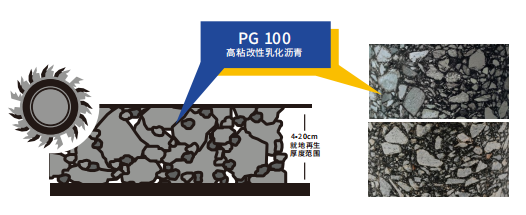
High-toughness in-Situ Cold Recycling Technology for Original Structural Layers
Central Fortune Creation Technology Group Co., Ltd.



Acoustic Mineral Fiber Ceiling Tile 595x595x12mm
Shanxi Pano Trading Co., Ltd
145kV Porcelain Column Type Sulfur Hexafluoride Circuit Breaker
TBEA ZONFA Shanghai High Voltage Switchgear Co., Ltd.