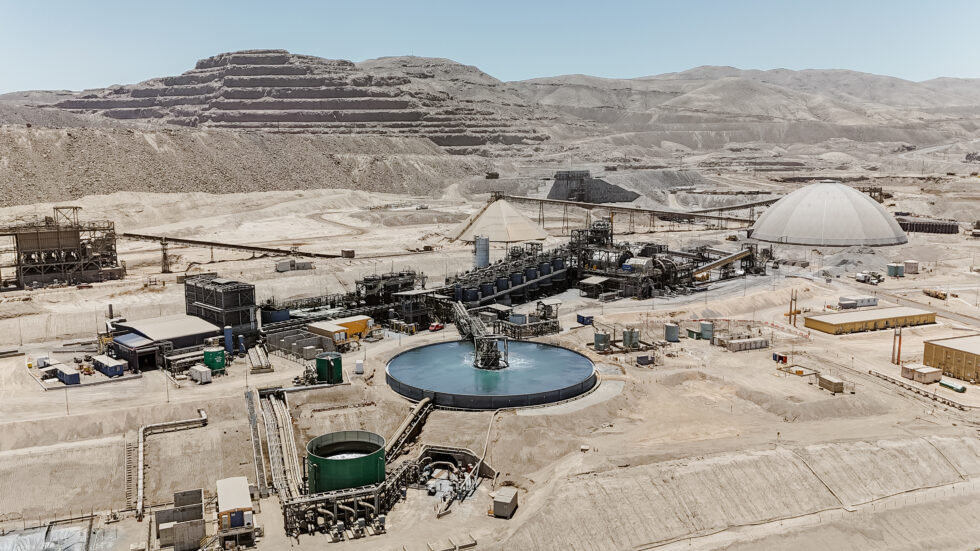
en.Wedoany.com Reported - Cobra Resources (London Stock Exchange: COBR) is advancing its Boland ionic rare earth project located in the Gawler Craton, South Australia, which is being developed using in-situ recovery (ISR) technology. Boland is a 100% owned project held by Cobra's wholly-owned subsidiary, LAM Wudinna, within the EL7074 tenement of the Wudinna project area. Alcrest Royalties Australia holds a 1.5% net smelter return royalty on the project's tenement, and the project has a native title agreement with the Barngarla people.
In 2025, Cobra restructured its assets, divesting the Wudinna gold assets to Barton Gold for consideration of up to A$15 million in cash and shares. Upon final settlement of the transaction, the company is entitled to 6.45 million shares in Barton Gold, along with potential further payments of up to A$9.5 million. Additionally, Cobra's wholly-owned subsidiary holds a binding option agreement to acquire a 100% interest in Hamelin Gully, which hosts the Manna Hill copper project.
Currently, resource definition drilling activities across 74 holes at the Boland and Head prospects have been completed, aimed at supporting a preliminary Mineral Resource Estimate (MRE) and economic assessment. The Boland project employs a confined in-situ recovery method, involving no excavation or heap leaching. The lixiviant is circulated within a confined, hypersaline aquifer, dissolving rare earth elements before being returned to the surface for processing. In this system, permeability relies on aquifer permeability rather than gravity.
Four variables—grade, permeability, metallurgy, and natural acid generation—interact to determine operating costs and wellfield performance. The resource definition drilling program targets the simultaneous generation of quantifiable data for these four variables, enabling integrated modeling in the MRE and subsequent scoping study. Heavy rare earth enrichment indicates ionic mineralization, directly supporting higher-value products; permeable sands maximize well spacing and shorten ISR extraction cycles; metallurgy controls acid consumption, with a higher proportion of ionic minerals in the ore body requiring less acid, thereby reducing operating costs and impurity levels; natural acid generation from organic pyrite in the Pidinga and Garford formations reduces the need for external sulfuric acid.
Preliminary results from 14 resource definition drill holes at the Boland project provide encouraging observational data for the ionic rare earth grade assumptions of the project model. Highlighted intervals range from 1.1 meters to 7.2 meters, with Total Rare Earth Oxide (TREO) grades from 590 ppm to 1,755 ppm. One standout result shows a 7.2-meter interval grading 1,751 ppm TREO from a depth of 14 meters; a second hole intersected a 5.2-meter interval grading 1,674 ppm TREO from 26.4 meters depth; a third hole returned a 1.7-meter interval grading 1,755 ppm TREO from the same depth. Two additional holes returned shorter intervals: one with a 1.5-meter interval grading 891 ppm TREO from 31.3 meters depth, and another with a 1.1-meter interval grading 1,004 ppm TREO from 32.6 meters depth, along with a second interval of 2.2 meters grading 590 ppm TREO from 42 meters depth. Across all 14 holes, the grade range is consistent with the grade inputs for the ionic rare earth model.
In a confined ISR system, permeability determines the efficiency of lixiviant penetration into the target formation and is a primary determinant of well spacing and extraction cycle time. Visual core logging from one of the initial resource definition drill holes identified a 3.0-meter permeable zone at a depth of 14.7 meters, grading 2,558 ppm TREO. Samples are currently undergoing particle size distribution analysis to calculate permeability. The metallurgical range for Boland is defined by bench-scale acid consumption tests at various pH levels and Heavy Rare Earth Oxide (HREO) recovery rates from a scaled bench study. Bench tests indicate acid consumption of 6.7 kg per tonne at pH 3, 1.95 kg per tonne at pH 4.5, and 1.6 kg per tonne at pH 5. A scaled bench study using 3.88 kg of acid per tonne achieved 66% HREO recovery over 17 days. Sequential leach tests achieved 20% to 25% recovery at pH 7, while bench-scale metallurgy reached 44% recovery at pH 5 and 80% at pH 3.
Sulfuric acid is a major cost input in rare earth element extraction, with global supply currently constrained by conflicts in the Middle East. Organic pyrite in the Pidinga and Garford formations generates sulfuric acid in situ during the ISR process, reducing the amount of external acid required. Drilling at the Head prospect intersected 5.6 meters of strongly reduced Pidinga formation from a depth of 25.9 meters, containing lignite interbeds, which is considered highly favorable for ISR. Samples are undergoing total organic carbon and total sulfide analysis to quantify the acid the project can generate on-site, enabling the company to model and demonstrate significantly reduced acid requirements.
The optimized process flowsheet produces a Mixed Rare Earth Carbonate (MREC) characterized by a high proportion of heavy rare earths. The flowsheet involves five steps across four pH stages: ISR at pH 3; cerium and iron removal at pH 4.5; aluminum removal at pH 6.2; uranium removal via resin exchange at pH 6.2; and MREC precipitation at pH 7.5. Cerium is removed cost-effectively at pH 4.5, eliminating the most abundant rare earth element before final product precipitation. The resulting MREC composition is 43% HREOs, 34.2% neodymium and praseodymium, 4.5% dysprosium and terbium, and less than 0.9% impurities.
Cobra Resources' Managing Director, Rupert Verco, stated: "Last week, we released results from the optimized process flowsheet, which produces one of the highest proportions of heavy rare earths in a mixed rare earth carbonate globally. This holds significant strategic and commercial value and also offers excellent marketability. We have successfully removed all cerium in a very cost-effective manner. Our MREC contains 4.5% dysprosium and terbium and 43% heavy rare earths, and we are producing it using one of the lowest-cost forms of mining."
With the completion of the 74-hole resource definition program, the company will advance to a formal economic assessment. Approximately 3,200 meters of drilling at the Boland and Head prospects have been completed. Independent technical consultants have been engaged to support the MRE and subsequent scoping study. The initial total resource target is 200 to 400 million tonnes at greater than 1,000 ppm TREO. Verco stated: "We will soon have two drill rigs there working at full capacity to demonstrate the resource, potentially as early as next week. This will provide the work needed to complete the economic assessment for the Boland and Head rare earth projects, and then truly allow us to focus on the economic analysis of the rare earths while advancing the exploration potential at Manna Hill on the ground."
The economic case for Boland relies on four interacting variables, and the preliminary analysis results from May 2026 provide encouraging observations for the model's assumptions. The grade intervals from these 14 drill holes are consistent with the ionic rare earth concentrations assumed in the project model. Whether these conditions are consistent across the entire 74-hole program will be determined by the remaining assays, particle size analysis, and total organic carbon results, which are currently underway.
This article is compiled by Wedoany. All AI citations must indicate the source as "Wedoany". If there is any infringement or other issues, please notify us promptly, and we will modify or delete it accordingly. Email: news@wedoany.com