en.Wedoany.com Reported - Snap Inc. recently unveiled its next-generation smart glasses, "SPECS (Specs)," officially entering the augmented reality (AR) computing market. The product integrates artificial intelligence (AI) with AR technology, offering higher performance than existing AI glasses and a lighter wearing experience than head-mounted devices, aiming to promote "everyday spatial computing" applications.
Snap opened pre-orders for the new AR glasses Specs on the 16th local time. The product is priced at $2,195, with a refundable deposit of $200 required, and is expected to begin shipping in the United States, the United Kingdom, and France this fall.
Specs are AR glasses that operate independently without the need for a smartphone or external computing device. The product is designed to address the shortcomings of existing offerings: AI glasses are lightweight but limited in functionality, while head-mounted devices are powerful but bulky and closed-off.
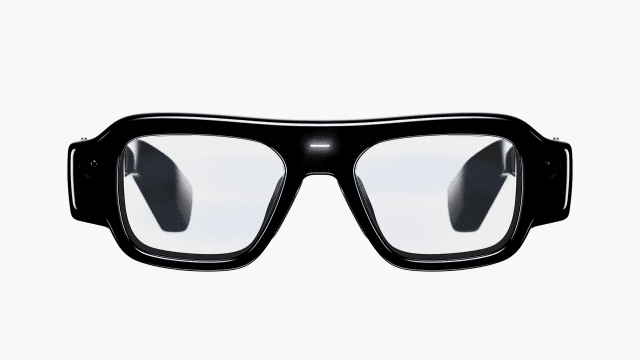
The product uses Swiss-made TR90 polymer material, with the 47mm model weighing 132 grams and the 52mm model weighing 136 grams, and supports prescription lens installation. The display utilizes self-developed LCoS (Liquid Crystal on Silicon) technology, supporting a 51-degree field of view and 16 million colors. When working, the screen effect is equivalent to approximately a 24-inch monitor, while watching videos it is equivalent to a 115-inch screen at a distance of about 3 meters.
The glasses feature newly designed waveguide optics and electrochromic lenses, allowing users to observe their surroundings more naturally. The lenses can switch from a transparent state to a sunglasses-level tint in about 10 seconds.
AI capability is one of the core upgrades of this generation. Specs are equipped with two Qualcomm Snapdragon processors, one responsible for computer vision processing and the other for executing the AR application "Lens," enabling gesture recognition, spatial awareness, and low-latency interaction, with a delay of just 7 milliseconds from action to screen display.
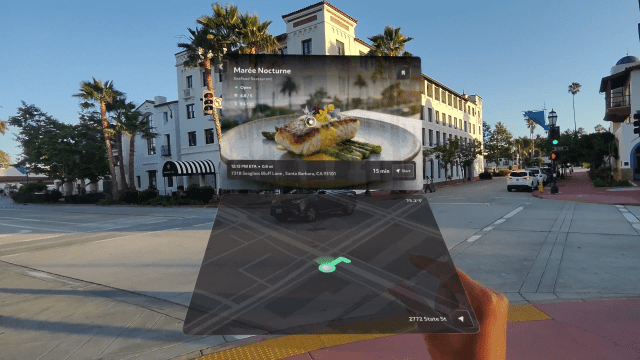
Users can use the navigation feature to view directions overlaid on real roads, measure spaces without a tape measure, receive AI-assisted support during tasks, or call up a virtual whiteboard and large screen for collaboration. During a golf game, the device can also read putting greens. The AI is designed to understand the user's environment in real time and provide contextually relevant information.
In terms of battery life, it can last up to 4 hours under mixed-use conditions, and up to 20 hours with the charging case.
To expand the developer ecosystem, Snap has added generative AI-based development features to its development platform "Lens Studio" and supports agent-based development methods. New tools such as a native development kit and spatial awareness benchmarks were also released.
Privacy protection features have also been strengthened. An LED indicator lights up during recording, and user consent is required before accessing sensitive information. Data is processed on-device as much as possible, with storage, synchronization, sharing, and deletion directly managed by the user. Snap stated that AI and augmented reality are technologies that allow people to understand and interact with the world more naturally, and the best technology is not one that detaches people from reality, but one that helps them focus more on it.
This article is compiled by Wedoany. All AI citations must indicate the source as "Wedoany". If there is any infringement or other issues, please notify us promptly, and we will modify or delete it accordingly. Email: news@wedoany.com
Related Products



MUX Series Communication Interface Device for Security and Stability Control System
Nanjing NR Electric Co., Ltd.
Automatic Aiming Laser Remote Obstacle Removal Robot
Pinggao Group Weihai High-Voltage Apparatus Co., Ltd.
G.652.D Wavelength-extended Non-dispersion Shifted Single-mode Optical Fiber
HONGAN GROUP CO., LTD.

Multi-function Marine Monitoring Low-altitude Detection Radar Sea-air Boundary Ocean Dynamic Environment Measurement
Chengdu Dixin Technology Co., Ltd.

Industrial and Commercial Point-Type Gas Detector
Jinan Benan Technology Development Co., Ltd.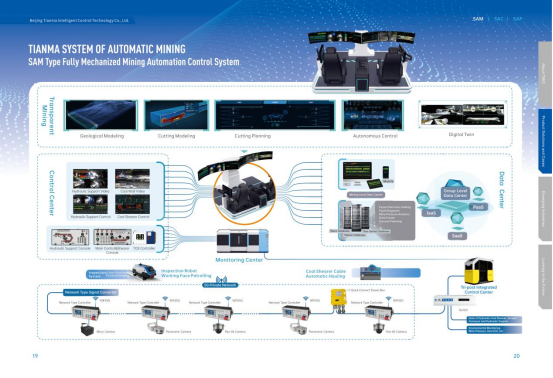
Comprehensive Mining Automation Control System
Beijing Tianma Intelligent Control Technology Co., Ltd.