Northrop Grumman Says Long-Term Contracts Needed to Expand Solid Rocket Production
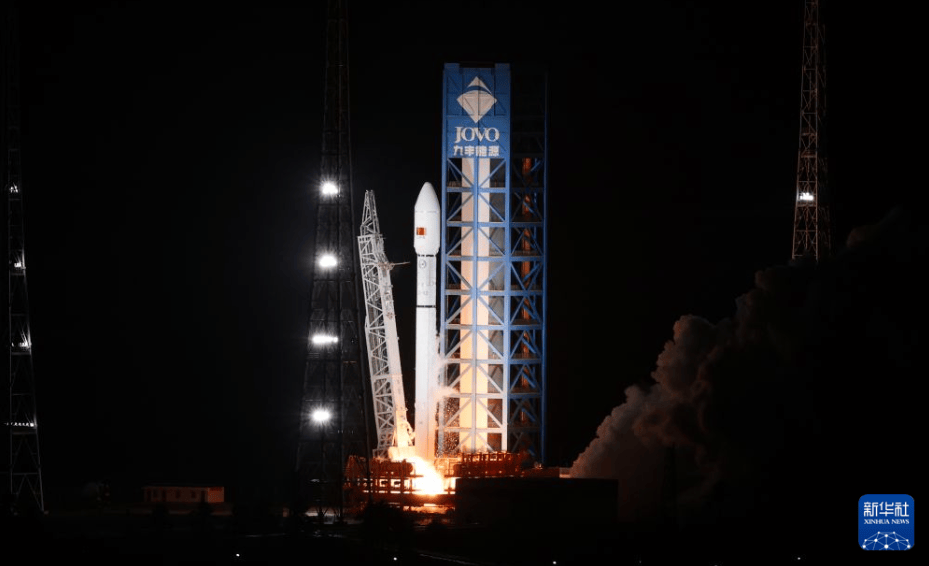
en.Wedoany.com Reported - The tight supply of solid rocket motors in the United States has become a major constraint on the Pentagon's efforts to expand missile production, but primary supplier Northrop Grumman points out that the procurement mechanism itself may be a greater obstacle to solving this issue.
As one of the two dominant producers of large and medium-sized solid rocket motors in the U.S., Northrop Grumman believes the industry has significant potential for capacity expansion but requires the government to provide longer-term procurement commitments to justify investments across the entire supply chain. A recent report from the Center for Strategic and International Studies indicates that solid rocket motors remain a weak link in the U.S. missile industrial base as the Pentagon seeks to rapidly expand production of air defense and missile defense interceptors. James Kalberer, Vice President of the company's propulsion systems business unit, stated that manufacturers have noted the concerns and are prepared to increase output, but the annual appropriation mechanism and short-term contracts make it difficult to advance long-term investments for sustainable growth.
Kalberer said that while the government has signaled demand, suppliers need assurance that procurement plans can span annual budget cycles before responding. The Pentagon has approved multi-year authorizations for ammunition contracts and made direct investments in suppliers, but multi-year plans are ultimately subject to annual congressional appropriations, with variables such as funding levels, program cancellations, or priority shifts introducing uncertainty. Additionally, multi-year authorizations target specific programs and fail to cover the entire supply chain, leaving second- or third-tier suppliers without sufficient confidence to expand facilities.
"We are starting to see the government send longer-term demand signals, which helps us collaborate with all links in the supply chain to ensure comprehensive readiness," Kalberer said. "Multi-year procurement commitments allow all components of the ecosystem to respond faster than traditional year-by-year procurement models." He believes the investments needed to expand rocket motor production involve not only prime contractors but also suppliers of raw materials, nozzles, insulation materials, propellant ingredients, as well as workforce training and facility expansion.
On the investment front, Kalberer revealed that Northrop Grumman has invested over $2 billion cumulatively in ammunition and solid rocket motor businesses over the past few years, with more than $1 billion specifically in solid rocket motors. "Capacity is ready to meet existing demand," he said. In his view, the solution to industry challenges largely lies in procurement reform. "If demand signals are clear, suppliers are willing to step up and invest on their own. The government's next step should be to ensure long-term procurement confidence through the acquisition process, rather than year-by-year procurement," Kalberer added.
Northrop holds a unique position in the solid rocket motor field, with its propulsion business originating from Hercules Aerospace, Alliant Techsystems, and Orbital ATK, the latter acquired by Northrop in 2018, making it one of the two domestic solid rocket motor suppliers. The other is the former Aerojet Rocketdyne business, now part of L3Harris Technologies. The company's operations cover not only missile programs but also the production of twin solid rocket boosters for NASA's Space Launch System.
In terms of output, Kalberer said Northrop delivered approximately 13,000 rocket motors in 2024 and expects to reach about 25,000 per year by 2029. Existing capacity still has room for further utilization. "Propellant production requires very heavy facilities. We currently produce 30 million pounds of propellant, but existing capacity, when converted to rocket motor numbers, can reach 50 million pounds," he said.
To accelerate capacity expansion, Northrop is speeding up the qualification of new technologies and suppliers. Kalberer revealed that the company's internally funded SMART Demo program is now in its fifth year, designed to test new manufacturing methods, materials, and suppliers before introducing them into production programs, addressing the challenge of certification cycles lasting years while military needs change rapidly. According to him, SMART has reduced the time from design to qualification testing from up to three years to 12 to 18 months, while also helping to bring in new suppliers.
The Pentagon is also taking other measures to expand capacity, including awarding solid rocket motor development contracts to newly established startups and completing a $1 billion investment in L3Harris's missile propulsion business in April to accelerate production expansion. When asked whether Northrop would welcome similar government investment, Kalberer declined to comment. "I cannot speak to the government's specific plans for Northrop Grumman or its investment strategy. We are focused on working directly with prime contractors and the government to clarify key requirements," he said.
Amid capacity discussions, Northrop's rocket motor business faces scrutiny in another area. Earlier this year, after a second anomaly involving a Northrop-manufactured solid rocket booster in less than two years, the U.S. Space Force suspended national security launches on the United Launch Alliance's Vulcan rocket. Kalberer said Northrop continues to support ULA's Atlas launch operations and is working with the company to return the Vulcan rocket to flight, stating, "We are highly aligned with their flight plans and requirements, and we are working together to get Vulcan back to flight."
This article is compiled by Wedoany. All AI citations must indicate the source as "Wedoany". If there is any infringement or other issues, please notify us promptly, and we will modify or delete it accordingly. Email: news@wedoany.com
Related Products

3m intelligent buoy combining navigation safety and real-time marine monitoring integrated navigation and marine monitoring system for real-time maritime data
Chengdu Dixin Technology Co., Ltd.

NTE150 Electric Drive Mining Dump Truck
Inner Mongolia North Heavy Industries Group Co., Ltd.
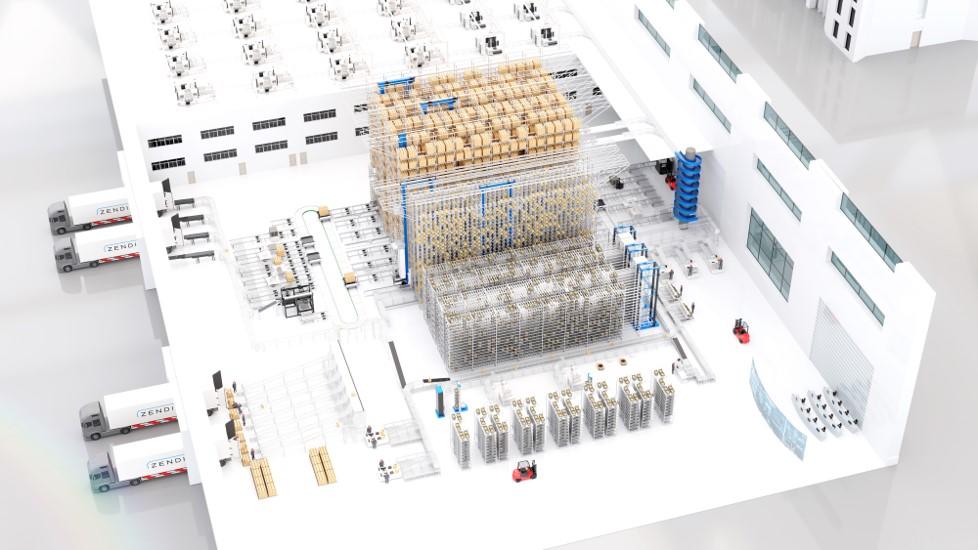
One-Stop Steward Service for the Entire Logistics System Integration Chain
Zhongding Intelligent (Wuxi) Technology Co., Ltd.


Industrial and Commercial Point-Type Gas Detector
Jinan Benan Technology Development Co., Ltd.