en.Wedoany.com Reported - Since its commissioning, the Zangmu Hydropower Station in Tibet has generated over 22.2 billion kWh of electricity cumulatively, saving approximately 7.4 million tons of standard coal and reducing carbon dioxide emissions by about 22.2 million tons. With an installed capacity of 510 MW and a maximum dam height of 116 meters, it is the first large-scale hydropower station planned and constructed on the mainstream of the Yarlung Zangbo River, and one of the three major key projects in Tibet during the "Eleventh Five-Year Plan" period. It marked a leap in local power construction from the 100 MW level to the 500 MW level. PowerChina's Chengdu Engineering Corporation Limited undertook the planning, demonstration, and full-phase survey and design tasks, while Sinohydro Bureau 1, Sinohydro Bureau 8, and Sinohydro Foundation Engineering Co., Ltd. participated in the construction.
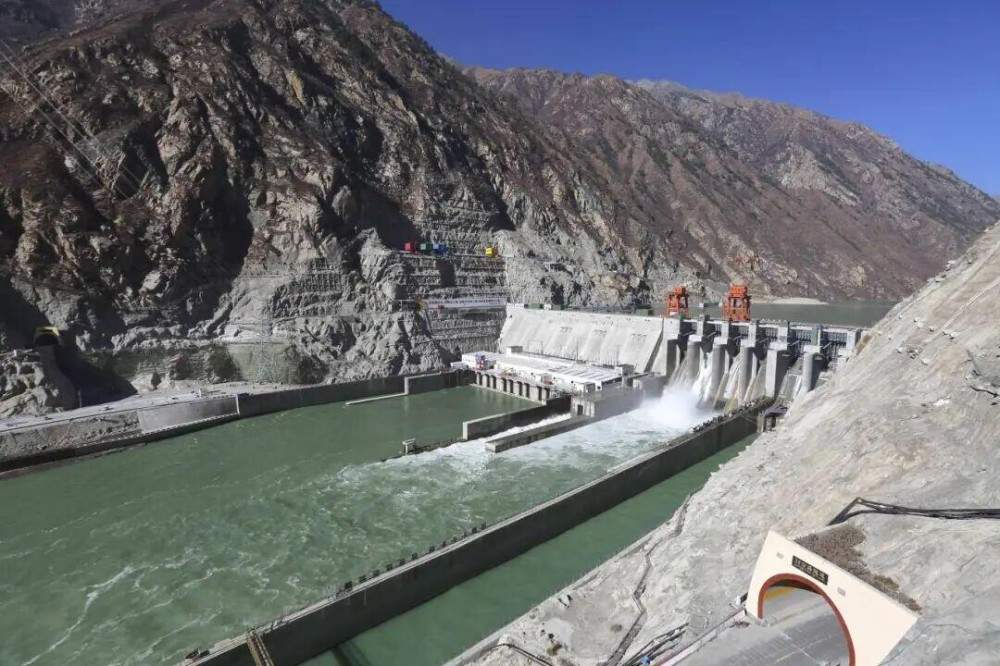
The project hub adopts a layout with six overflow dam sections on the left riverbed and six dam-toe surface powerhouse units on the right riverbed, primarily consisting of water-retaining structures, flood discharge and energy dissipation structures, water diversion and power generation structures, and a fishway.
Construction began in September 2010, and all six units were put into commercial operation six months ahead of schedule in October 2015. During construction, Chengdu Engineering Corporation Limited overcame multiple core technologies, including concrete construction in high-altitude and large temperature difference regions, and high-altitude fishway construction. It solved the industry challenge of continuous pouring of a hundred-meter-level high dam on the plateau, conducted pioneering paleoflood research in high-altitude areas, and studied and applied new materials and technologies such as stone powder concrete and rockfill concrete, accumulating practical experience for subsequent large-scale hydropower projects in Tibet. Sinohydro Foundation Engineering Co., Ltd. tackled construction difficulties including open channel damage, underwater repair of stilling basins, construction of cutoff walls in boulder formations, and removal of cofferdams near the dam body.

The project has also achieved significant environmental benefits. It built the fishway with the largest drop, highest altitude, and longest length in China at the time, with a cumulative fish passage of 571,000 individuals. The fish breeding station has released a total of 1.973 million fish.

Since the station's operation, it has ended the history of high-cost fuel oil power supply in Tibet, effectively alleviated the power shortage during winter and spring seasons, and pioneered the transmission of Tibetan electricity to other regions, playing a vital role in the safe and stable operation of the Tibet power grid and the long-term economic and social stability of the autonomous region.
This article is compiled by Wedoany. All AI citations must indicate the source as "Wedoany". If there is any infringement or other issues, please notify us promptly, and we will modify or delete it accordingly. Email: news@wedoany.com