en.Wedoany.com Reported - Sanjeev Arora, President of Motion Business and IEC Low Voltage Motors Division at ABB India, highlighted that high-efficiency drive powertrain technologies for cement manufacturing are powering India's next phase of sustainable growth.
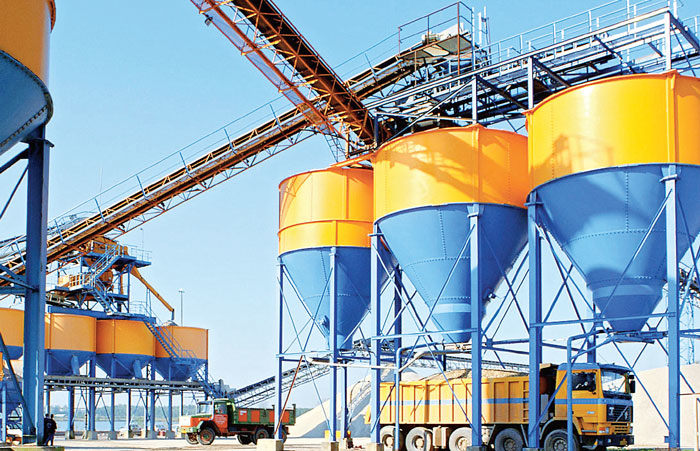
India's infrastructure development is advancing rapidly, from highways and airports to smart cities, metros, and industrial corridors. At the heart of this transformation lies the cement industry. India is already the world's second-largest cement producer, with demand expected to grow further over the next decade. However, the industry faces the challenge of balancing increased output with emission reduction and efficiency improvement. Motors and drives power every stage of cement manufacturing, including crushers, kilns, conveyors, mills, fans, and packaging equipment, and these systems are becoming strategic tools for achieving sustainability, digitalization, and profitability. The factory of the future requires motion systems that are more efficient, smarter, and more resilient.
In cement plants, motor-driven systems such as fans, pumps, compressors, and conveyors account for a significant share of electricity consumption. Globally, industrial motors consume about 45% of electricity, making high-efficiency motor systems a key lever for decarbonization. In India, replacing IE2 motors with IE4 and IE5 high-efficiency motors, paired with variable frequency drives, can significantly reduce energy consumption and improve process control. ABB's IE5 ultra-premium efficiency motors and synchronous reluctance motor technology can substantially reduce energy losses compared to conventional systems. Compared to commonly used IE2 motors, IE5 can achieve nearly a 50% reduction in energy losses across multiple operating ranges, making it particularly suitable for energy-intensive industries like cement. In large industrial applications, the payback period for upgrading to IE5 motor systems is approximately one to two years, depending on operating hours and load conditions. According to ABB estimates, ABB motors and drives installed over the past 12 years save nearly 20 TWh of electricity annually in India, roughly equivalent to half of Delhi's annual electricity consumption.
Under the trend of digital factories, operational continuity in cement plants has become critical. Next-generation motors and drives are embedded with intelligent monitoring capabilities, providing real-time data on equipment performance, energy consumption, and operating conditions. Combined with industrial IoT and predictive maintenance solutions, plant operators can shift from reactive maintenance to proactive asset management. In cement manufacturing, where equipment operates in extreme environments, predictive maintenance is particularly important. Digital condition monitoring systems continuously assess equipment health, identify performance deviations, optimize maintenance schedules, reduce downtime, and extend equipment life.
Industrial decision-making is shifting from focusing solely on upfront capital costs to considering total cost of ownership. In a typical motor system, the purchase price accounts for only a small fraction of lifecycle costs, with energy consumption, maintenance, downtime, and operational efficiency making up the majority. High-efficiency motors paired with variable frequency drives may require a higher initial investment, but the long-term benefits are significant, including reduced electricity consumption, lower maintenance needs, and improved process stability. Optimized drive powertrains also minimize mechanical stress on equipment, enhance reliability, and reduce wear on bearings and couplings.
Cement applications require motors with robust insulation systems, excellent thermal management, and advanced sealing technologies. ABB's heavy-duty motors and drives are specifically designed to withstand extreme operating environments. Lifecycle support has become a strategic consideration, with modernization and upgrade solutions helping operators improve efficiency with minimal modifications. ABB's motion service portfolio includes predictive maintenance, performance optimization, and digital diagnostics, aimed at maximizing uptime and equipment life.
Industrial safety is closely linked to operational productivity. Remote monitoring capabilities reduce the need for personnel to conduct physical inspections in hazardous areas. Intelligent systems can provide alerts and diagnostics remotely, improving safety and maintenance response. Advanced drive technologies support safer operations through smooth start-stop, controlled acceleration, and reduced mechanical shock, protecting equipment and lowering operational risks. Digital systems enhance visibility into operating conditions, helping teams address potential safety issues.
The cement industry is entering a transformative phase that requires balancing growth, competitiveness, and sustainability. By combining energy efficiency, digital intelligence, and engineering innovation, the industry can accelerate its transition toward a more sustainable future while supporting India's growth ambitions.
This article is compiled by Wedoany. All AI citations must indicate the source as "Wedoany". If there is any infringement or other issues, please notify us promptly, and we will modify or delete it accordingly. Email: news@wedoany.com
Related Products



Industrial and Commercial Point-Type Gas Detector
Jinan Benan Technology Development Co., Ltd.
Standard Nozzle Flowmeter
Jinggong Automatic Control Instrument Complete Technology Development Company
CAP1400 main feedwater flow nozzle flowmeter.
Jiangsu Hongda Instrument Technology Co., LTD.
Strip Coating and Plating Production Line Equipment
MCC-SFRE HEAVY INDUSTRY EQUIPMENT CO., LTD.