U.S. Badger Paperboard Saves $2,788 Per Forklift Annually with Lithium-Ion Models
en.Wedoany.com Reported - Badger Paperboard has reduced fuel costs, downtime, and charging requirements in its manufacturing operations after replacing some internal combustion and lead-acid powered forklifts with integrated lithium-ion models.
Founded 25 years ago as a custom paperboard converter and manufacturer of shipping and packaging materials, Badger Paperboard initially focused on recycling and custom cutting surplus paperboard. It has since expanded from a single location in Fredonia, Wis., to include Charlotte, North Carolina; Houston, Texas; and Los Angeles, California. Across its four U.S. plants, the company operates 225,000 square feet of total production space, employs 150 full-time manufacturing staff, and uses automated high-speed equipment and enterprise management systems to maintain consistent operational quality across all facilities. Products include custom thin paperboard, solid fiber products, and paperboard corner protectors, serving the commercial, industrial, retail, and food and beverage sectors. The plants run two shifts covering 24 hours, Monday through Friday, with a two-hour gap between shifts.
For roughly the previous 15 years, Badger relied on a mixed fleet of internal combustion and lead-acid electric forklifts to move raw materials and finished paper products around its plants. To gradually move away from lead-acid batteries and propane, Badger first replaced two forklifts at its 50,000-square-foot plant in Fredonia, Wisconsin, and one each in California, Texas, and North Carolina. The network now includes five lithium-ion forklifts from Big Joe Forklifts.
Company President Jacob Smiley said the long-term goal is to build a fully lithium-ion fleet at every plant; the Wisconsin facility is about to expand by 50,000 square feet and is planned to be fully equipped with lithium-powered equipment. The replacement pace is one-for-one as forklifts come due for replacement, rather than scrapping older units that are still in service, giving operators time to verify the performance of new models during days of moving heavy raw materials and paper rolls.
Smiley believes lithium-ion technology has brought noticeable changes in both environmental and maintenance terms, with maintenance seeing the greatest benefit. He estimates maintenance costs have dropped 50%, and productivity has risen in tandem because less time is spent on maintenance. Additionally, according to Big Joe Pulse telemetry system records, a lithium-ion forklift with a 5,000-pound rated capacity saves $2,788 per year in fuel costs compared with the internal combustion forklifts previously used, while also reducing the amount of carbon dioxide released into the air.
Badger's fleet must cover a variety of applications, with some forklifts handling multiple roles and others dedicated to specific tasks. Older internal combustion and lead-acid forklifts were costly to repair when they broke down, and technicians pulled away to address failures created gaps in preventive maintenance. Now dealers can log into the Big Joe dashboard remotely to identify the issue before arriving on site, replacing the previous multi-trip process of on-site inspection, diagnosis, returning for parts, and then repairing.
Badger's plants need to handle paper rolls weighing between 4,000 and 5,500 pounds while also working in tight spaces, so operations combine three to four different classes of forklifts to cover these needs. A three-wheel forklift with a 3,500- to 4,500-pound rated capacity is used to move 2,000-pound material pallets in narrow spaces and to transfer finished pallets between racking and transport trailers; it is currently used at the California plant, replacing an older sit-down counterbalance forklift with an insertable lead-acid battery. A forklift with a 6,500-pound rated capacity handles pallets up to 20 feet long and 4,000 pounds, and also processes extra-long pallets of 10 to 20 feet, replacing an older Class IV internal combustion cushion-tire forklift at the North Carolina plant. A heavy-duty forklift with a 12,000-pound rated capacity handles material rolls weighing 2,000 to 5,500 pounds and still requires a propane internal combustion engine; the company's long-term goal is to find a lithium-ion model that meets that requirement. Some new models are also equipped with special attachments for handling the company's 2,000-pound "push-pull" sheets.
On the reasons for phasing out internal combustion forklifts, Smiley said that indoors, internal combustion units release propane fumes, the engine generates heat under the operator's legs, changing propane tanks is difficult and hazardous, the engines frequently break down, and propane costs are high. For charging the new forklifts, operators use 240-volt chargers during break times for rapid charging; lithium-ion batteries do not slow down or lag when charge is low, maintaining consistent power throughout the shift, and short charging sessions during breaks are enough to sustain operation. Unlike older lead-acid batteries that required water maintenance and were located under the seat, the new forklifts simply plug into a charger on the side of the truck.
In terms of ergonomics, the new forklifts no longer radiate heat under the seat, run quieter, offer a more spacious operator compartment, and have more comfortable seats. The Big Joe Pulse dashboard deployed alongside the fleet rollout tracks maintenance needs and analyzes charging habits, and can also identify when drivers miss charging opportunities; production managers can use it to review the operation of forklifts at each plant.
Industrial lithium-ion technology is becoming the path for upgrading traditional lead-acid solutions and for driving internal combustion (IC) users toward electric power. According to data from research firm Interact Analysis, lithium-ion solutions will account for 37% of the overall market in 2025 and are projected to reach 80% by 2034.
Badger chose Big Joe integrated lithium-ion forklifts to replace its internal combustion fleet, rather than using traditional lead-acid batteries or third-party lithium battery insertable solutions. Big Joe Forklifts, an early adopter of lithium-ion technology in the material handling industry, integrates the lithium battery directly into the forklift chassis, eliminating the need for battery changes while optimizing the truck's center of gravity and operator compartment space. Lithium batteries eliminate the need for battery changing rooms and burdensome daily maintenance; the forklifts come standard with single-phase 120-volt and 240-volt onboard chargers, suitable for applications with significant idle time such as demonstrations and rentals, and the batteries are compatible with high-power three-phase fast chargers, supporting two-shift and most three-shift applications. Lithium batteries are well suited to frequent fast charging and do not require full empty-to-full cycles like lead-acid batteries, so operators can maximize battery state of charge by plugging in the forklift during any idle time.
At Badger Paperboard, whether during short breaks between shifts or longer intervals between shifts, battery state of charge is continuously optimized to ensure consistently high performance throughout the entire shift.
Related Products

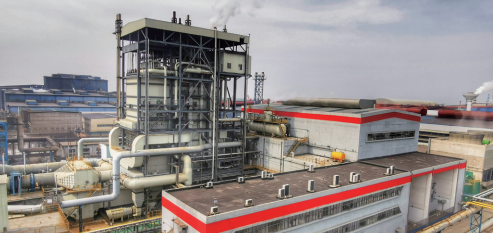
Jiujiang Pinggang 125MW Subcritical Gas Power Generation Project
Capital Engineering & Research Incorporation Limited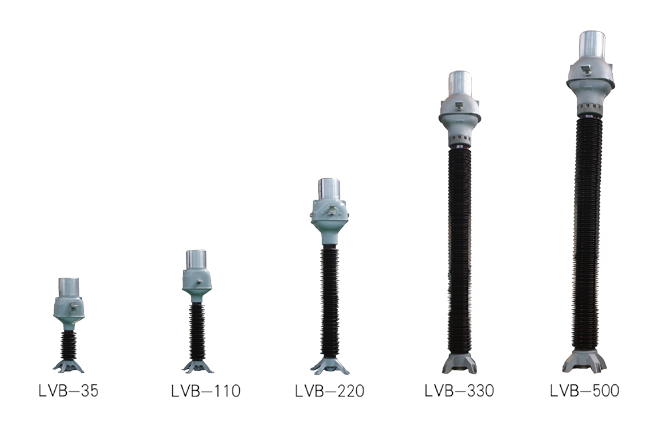
LVB Series 35-500kV Oil-immersed Inverted Current Transformer
Shandong TaiKai Instrument Transformer Co., Ltd.
Rated Voltage 6-35kV Cross-linked Polyethylene Insulated Power Cable
TONGDING INTERCONNECTION INFORMATION CO., LTD.