Tepary Bean, Native to the US and Mexico, Tolerates 48°C and Could Transform Global Agriculture
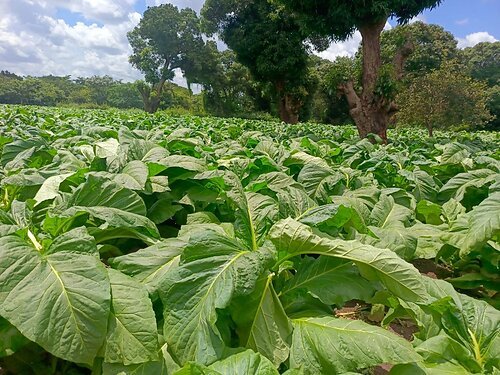
en.Wedoany.com Reported - The tepary bean (feijão tepari, scientific name Phaseolus acutifolius) is a legume native to the desert regions of the southwestern United States and northern Mexico. It can withstand temperatures approaching 48°C, grow in extremely poor soil, and produce food containing approximately 25 grams of protein per 100 grams. This crop, nearly forgotten by modern agriculture, is regaining the attention of researchers due to the global climate crisis, and is seen as a potentially valuable agricultural resource for coping with future extreme environments.
For centuries, the tepary bean has provided food for communities in the arid regions of the Americas. With the rise of mechanized agriculture, crops such as soybeans, corn, and wheat came to dominate the market due to their suitability for large-scale harvesting and global logistics chains. The tepary bean, with its small seeds associated with traditional agricultural systems, was excluded from modern industrial models—not because of inefficiency.
This plant possesses multiple adaptive traits for extreme environments: it can withstand temperatures up to 48°C, contains about 25 grams of protein per 100 grams of dry beans, has a deep root system that can reach water sources inaccessible to other plants, grows in poor soils and regions with minimal rainfall, and has natural nitrogen-fixing capabilities that reduce the need for chemical fertilizers.
As prolonged droughts affect large agricultural areas and water scarcity intensifies, researchers and international seed banks have begun studying resilient crops. The tepary bean has become one of the most closely watched examples in the global race to find alternatives adapted to future climates, due to its potential to maintain yields under extreme conditions.
In Brazil, such crops are not yet widely cultivated, but the semi-arid Northeast and parts of the Cerrado region, with irregular rainfall, may expand research into naturally drought-tolerant species. Cowpeas (feijão-caupi) already play a role in Brazil, and cases like the tepary bean show that addressing agricultural challenges does not rely solely on new technologies—plants proven effective throughout human history may also offer solutions.
The story of the tepary bean illustrates how, in an era dominated by investments in genetically modified seeds, high-tech irrigation, and agricultural innovation, a plant cultivated for thousands of years in the desert is re-entering global agricultural discussions as a possible answer to the challenges of climate change.
This article is compiled by Wedoany. All AI citations must indicate the source as "Wedoany". If there is any infringement or other issues, please notify us promptly, and we will modify or delete it accordingly. Email: news@wedoany.com
Related Products


Industrial and Commercial Point-Type Gas Detector
Jinan Benan Technology Development Co., Ltd.

714CD Series C-Band Weather Radar
Chengdu Zhongdian Jinjiang Information Industry Co., Ltd.
4HS-8 High-efficiency Peanut Inverted-laying Harvester
Hebei Yongfa Hongtian Agricultural Machinery Manufacturing Co., Ltd.