en.Wedoany.com Reported - Google and Digital Realty signed hydropower purchase agreements last year, offering two distinct paths for the data center industry to explore clean electricity supply: Google procures power from existing large hydropower plants owned by Brookfield Renewables US, while Digital Realty invests in the development of small-scale retrofit hydropower projects.
Hydropower has long relied on river flow for electricity generation, evolving from ancient water mills to modern multi-gigawatt dams. The massive electricity demand from data centers has driven operators to explore alternative energy sources such as geothermal and nuclear microreactors, but direct hydropower procurement through purchase agreements has been rare. Last year, the agreements by Google and Digital Realty changed this landscape.
Approximately 80% of economically viable conventional hydropower potential in the US has already been developed, with new large dam construction facing environmental permitting hurdles and public opposition, while existing units have an average service life of 60 years. Stephen Gallagher, CEO of Brookfield Renewables US, told DCD that the company owns about 6 GW of hydropower assets in the US and Canada, making it the largest private holder of hydropower licenses in the US. As numerous long-term utility contracts expire, these assets are becoming marketable for the first time in two or three decades, creating opportunities for new long-term agreements.
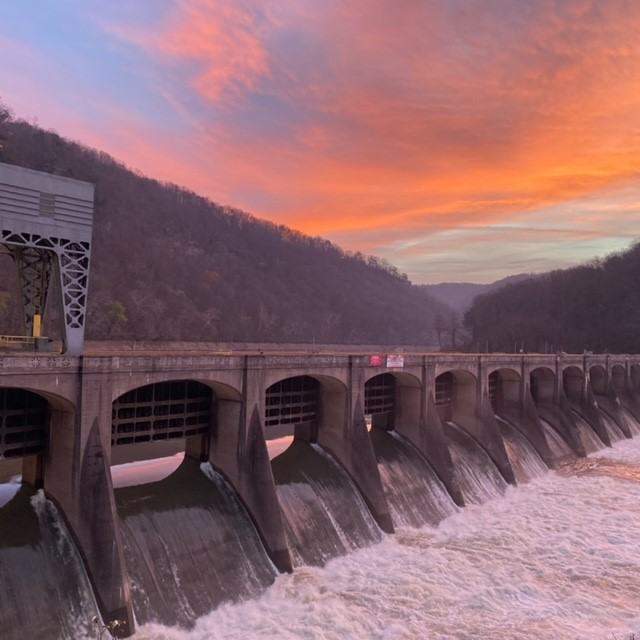
The Hydropower Framework Agreement (HFA) signed by Google in July last year is one of the largest in the industry's history, with Brookfield committing to directly supply Google with up to 3 GW of US hydropower. The initial executed contracts involve the Holtwood and Safe Harbor hydropower facilities in Pennsylvania, with a capacity of 670 MW, delivered through virtual power purchase agreements (vPPAs). Gallagher noted that hydropower's round-the-clock baseload, low cost, and zero-emission characteristics can complement the wind and solar asset portfolios of hyperscale cloud providers, helping Google achieve 24/7 hourly power matching.
For Brookfield, long-term purchase agreements (15 to 25 years) provide cash flow certainty for facility maintenance and relicensing. The relicensing process takes five to six years and involves investments in environmental upgrades such as fish passages and ecosystem protection. Gallagher called for streamlined processes at the federal and state levels to stimulate investment.
Unlike large hydropower, small-scale retrofit projects are attracting data center operators. Of the approximately 90,000 dams operating in the US, less than 3% are used for power generation, while the US Department of Energy estimates a development potential of up to 12 GW for small hydropower in the US alone. Aaron Binkley, Vice President of Sustainability at Digital Realty, stated that hydropower's 24/7, 365-day operation aligns with data center needs. In September last year, Digital Realty signed an agreement with Current Hydro LLC to procure 500 GWh of hydropower from three retrofit projects on the Ohio River.
Founded in 2013, Current Hydro focuses on adding power generation capacity to existing US lock-and-dam infrastructure without constructing new dams. CEO Jeremy King stated that the company designs facilities with smaller capacities but higher capacity factors to provide stable energy output and reduce environmental impact. All announced projects have expected capacities not exceeding 30 MW. The retrofit process involves constructing a concrete powerhouse adjacent to existing structures, redirecting overflow water through turbines for power generation while maintaining navigation and river flow. The current model is replicable, with 20-25 projects in the development pipeline, primarily located on large industrial waterways east of the Mississippi River, expected to reach 250 to 500 MW over the next eight to ten years.
Currently, Current Hydro has not completed any retrofit projects, and the three projects associated with the Digital Realty deal are its first. The US already has proof-of-concept cases, such as the Red Rock Project in Iowa completed in 2021. King believes that after the successful deployment of the first three projects, expansion can occur nationwide.
Binkley noted that as wind and solar energy prices rise, hydropower prices have become more attractive, particularly due to its stable baseload characteristics. If the Current Hydro model proves scalable, it could provide a new stream of low-carbon electricity for US data center operators.
This article is compiled by Wedoany. All AI citations must indicate the source as "Wedoany". If there is any infringement or other issues, please notify us promptly, and we will modify or delete it accordingly. Email: news@wedoany.com