Eos Z3 Battery Module Passes Independent Fire Test Without Thermal Runaway
en.Wedoany.com Reported - U.S. zinc-based long-duration energy storage system manufacturer Eos Energy Enterprises (NASDAQ: EOSE) announced that its Eos Z3 battery module passed destructive testing conducted by the Energy Safety Response Group (ESRG), an independent energy storage safety and fire testing organization. Under simulated large-scale fire testing (LSFT) conditions, the module exhibited no thermal runaway, no sustained fire, and no fire spread to adjacent energized modules.
The 2026 edition of the Standard for the Installation of Stationary Energy Storage Systems (NFPA 855) requires large-scale fire testing to confirm that system failures do not propagate between units at specified spacing. To meet this requirement, Eos subjected the module to two extreme abuse scenarios: direct flame impingement and overcharging. Results showed that even under direct flame exposure, the module did not enter thermal runaway, did not sustain combustion, did not spread to adjacent modules, and exhibited no vent gas ignition.
Eos Chief Technology Officer Francis Richey stated that the inherent fire safety characteristics of the zinc-water-based chemistry form the foundation of the company's technology, and independent testing using an LSFT-equivalent method translates this design into verifiable performance. Under direct flame and overcharging conditions, the Z3 module showed no thermal runaway, sustained fire, or fault propagation—outcomes that are most critical to customers, regulators, first responders, and communities.
These test results reflect the inherent safety advantages of Eos's water-based electrolyte and flame-retardant polymer structure, fundamentally differentiating long-duration storage from traditional chemistries in terms of fire and thermal runaway risks. ESRG evaluated the module under conditions more stringent than real-world applications.
High-voltage, large-scale energy storage systems carry inherent electrical risks similar to any type of power plant. Testing equivalent to large-scale fire testing is essential for understanding system behavior under fault conditions. In this destructive testing, the Eos battery module demonstrated unique safety characteristics with no signs of thermal runaway or propagation, which is significant for risk mitigation, project siting, and ensuring long-term asset reliability.
Matthew Brown, Director of the Allegheny County Department of Emergency Services, noted that his department responded to an incident in November 2025 involving an overcharged battery module at Eos's Turtle Creek facility. Even under real-world stress, the system did not enter thermal runaway or escalate into a fire event, and this independent fire test further validates the observations made on-site.
Eos CEO Joe Mastrangelo stated that energy storage has become critical infrastructure and must be safe enough to be located near where people live and work. As data centers, utilities, and industrial users increase energy storage in dense urban environments, the market needs scalable systems that do not add fire risk. ESRG's independent testing validates that Eos technology meets this need and directly impacts the siting, permitting, and insurance of energy storage installations.
Additionally, Eos announced that it has obtained ISO 14001 certification, a globally recognized standard for environmental management systems (EMS), following a comprehensive third-party assessment. This certification confirms that Eos maintains robust environmental management practices, contributing to enhanced operational performance, risk management, and cost efficiency, reflecting the maturity of Eos's environmental practices in its operations and manufacturing facilities.
ESRG's independent test results and ISO 14001 certification provide third-party validation of Eos's core technology and manufacturing operations, reinforcing the differentiated safety characteristics of its zinc-based chemistry. Currently, Eos is ramping up annual production capacity to 4 GWh at its Turtle Creek and recently commercialized Thorn Hill facilities.
This article is compiled by Wedoany. All AI citations must indicate the source as "Wedoany". If there is any infringement or other issues, please notify us promptly, and we will modify or delete it accordingly. Email: news@wedoany.com
Related Products



Mars (Liquid Cooling) Series Industrial and Commercial Energy Storage Converter High Protection Module
Shenzhen Winline Technology Co., Ltd.


TAI Slew-drive Single-axis Independent 1P Tracking Bracket System
ANTAI TECHNOLOGY CO., LTD.
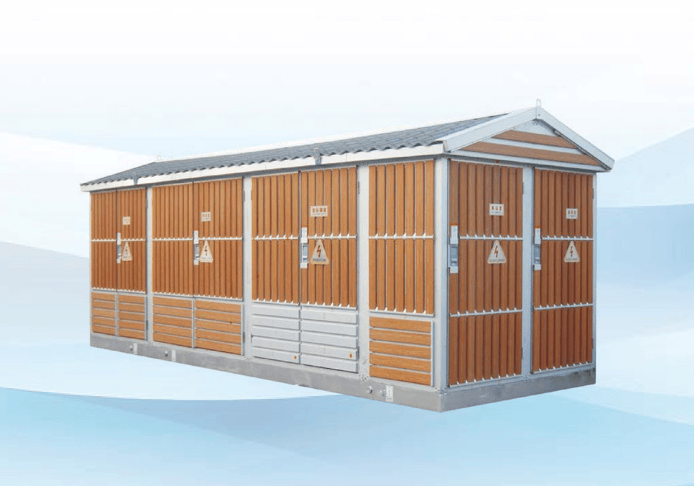
YB □ -12/0.4/1250 Outdoor Prefabricated Substation (European Style)
Shangrao Shangyu Intelligent Electric Co., Ltd.
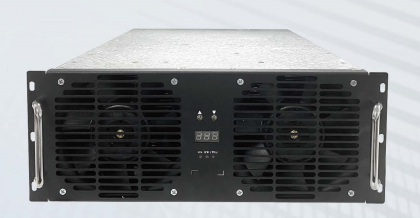
80kW Megawatt Supercharging Module TH80F10030C9
Shijiazhuang Tonhe Electronics Technologies Co., Ltd.