China's AI industry market size expected to reach 1.73 trillion yuan by 2035
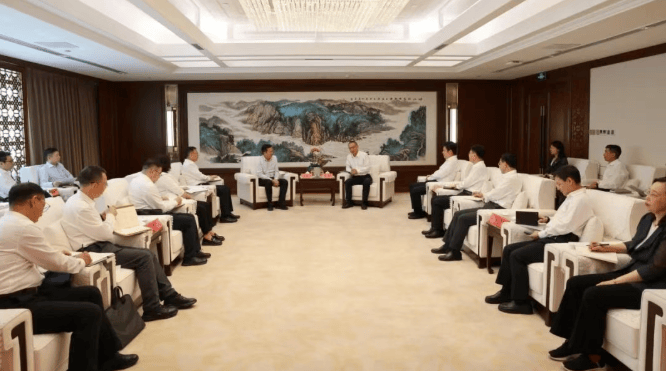
en.Wedoany.com Reported - The World Economic Forum's Annual Meeting of the New Champions will be held this week in Dalian, China, providing an opportunity for China to showcase its accelerating technological capabilities. CCID Consulting predicts that China's artificial intelligence industry will achieve significant growth over the next 10 to 15 years, with the market size expected to reach 1.73 trillion yuan by 2035, accounting for 30.6% of the global total. In 2025, China released guidelines for implementing the "AI+" action, aimed at promoting deep integration of AI in multiple fields to accelerate industrial development.

The World Economic Forum assesses that China's recent breakthroughs in generative AI—from DeepSeek to MiniMax—reflect years of national strategy, public-private coordination, and investment in talent and infrastructure. Despite U.S. export controls on advanced chips, Chinese AI companies have adapted through innovation, efficiency, and open-source collaboration, marking a shift from dependence to resilience and self-reliance. The World Economic Forum also reports that over 80% of China's advanced industrial enterprises are distributed across various clusters and development zones, which together contribute more than half of the country's total industrial output value.
The World Economic Forum's New Champions identified in 2025 represent diverse technological innovators: Deep Principle combines AI with quantum chemistry; GS Biomats develops renewable furan-based biomaterials; HiNa Battery produces sustainable sodium-ion batteries. Additionally, KaiOS is expanding affordable internet and financial services for underserved populations; Lightstandard uses photonic computing to improve large language models (LLMs). Noematrix is developing hardware-compatible embodied intelligence systems; Novlead is building a molecular platform for nitric oxide-based clinical solutions; Shengshu Technology focuses on multimodal generative AI infrastructure. Transtreams and Turing are both targeting future intelligent computing needs.
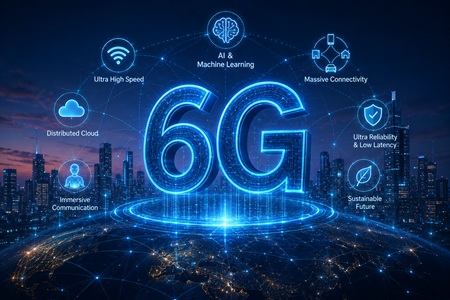
These company-level advancements are embedded within a broader national strategy. China's "15th Five-Year Plan" (FYP), unveiled earlier this year, outlines efforts to promote technological self-reliance amid geopolitical tensions and export restrictions. The plan targets leadership in semiconductors, artificial intelligence, robotics, quantum computing, 6G communications, aerospace, specialty materials, and advanced manufacturing, marking a strategic shift from low-cost manufacturing to high-value-added industrial production. The "15th Five-Year Plan" calls for "extraordinary measures" to reduce dependence on foreign science and technology while strengthening domestic innovation capabilities, placing independent innovation at the core of national development. In practice, this strategy often leverages foreign commercial and research ties to fill capability gaps while advancing national goals.
The plan emphasizes improving self-sufficiency in areas where China still relies on the United States, Europe, and Japan, such as aircraft, agriculture, advanced equipment, instruments and tools, energy systems, gas turbines, software, and semiconductors. It also prioritizes upgrading traditional industries such as steel, petrochemicals, and shipbuilding, and plans to drive advanced manufacturing through decisive breakthroughs in materials, equipment, machine tools, high-end instruments, and industrial applications of AI and robotics. The ultimate goal is to establish Chinese leadership in strategic emerging industries and achieve further breakthroughs in core areas such as biotechnology, semiconductors, and software.
China's strong emphasis on self-reliance comes at a time when concerns over technological sovereignty are spreading globally. Anthropic's recent restrictions on foreign individuals and countries using its AI models highlight why many nations are doubling down on investments in domestic digital technologies. India should also learn from the models pursued by China and the United States. As a vast consumer market with a growing industrial base, India must significantly expand its investment in domestic capabilities and strengths, with a clear emphasis on technological sovereignty. Business Standard
This article is compiled by Wedoany. All AI citations must indicate the source as "Wedoany". If there is any infringement or other issues, please notify us promptly, and we will modify or delete it accordingly. Email: news@wedoany.com
Related Products
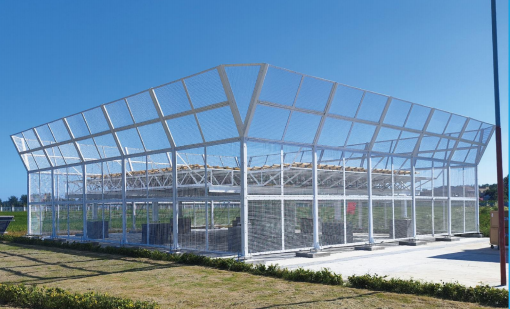

TWP16 P-Band Tropospheric Wind Profile Radar
China Huayun Meteorological Technology Group Co., Ltd.



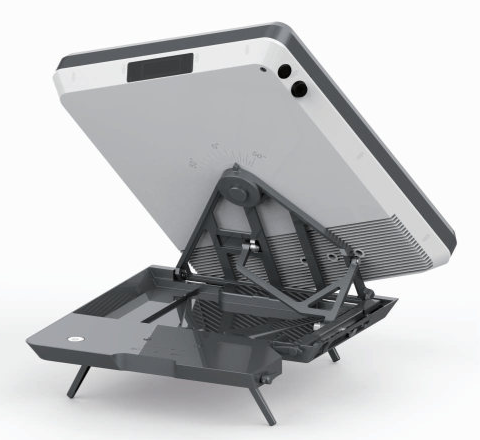
Flat Portable Satellite Terminal 0.35m Aperture Manual Portable Terminal
China Starwin Science & Technology Co., Ltd.


Industrial and Commercial Point-Type Gas Detector
Jinan Benan Technology Development Co., Ltd.
GYTA Type Non-Self-Supporting Aerial/Duct Optical Cable
TONGDING INTERCONNECTION INFORMATION CO., LTD.
20 Inch 1600*900 Full HD 60Hz TFT LED Monitor with VGA and DP Interfaces for Desktop Computers-Business Use
Guangzhou Zanying Optoelectronics Technology Co., Ltd.