India's Semiconductor Accelerates Construction, Tata's INR 270 Billion Plant Nears Production
en.Wedoany.com Reported - India's semiconductor industry is transitioning from policy announcements to substantive construction, advancing simultaneously on multiple fronts including diplomatic cooperation, mass production by startups, and national industrial projects. However, this process still faces severe challenges such as supply chain disruptions, funding gaps, and insufficient infrastructure.
U.S. Secretary of State Marco Rubio's four-day visit to India has injected new momentum into the bilateral technology partnership. Semiconductors and artificial intelligence have risen to the top of the technology cooperation agenda. The vehicle for this is the "TRUST Initiative," signed in February 2025, which provides an overarching framework for bilateral technology cooperation. Within this framework, the "US-India Roadmap on Accelerating AI Infrastructure" aims to identify and remove financing and infrastructure constraints hindering India's construction of U.S.-origin AI data centers. The "National Champions Program" under the American AI Exports Program allows the U.S. Department of Commerce to include leading AI companies from partner countries in the U.S. AI export stack, and the Indian government has begun soliciting proposals from domestic enterprises. Additionally, the U.S. State Department's $250 million "Pax Silica Fund" aims to leverage over $1 trillion in capital for critical global infrastructure projects. India has joined the "Pax Silica Alliance" and is actively seeking the fund's participation in its semiconductor projects.
Domestically in India, a number of startups have moved beyond the prototype stage and begun shipping to customers. Netrasemi is piloting its flagship chip with three customers, with commercial shipments expected by mid-2027. Mindgrove Technologies, backed by PeakXV Partners, targets applications including biometrics, motor controllers, and industrial electronics. It expects commercial rollout by the end of this year and plans to ship hundreds of thousands of chips in 2025. Agnit Semiconductors, focusing on gallium nitride chips for defense applications, is piloting with three defense units and expects to ship 5,000 to 10,000 chips within nine months. This progress is driven by two national schemes—the "Design-Linked Incentive scheme" and the "Production Linked Incentive scheme"—as well as the "India Semiconductor Mission," launched in December 2021. Policy impacts are evident in adjacent sectors: government restrictions on uncertified networked CCTV cameras have effectively kept Chinese brands like Hikvision and Dahua out of the Indian market, opening new opportunities for domestic manufacturers. Indian chip companies hope for similar deliberate market creation—a policy signal that gives Indian buyers a reason to source locally rather than defaulting to cheaper Taiwanese or Chinese alternatives.
The Gulf conflict has had a ripple effect on the global components market. Shipments from China have dropped by 21%, printed circuit board (PCB) lead times have extended from 7 days to 25 days, and chemicals used in semiconductor manufacturing are also facing disruptions. This has forced chipmakers to substitute materials during production and prioritize availability over optimal technical specifications based on supply chain partner recommendations. The cost of a single tape-out exceeds $3 million, with production-grade quality requiring several times that amount; errors or delays pose existential threats to startups.
Union Minister of Electronics and Information Technology Ashwini Vaishnaw confirmed that the Tata Semiconductor Assembly and Test facility (located in Jagiroad, Assam) is expected to begin production within the current fiscal year. The plant, with an investment of INR 270 billion, employs advanced packaging technologies such as flip-chip and integrated system-in-package, and is designed to produce up to 48 million semiconductor chips per day, targeting markets including automotive, electric vehicles, telecommunications, and consumer electronics. Along with Micron's facility in Gujarat, these projects represent the industrial scale of India's semiconductor strategy. The first phase of the India Semiconductor Mission has concluded, with the last two projects approved for Crystal Matrix and Suchi Semicon, involving a total financial outlay of approximately INR 760 billion, providing up to 50% financial support for related projects.
Despite the flurry of activity, India's semiconductor ecosystem still lacks robust foundries and domain-specific outsourced semiconductor assembly and test (OSAT) capabilities. NITI Aayog predicts that by 2035, India's semiconductor market will reach approximately $200 billion, with the global market expected to exceed $1.5 trillion. Currently, 90% to 95% of India's semiconductor demand is met through imports. The path recommended by NITI Aayog requires a cumulative investment of $135 billion to $180 billion over the next decade, with the government expected to commit at least one-third. India is urged not to compete from a disadvantageous position in the global race but to define its own unique path, building a semiconductor value chain worth $120 billion to $150 billion.
This article is compiled by Wedoany. All AI citations must indicate the source as "Wedoany". If there is any infringement or other issues, please notify us promptly, and we will modify or delete it accordingly. Email: news@wedoany.com
Related Products

Comprehensive Mining Automation Control System
Beijing Tianma Intelligent Control Technology Co., Ltd.
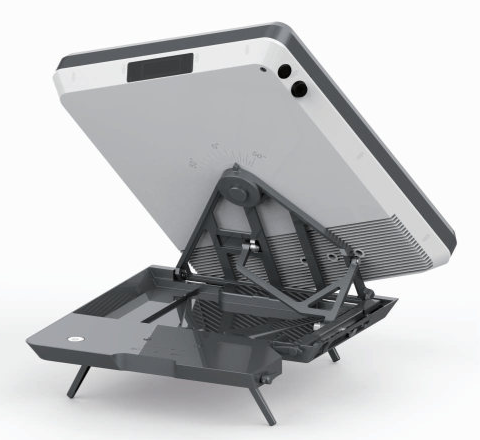
Flat Portable Satellite Terminal 0.35m Aperture Manual Portable Terminal
China Starwin Science & Technology Co., Ltd.
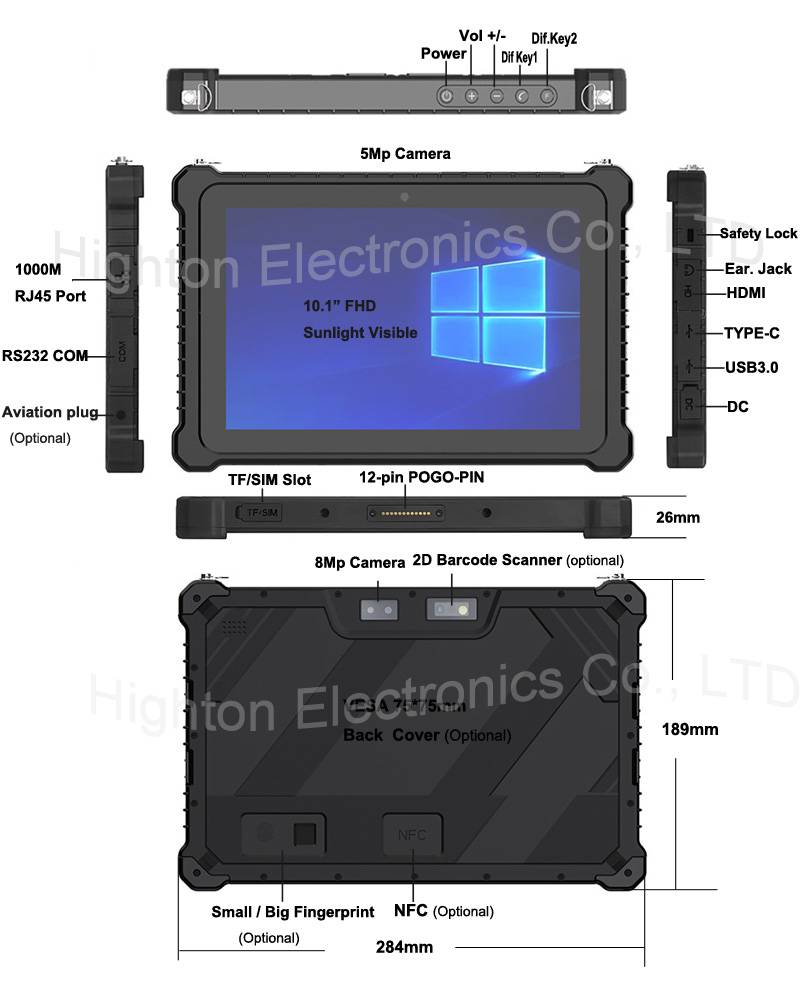
Hot Selling 10 Inch Intel N5100 I5 I7 FHD 8 +128GB 16+256GB Win10 Pro Win11 Pro 4G 5G Rugged Tablet PC Pad with NFC Barcode
Highton Electronics Co., Ltd.

G.652.D Wavelength-extended Non-dispersion Shifted Single-mode Optical Fiber
HONGAN GROUP CO., LTD.
Automatic Aiming Laser Remote Obstacle Removal Robot
Pinggao Group Weihai High-Voltage Apparatus Co., Ltd.
MUX Series Communication Interface Device for Security and Stability Control System
Nanjing NR Electric Co., Ltd.