Samsung Electronics Launches UFS 5.0 Mobile Storage Products
en.Wedoany.com Reported - On June 23, Samsung Electronics announced the development of Universal Flash Storage (UFS) 5.0 products, targeting next-generation on-device AI mobile devices, premium smartphones, XR devices, and AI wearables. The product achieves a maximum data transfer bandwidth of 10.8 GB/s, with sequential read speeds up to 10.8 GB/s and sequential write speeds up to 9.5 GB/s.
UFS is the core storage standard in mobile devices, handling tasks such as system booting, application loading, file reading and writing, image processing, and AI data calls. As on-device AI models gradually enter smartphones and mobile terminals, devices need to process larger volumes of data locally. Storage speed, power consumption, and package size are becoming key factors affecting the AI experience.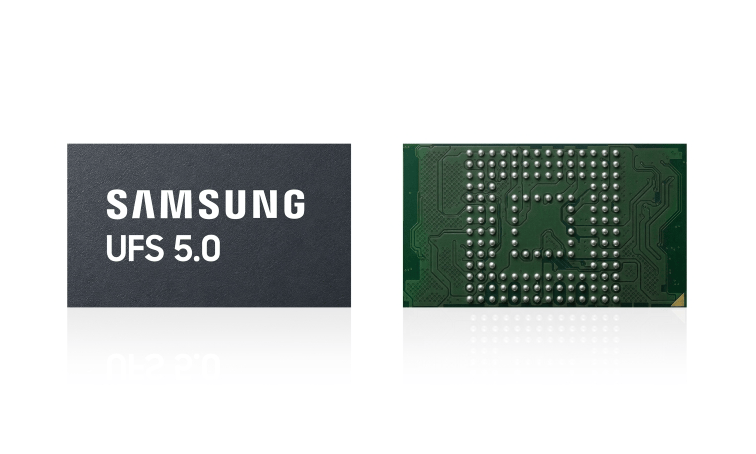
Compared to the previous generation UFS 4.1, Samsung UFS 5.0 more than doubles the transmission bandwidth. Higher read and write speeds help reduce data latency during processes such as large language model operations, image generation, real-time translation, multimodal recognition, and on-device inference. For mobile terminals, storage is no longer just a component for saving photos, videos, and application data, but a critical foundational element in the AI computing chain.
Samsung UFS 5.0 adopts the latest JEDEC embedded storage interface standard. In addition to performance improvements, it also strengthens power consumption control. Through technologies such as clock gating and multi-voltage, the product achieves over 40% better energy efficiency compared to Samsung UFS 4.1. Under the constraints of limited space and battery capacity in mobile devices, improved energy efficiency reduces the power required for the same amount of data transmission, providing a better foundation for prolonged on-device AI operation.
Package size is also a key aspect of this product upgrade. Samsung has reduced the UFS 5.0 package size to 7.5 mm × 13 mm × 0.9 mm, further shrinking it compared to the previous generation. A smaller package helps improve internal space utilization in terminals, leaving more design margin for batteries, heat dissipation, camera modules, and other AI hardware components. It also facilitates integration into more compact product forms such as XR headsets and wearables.
Samsung plans to begin mass production of UFS 5.0 in the fourth quarter of 2026, with capacity specifications up to 1 TB. As flagship mobile terminals gradually adopt on-device large models, AI imaging, real-time voice interaction, and multimodal applications, UFS 5.0 will become a crucial storage link in the upgrade of mobile AI hardware.
The competitive focus of such products will shift from sheer capacity comparison to a comprehensive capability encompassing "speed, power consumption, package size, and AI workload adaptation." For terminal manufacturers, faster mobile storage can improve application response, model loading, high-definition video processing, and local AI inference experiences. For storage manufacturers, the mass production of UFS 5.0 also signals that mobile NAND products are entering a new cycle of performance upgrades.
Samsung's launch of UFS 5.0 indicates that mobile storage is undergoing a role change driven by on-device AI demands. In the future, the AI experience of smartphones and mobile terminals will depend not only on processors and memory but also on whether the storage system can continuously, stably, and with low power consumption provide data support for models and applications.
This article is compiled by Wedoany. All AI citations must indicate the source as "Wedoany". If there is any infringement or other issues, please notify us promptly, and we will modify or delete it accordingly. Email: news@wedoany.com
Related Products




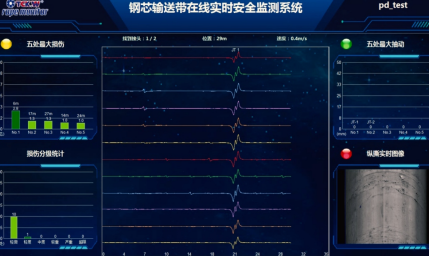
Conveyor Belt Intelligent Monitoring System
LUO YANG WIRE ROPE INSPECTION TECHNOLOGY CO., LTD.
TWP16 P-Band Tropospheric Wind Profile Radar
China Huayun Meteorological Technology Group Co., Ltd.

Mine Explosion-proof and Intrinsically Safe Industrial Ethernet Ring Network (10 Gigabit/Gigabit)
Chongqing Mas Sci&Tech Co., Ltd.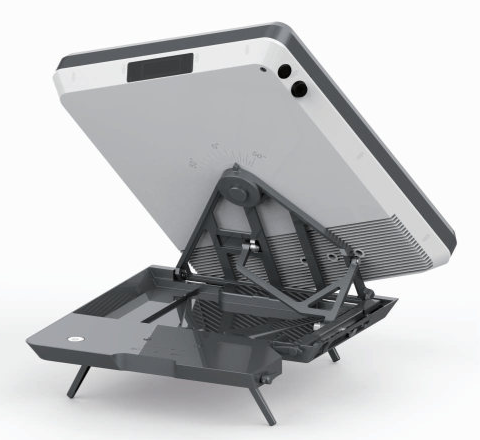
Flat Portable Satellite Terminal 0.35m Aperture Manual Portable Terminal
China Starwin Science & Technology Co., Ltd.