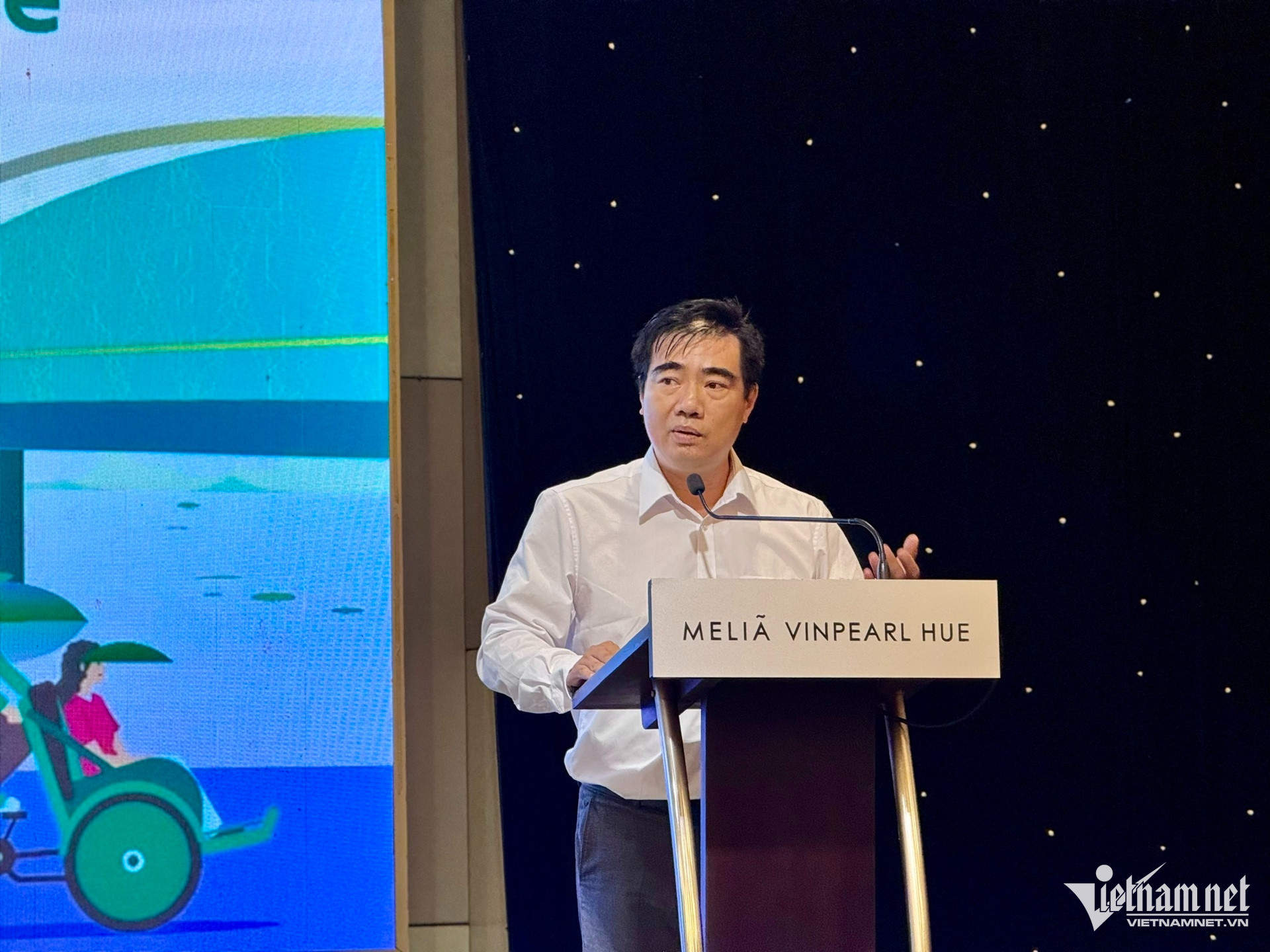
en.Wedoany.com Reported - On June 23, during the 2026 Volcano Engine Force Conference, Volcano Engine President Tan Dai responded to topics including AI Coding, large model valuation logic, and enterprise-level Agent deployment. He stated that AI Coding is a core manifestation of the generalization capabilities of large models and a key capability for supporting complex Agent tasks, adding that ByteDance has already implemented AI Coding production processes on a large scale internally.
Tan Dai believes that the current market's high valuation of large models with code productivity is supported by industrial logic. Code tasks typically require the model to understand requirements, deconstruct engineering structures, invoke tools, make continuous modifications, and complete deliveries. Compared to ordinary text generation, this better reflects the model's reasoning, planning, and execution capabilities. As AI Coding capabilities improve, large models are no longer just auxiliary Q&A tools but are beginning to enter real R&D processes and complex task execution chains.
Doubao 2.1 Pro is the latest flagship model released by Volcano Engine this time. This model is upgraded in four directions: code delivery, long-range Agent tasks, multimodal understanding, and enterprise-level stable operation, emphasizing requirement understanding, long-term planning, and engineering delivery capabilities. Tan Dai stated that Doubao 2.1 Pro has crossed the qualitative change point for production-level productivity and can be deployed in real industrial code iteration tasks, such as chip RTL development.
For AI Coding to enter enterprise production processes, the key is not just whether the model can write code, but whether it can be embedded into the R&D management system. Real software engineering includes stages such as requirement review, technical proposals, code generation, unit testing, problem localization, version management, specification constraints, and security review. Only when the model can work continuously through these stages and collaborate with existing enterprise toolchains can AI Coding transform from a personal efficiency tool into an organizational-level production process.
ByteDance's large-scale internal practice indicates that AI Coding is moving from the trial phase to the engineering deployment phase. For large internet companies with complex R&D systems, large codebases, and frequent business iterations, if the model can be used stably in internal processes, it means it must meet high requirements in context understanding, code style adaptation, task decomposition, and error fixing. This also represents a significant shift in enterprise-level AI applications from "being able to generate" to "being able to deliver."
However, the production-level deployment of AI Coding still requires clear boundaries. Model-generated code does not mean completely replacing engineers; critical code, architectural design, security strategies, and deployment decisions still require human review. Especially in high-reliability scenarios such as chip RTL development, infrastructure code, financial systems, and industrial control, model outputs must undergo testing, verification, and responsibility chain management, and cannot simply rely on a single generation result.
From an industry trend perspective, AI Coding is becoming an important entry point for the commercialization of large models. Compared to chat assistants, code productivity is more directly linked to enterprise efficiency, R&D costs, and delivery cycles, and it is easier to measure input-output effects. Model vendors that can build advantages in code tasks, long-range Agents, and enterprise toolchain integration will find it easier to enter core enterprise workflows.
Key areas for future observation will focus on the stability of Doubao 2.1 Pro in real code delivery tasks, enterprise customer adoption, long-range Agent execution capabilities, validation in industrial code scenarios like chip RTL, and whether ByteDance's internal AI Coding process can further form a replicable enterprise-level methodology. As AI moves from content generation to the engineering delivery phase, code productivity will continue to be a core metric in the competition among large models.
This article is compiled by Wedoany. All AI citations must indicate the source as "Wedoany". If there is any infringement or other issues, please notify us promptly, and we will modify or delete it accordingly. Email: news@wedoany.com