India Telecom Testing Market to Exceed $1 Billion by Mid-Decade, Becoming the World's Most Demanding Testing Ground
en.Wedoany.com Reported - A critical mindset currently prevails in the telecom testing and measurement domain: envision the most stringent testing scenario, encompassing a multi-vendor cloud-native 5G standalone core network, an open RAN deployment from four different equipment vendors, satellite backhaul extending to rural areas, AI-driven network optimization running in real-time, and a device ecosystem spanning the world's cheapest mobile phones and the most demanding industrial IoT sensors. India is the only market globally that simultaneously meets all these conditions at a national scale while enduring constant cost pressure, making it the most critical market for the future of telecom testing.

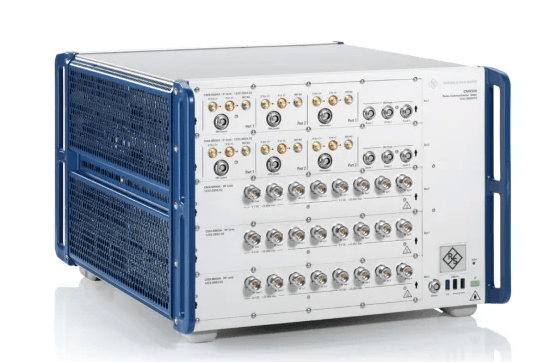
The global telecom test equipment market, valued at just over $5 billion in 2026, is expected to double by the mid-2030s, but this figure underestimates the transformation underway. The core question in testing has shifted from discrete, point-in-time queries like "Does the component meet specifications?" to the more complex "Does the entire multi-vendor, AI-driven network fabric perform as promised under real traffic, real threats, and unknown failure conditions?" This shift from compliance to behavior, from lab to continuous production, and from interface metrics to end-to-end observability is what 5G standalone, open RAN, and AI-native operations demand of the industry. The Indian market, simultaneously undertaking the world's most ambitious 5G rollout, building a domestic telecom manufacturing base, and connecting 1.4 billion people with diverse connectivity needs, makes the pressure to answer these harder questions particularly acute.
India's 5G journey is structurally different from that of South Korea or the United States, generating unique testing requirements. Jio (Reliance Jio) and Airtel (Bharti Airtel) are simultaneously covering hyper-dense cities, rapidly growing mid-sized towns, and vast rural areas. The same network must serve both 5G phones and 2G/4G devices, and each operator holds a complex portfolio of low-band, mid-band, and mmWave spectrum, creating coverage and interference scenarios that standardized test templates cannot fully anticipate. Indian operators serve one of the world's most cost-sensitive user bases, with average revenue per user among the lowest in major markets, creating a "T&M paradox": complexity demands sophisticated validation, but economics require every rupee of testing investment to deliver significant efficiency gains or prevent field failures. The Indian T&M market is expected to surpass $1 billion by mid-decade, with telecom being a direct and indirect driver.
The government's push for domestic telecom manufacturing adds a unique dimension to India's T&M story. The Production Linked Incentive scheme, the India Semiconductor Mission, and BSNL's (Bharat Sanchar Nigam Limited) fully indigenous 4G core network and RAN deployment built by TCS (Tata Consultancy Services) and C-DoT (Centre for Development of Telematics) are creating new testing demands. When BSNL deploys indigenously developed protocol stacks, it cannot rely on global vendors' validation frameworks and requires vendor-neutral test platforms. Startups from the Indian Institutes of Technology (IITs) and defense research institutions are entering the 5G ecosystem, and each component must be validated against global standards. With its deliberate investment in open, vendor-neutral test platforms, India has the opportunity to become a regional hub for open RAN and private 5G testing.
India's policy orientation towards a multi-vendor ecosystem makes it the world's most important natural laboratory for open RAN validation. Decomposing the RAN into components from different vendors generates numerous interfaces and potential integration issues that only become apparent under real traffic. This is driving a shift towards continuous, production-embedded testing. CI/CD practices (continuous integration and continuous delivery pipelines) are transitioning from software development to telecom operations, automatically triggering test suites upon new code commits. Indian operators have limited tolerance for discovering integration failures in production.
The satellite dimension adds another layer of complexity. Starlink, the Jio-SES (Reliance Jio and SES joint venture), and Eutelsat OneWeb all hold Indian licenses and await spectrum allocation, expanding the test matrix into new territory. Non-terrestrial paths introduce Doppler shifts, dynamic channel conditions, and handover behaviors that terrestrial channel simulators were not designed to handle. When 5G-Advanced services depend on terrestrial base stations, low-Earth orbit satellites moving at 27,000 km/h, and devices that may switch mid-session, timing and synchronization requirements tighten significantly. Integrated satellite-terrestrial networks have become an active deployment issue in India, particularly for rural health, education, and critical infrastructure. For example, a telemedicine link for a remote health center in Manipur, running over satellite backhaul and integrated with a 5G core, cannot afford to discover edge-case handover failures after deployment—this is an urgent reality.
The most fundamental change in 2026 is the embedding of AI. The AI-RAN initiative places machine learning models directly into scheduling, beamforming, and power control loops. AI systems cannot be validated purely against specifications, as they behave differently under untrained conditions. For Indian operators, AI-assisted operations are the only mechanism to maintain nationwide network quality without proportionally scaling human operational staff, making AI behavior validation a strategic imperative.
India is not just a large market for telecom testing; its scale, cost sensitivity, multi-vendor complexity, regulatory ambition, and the combination of domestic manufacturing with satellite-terrestrial integration constitute a testing environment more demanding than any dedicated laboratory. A testing methodology that works in India will work almost anywhere. In 2026, India's 5G testing story holds not only local significance but global guiding relevance.
This article is compiled by Wedoany. All AI citations must indicate the source as "Wedoany". If there is any infringement or other issues, please notify us promptly, and we will modify or delete it accordingly. Email: news@wedoany.com
Related Products


Conveyor Belt Intelligent Monitoring System
LUO YANG WIRE ROPE INSPECTION TECHNOLOGY CO., LTD.



MUX Series Communication Interface Device for Security and Stability Control System
Nanjing NR Electric Co., Ltd.


Automatic Aiming Laser Remote Obstacle Removal Robot
Pinggao Group Weihai High-Voltage Apparatus Co., Ltd.
Mine Explosion-proof and Intrinsically Safe Industrial Ethernet Ring Network (10 Gigabit/Gigabit)
Chongqing Mas Sci&Tech Co., Ltd.
GYTA Type Non-Self-Supporting Aerial/Duct Optical Cable
TONGDING INTERCONNECTION INFORMATION CO., LTD.