Korea Railroad Research Institute Launches Development of Autonomous Track Inspection Robot
en.Wedoany.com Reported - The Korea Railroad Research Institute has launched a project to develop core technologies for track inspection using railway-specific robots, aiming to train robots for autonomous and safe inspections by utilizing virtual railway environments as "dynamic learning fields."
![Railway environment data augmentation and domain transformation based on the World Foundation Model. [Image source: Korea Railroad Research Institute]](https://img.wedoany.com/2026/0623/20260623050924826.jpg)
Announced by the Korea Railroad Research Institute (KRRI) on the 22nd, the project's core objective is to enable autonomous inspection robots to repeatedly learn and experience various track conditions and hazardous situations within a virtual railway environment built through digital twins, transforming the traditional reactive railway maintenance system into a preventive and autonomous inspection system.
Railway track inspection currently faces multiple complex challenges, including safety risks for workers, insufficient data on rare defects, and variations in inspection results due to differences in operator proficiency. The scarcity of actual accident or defect cases makes it difficult to obtain sufficient AI learning samples and impossible to repeatedly conduct hazardous situation experiments in real-world settings. To overcome these limitations, the institute plans to use drones, cameras, and LiDAR to collect data on real tracks and surrounding environments, construct a three-dimensional virtual space, and use it as a digital learning field for training robot visual perception and motion control.
In the virtual space, sudden variables such as track intrusions and obstacles, as well as weather conditions like heavy snow and rain, environmental conditions such as nighttime and backlighting, and terrains including gravel and slopes, can be set up. Data learned by the robot in the virtual space will be fed back into the actions of the physical robot and continuously optimized using actual operational data.
Byeon Seong-jun, a senior researcher at KRRI and project leader, stated that the performance of autonomous inspection robots depends on their ability to accurately perceive and move stably. The core of this research is to enhance the robot's visual perception capabilities using the World Foundation Model and to ensure stable movement control strategies in real track environments through reinforcement learning and Sim2Real (simulation to reality) technology.
This article is compiled by Wedoany. All AI citations must indicate the source as "Wedoany". If there is any infringement or other issues, please notify us promptly, and we will modify or delete it accordingly. Email: news@wedoany.com
Related Products

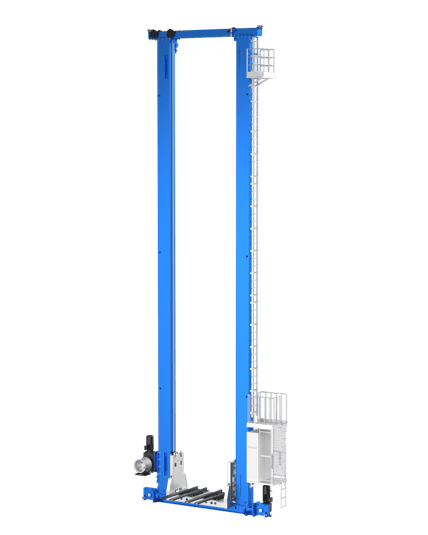
Pallet Solutions Product Line: HD3000 Double-Column Stacker Crane
Zhongding Intelligent (Wuxi) Technology Co., Ltd.

Industrial and Commercial Point-Type Gas Detector
Jinan Benan Technology Development Co., Ltd.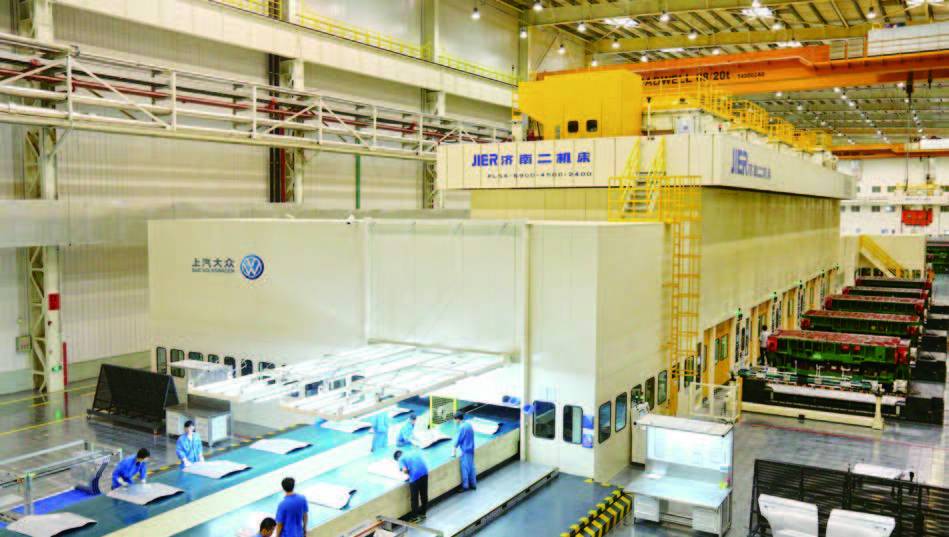
High-Speed Flexible Fully Automatic Stamping Production Line
JIER Machine-Tool Group Co., Ltd.
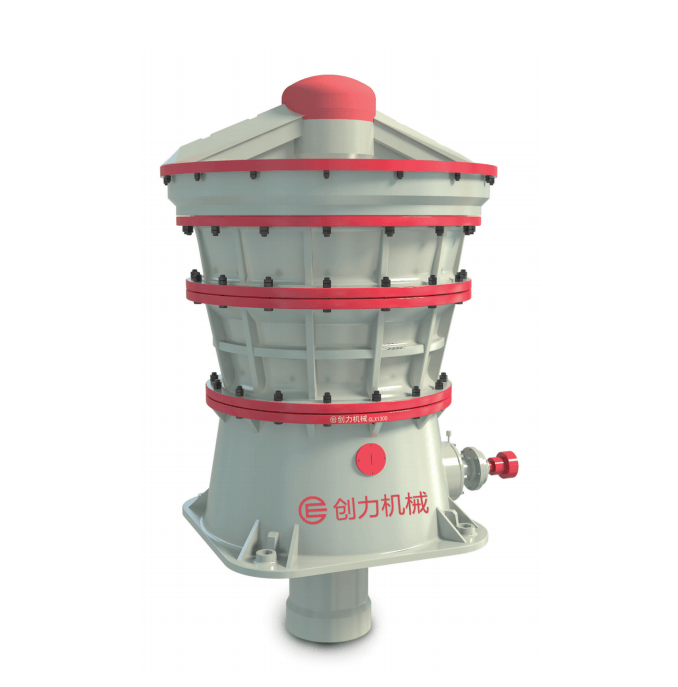
CLX Series Intelligent Hydraulic Gyratory Crusher
Guangdong CHUANGLI intelligent machinery Equipment Co., LTD