Brazilian House Committee Approves AI Consumer Rights Bill
en.Wedoany.com Reported - The Science, Technology, and Innovation Committee of the Brazilian Chamber of Deputies approved a bill on Tuesday (23) that establishes clear protection rules for consumer use scenarios of products and services based on artificial intelligence (AI). This proposal consolidates three bills—No. 4.089/2024, No. 5.441/2025, and No. 6.586/2025—and systematically defines corporate obligations regarding transparency, review of automated decisions, data protection, and prevention of algorithmic discrimination.

The approved text, proposed by Congressman David Soares (Pode-SP), serves as a substitute for the aforementioned three bills. Key obligations include: when consumers interact with AI systems or receive content generated by them, this must be communicated in a clear and prominent manner. Companies must also explain, in plain language, the purpose of the algorithms used and their potential impact on the user experience.
In fully automated decision-making scenarios, such as credit approval or medical diagnostic support, consumers have the right to request information about the criteria used in the decision, subject to industrial and commercial confidentiality regulations. The text also grants consumers the right to contest automated decisions and request human review.
Another provision states that consumers have the right to request the deletion of their personal data from databases used to train or operate AI systems, except for information within the credit ecosystem, provided this complies with the rules of the Consumer Protection Code and the General Data Protection Law (LGPD).
The proposal explicitly prohibits the use of AI systems that result in algorithmic discrimination based on race, gender, age, disability, or other legally protected factors. To enforce this requirement, companies must conduct regular audits to identify and correct potential biases, while establishing complaint channels and mechanisms to compensate consumers who may suffer harm.
Penalties for violations include warnings with a deadline for corrective action, fines ranging from 1% to 5% of the company's revenue, and suspension of the use of the AI system.
The substitute text also amends the Medical Law (Law No. 12.842/2013), allowing the use of AI systems certified by administrative authorities to revalidate prescriptions for long-term medication, with specific implementation rules to be defined by the executive branch.
According to the rapporteur, some provisions of the bill draw on guiding principles established by the European AI Act and Brazil's General Data Protection Law. In the justification submitted to the committee, David Soares noted that the increasing use of AI in areas such as health, public security, and finance reinforces the need for consumer protection mechanisms.
The proposal is being reviewed on a conclusive basis and must also be examined by the Consumer Protection Committee and the Constitution, Justice, and Citizenship Committee (CCJC). To take final effect, the text must also be approved by the Chamber of Deputies and the Federal Senate.
This article is compiled by Wedoany. All AI citations must indicate the source as "Wedoany". If there is any infringement or other issues, please notify us promptly, and we will modify or delete it accordingly. Email: news@wedoany.com
Related Products






Hot Selling 10 Inch Intel N5100 I5 I7 FHD 8 +128GB 16+256GB Win10 Pro Win11 Pro 4G 5G Rugged Tablet PC Pad with NFC Barcode
Highton Electronics Co., Ltd.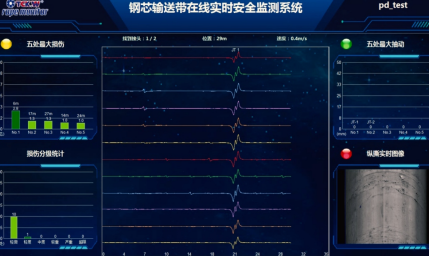
Conveyor Belt Intelligent Monitoring System
LUO YANG WIRE ROPE INSPECTION TECHNOLOGY CO., LTD.
Industrial and Commercial Point-Type Gas Detector
Jinan Benan Technology Development Co., Ltd.
GYTA Type Non-Self-Supporting Aerial/Duct Optical Cable
TONGDING INTERCONNECTION INFORMATION CO., LTD.
Mine Explosion-proof and Intrinsically Safe Industrial Ethernet Ring Network (10 Gigabit/Gigabit)
Chongqing Mas Sci&Tech Co., Ltd.

20 Inch 1600*900 Full HD 60Hz TFT LED Monitor with VGA and DP Interfaces for Desktop Computers-Business Use
Guangzhou Zanying Optoelectronics Technology Co., Ltd.