Canada's Sage Potash Commences Drilling to Advance 298 Million Tonne Potash Feasibility Study
en.Wedoany.com Reported - Canada's Sage Potash Corp. (TSX: SAGE; OTC: SGPTF) recently announced that it has obtained all necessary approvals and permits from local county authorities and the state of Utah to commence drilling operations at the Sage Plain project in San Juan County, Argentina. Final approval was granted following a routine on-site inspection by officials from the Utah Oil, Gas and Mining Division on May 28, along with representatives from the company and its contractors, which also included the submission of the required drilling reclamation bond. CEO J. Patricio Varas stated that this is a significant milestone in advancing the project, with the technical team designing a focused multi-purpose drilling program aimed at generating geological and hydrogeological data to upgrade resource classification and move the project into the feasibility study stage.
The company has appointed Westrock Energy Services (USA) Inc. to manage and coordinate the drilling program and has selected Drake Well Service Inc. as the drilling contractor. Drilling will target potash-rich horizons to expand and enhance resource confidence. The agenda also includes a comprehensive hydrogeological assessment, involving targeted drill stem tests in horizons with sufficient water flow to evaluate yield and water quality, with a focus on saline non-potable aquifers critical for solution mining operations. Additional activities will include fluid sampling, detailed water analysis, core mechanical testing, and a full suite of geophysical wireline logging after coring. Extracted core samples will be sent to independent laboratories for geological logging, geochemical sampling, and assaying to verify the grade, continuity, and thickness of potash mineralization. The company expects to release an updated resource estimate integrating current drilling results with historical data in the third quarter of 2026, laying the foundation for subsequent feasibility studies, detailed engineering design, and development planning.
Historical drilling identified significant potash mineralization in the upper and lower Cycle 18 horizons at a depth of approximately 2,100 meters. The current drilling strategy includes drilling a 1.275-kilometer step-out hole to the north-northeast from the initial exploration hole, which served as the basis for the current resource estimate. The company's current NI 43-101 report indicates an inferred resource of 298 million tonnes at a grade of 36%–46% KCl. Two high-grade potash horizons have been identified: the upper Cycle 18 horizon contains 179 million tonnes at 46% KCl with a thickness of 7.26 meters, and the lower Cycle 18 horizon contains 128 million tonnes at 35.77% KCl with a thickness of 5.46 meters. The company believes it can release an updated 43-101 report and current drilling results by September.
Last year, the U.S. Department of Agriculture (USDA) awarded the company a $14 million grant as part of a fertilizer production expansion program, targeting an annual production capacity of 300,000 tonnes of potash. The grant supports U.S. efforts to boost domestic potash production, as the country currently imports over 90% of its potash, with Canada supplying approximately 81% and Russia providing about 15%. The U.S. produces only 5%–10% of the potash it needs. In May 2025, U.S. President Donald Trump designated potash as a critical mineral via executive order, a designation confirmed by the Department of the Interior and the U.S. Geological Survey in August 2025, bringing strategic advantages such as federal funding opportunities and tax credits. The company plans to use solution mining, which is considered safer and more environmentally friendly than conventional mining.
A preliminary economic assessment (PEA) released last September showed project capacity starting at 150,000 tonnes per year and later expanding to 300,000 tonnes per year. At an 8% discount rate, the unlevered after-tax net present value (NPV) is $502 million, with an internal rate of return (IRR) of 39%. The resource estimate is 298 million metric tonnes at a potash (KCl) grade of 42.1% (equivalent to 26.6% K₂O), with insoluble content below 1% and carnallite content at only 0.01%. The project is expected to generate positive cash flow within two years and achieve rapid payback within five years, with startup costs estimated at $155 million (including $26 million in contingency costs and $16 million in indirect construction costs).
Current potash prices are approximately $400 per tonne. According to the U.S. Geological Survey, Utah alone holds an estimated 2 billion tonnes of potash. The global potash market was valued at $62.37 billion in 2024 and is projected to grow at a compound annual growth rate of 5.3% from 2024 to 2032, with agricultural end uses accounting for 93.1% of revenue share and the potassium chloride segment holding 53.0%. In the U.S., 85% of potash is used in agriculture, and potash has no substitute as a fertilizer, also being used in the production of soap, glass, and ceramics.
Approximately 4% of Sage Potash shares are held by management and insiders, with the remainder primarily held by retail investors. The company has a market capitalization of approximately C$22.29 million, with 171.24 million shares outstanding and a 52-week trading range of C$0.12 to C$0.50. Bob Moriarty wrote on 321gold.com that the company's market cap is approximately 0.4% of its NPV, calling the stock "ridiculously cheap."
This article is compiled by Wedoany. All AI citations must indicate the source as "Wedoany". If there is any infringement or other issues, please notify us promptly, and we will modify or delete it accordingly. Email: news@wedoany.com
Related Products

Quick-Change Single-Seat Control Valve / Quick-Change High-Pressure Single-Seat Control Valve
Beijing Consen Automation Technology Co., Ltd.
Industrial and Commercial Point-Type Gas Detector
Jinan Benan Technology Development Co., Ltd.
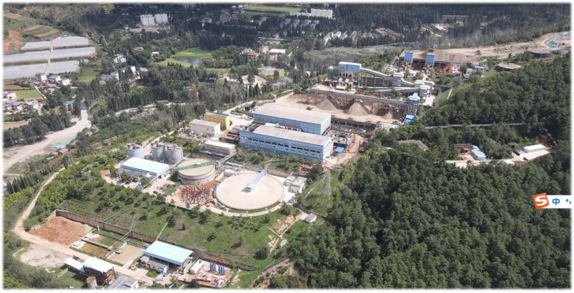
Yunnan Phosphorus Chemical Group Co., Ltd. 2 Million t/a Phosphorus Ore Mining and Beneficiation Project
China Bluestar Lehigh Engineering Corporation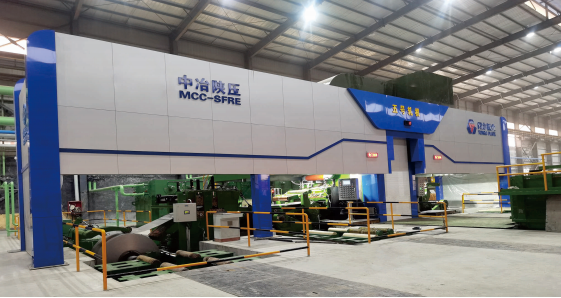
1050-1750mm Steel Strip Single-stand Reversible Cold Rolling Production Line
MCC-SFRE HEAVY INDUSTRY EQUIPMENT CO., LTD.