en.Wedoany.com Reported - The EU has invested €20 billion in the AI Gigafactory project to build data centers and provide computing power for training AI models. The tender, launched in February 2025, will be fully allocated by early 2027, aiming to build five AI gigafactories equipped with 100,000 state-of-the-art GPUs, approximately four times the capacity of current-generation data centers. Based on this premise, Nicoleta Kyosovska, Research Assistant at the Centre for European Policy Studies (CEPS), analyzed the pros and cons, truths, and myths surrounding European AI data centers and AI gigafactories. This project is part of the Continental AI Action Plan and the InvestAI initiative.
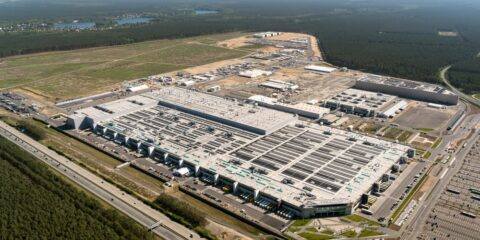
Meanwhile, according to Nicoleta Kyosovska's analysis, private companies such as Nvidia and Microsoft are investing $10 billion in new data centers in Portugal and have announced plans to build their own gigafactories across Europe, competing with the EU's initiative.
According to the AI World Index, a specialized index developed by CEPS, between 2023 and 2025, U.S. AI startups accounted for 66% of venture capital investments, compared to just 12% in Europe. The U.S. holds 32% of AI patents, Europe 18%, and China 21%. Based on the Stanford AI Index, in 2024, the U.S. developed over 50% of the most significant AI models, while Europe accounted for only 6% of patents. A recent report from a University of Oxford team shows that the U.S. and China independently operate over 90% of AI-specific data centers. U.S. tech giants operate 87 computing hubs globally, Chinese companies control 39, and European companies only 6.
Data center site selection involves multiple factors, including technical, economic, environmental, and regulatory considerations, requiring a balance between power access and grid connection, energy costs, cooling capacity, proximity to economic zones, and approval speed. Tech hubs like Dublin, Frankfurt, and Amsterdam have reached their electricity consumption limits. According to a November 2025 CEPS report, ecosystem vitality is also a key criterion. The report notes that, aside from a few regions such as Île-de-France, Stuttgart, Cologne, Bologna, Catalonia, Sweden, and Poland, the match between centers of excellence and selected locations is not strong. The European Commission needs to clarify whether AI hubs are intended to host scientists and startups or whether geographic criteria should be prioritized.
Goldman Sachs Research predicts that by 2027, data center electricity demand will grow by 50%, and by the end of the decade, it will increase by 165% (compared to 2023). Each gigafactory's energy consumption is equivalent to that of a medium-sized city. A new report from the French Environment and Energy Management Agency (Ademe) forecasts that by 2035, data center electricity consumption could increase 3.7-fold to 37 TWh. To align with green transition goals, gigafactories must be located in regions with abundant low-carbon energy and sufficient cooling capacity, relying on new renewable energy sources. These facilities may consume excessive resources, negatively impacting local environments and social ecosystems, potentially conflicting with other demands such as electric vehicles, industrial electrification, or building decarbonization, or competing with agriculture for water resources.
Based on electricity prices and the share of renewable energy, Scandinavian countries rank first, followed by Austria, Portugal, and Spain. The CEPS report indicates that only AI facilities in Sweden and Finland can enjoy prices (EUR/MWh) similar to those in U.S. and Chinese hubs. In the first round of gigafactory tenders in June 2025, the European Commission received 76 proposals from 16 member states. Discussions are ongoing to consolidate consortia and prioritize countries with better conditions, i.e., regions that already have battery factories and low energy access costs.
Brussels believes these massive investments will enhance Europe's technological sovereignty, giving it the internal capacity to train cutting-edge models. However, based on information disclosed so far, all gigafactories will use Nvidia chips. The report notes that this could undermine EU technological sovereignty. Supplier diversification is also insufficient to ensure sovereignty. To train AI models on Nvidia GPUs, the company's CUDA programming and computing model must be used, meaning Nvidia also controls chip-software compatibility, limiting alternatives. Infrastructure alone is insufficient to make the EU independent; investments in training, open data, interoperability standards, and ethical frameworks are equally crucial.
The tender requires gigafactories to develop mutual cooperation plans, but publicly available information is currently limited. The only exception is the Franco-German cooperation announcement, allowing joint training in computing between the two facilities. Collaboration between the regions hosting gigafactories is minimal in terms of co-authorship and joint publication of scientific papers. From a technical perspective, these facilities are not yet integrated, lacking a unified access point for computing resources or fiber optic connections. While there is a clear intention for technical and organizational cooperation between facilities, significant effort is required to achieve it.
This article is compiled by Wedoany. All AI citations must indicate the source as "Wedoany". If there is any infringement or other issues, please notify us promptly, and we will modify or delete it accordingly. Email: news@wedoany.com