Zacatecas, Mexico Launches Automotive Cluster with Annual Exports Exceeding $480 Million
en.Wedoany.com Reported - The government of Zacatecas, Mexico has officially launched a specialized initiative to establish an automotive cluster, integrating local manufacturing into the national supply chain to mitigate the impact of international trade uncertainties.
Jorge Miranda, the State Secretary of Economy of Zacatecas, announced this strategic shift during the state's weekly press conference, following the directives of Governor David Monreal. The plan aims to leverage the state's automotive industry, which currently generates over 23,000 direct jobs, surpassing the traditional mining sector in employment scale.
The state's automotive ecosystem already includes more than 25 established auto parts companies. The Ministry of Economy noted that Zacatecas' key competitive advantage lies in its geographic location—within a 400-kilometer radius, there are 22 large automotive assembly plants distributed across neighboring states. These plants include factories of BMW and General Motors in San Luis Potosi; Ford, Honda, Toyota, and General Motors in Guanajuato; Nissan in Aguascalientes; and General Motors in Coahuila. The state is also approximately a six-hour drive from the Texas border.
Zacatecas currently exports over $480 million worth of automotive products annually. State officials pointed out that the presence of heavy equipment manufacturers such as Epiroc and Sandvik, backed by Swedish and Finnish capital, provides a solid industrial foundation for the cluster strategy.
The cluster strategy has been adjusted in response to global trade developments, particularly considering the anticipated renegotiation of the United States-Mexico-Canada Agreement (USMCA). State officials acknowledged that the potential shift from a trilateral framework to separate bilateral agreements between the U.S. and Mexico, and Mexico and Canada, has increased the difficulty of attracting new Original Equipment Manufacturer (OEM) assembly plants. Consequently, the state has shifted its investment attraction focus to Tier 2 and Tier 3 suppliers.
During the first planning meeting with industry companies and chambers of commerce, Miranda Castro stated: "We are laying the groundwork for collaborative efforts between the government and the industry. The establishment of the automotive cluster will enable us to strengthen production capacity, integrate into more competitive value chains, and create more development opportunities for Zacatecas." Despite broader trade pressures, Miranda noted that the current tariff structure has accelerated the nearshoring trend, with some parts manufacturing shifting from traditional production hubs in Asia, particularly China, to Zacatecas.
To offset the expected inflationary pressures and job contraction resulting from U.S. tariff policies, the state government has accelerated domestic labor programs. The government invested over 80 million Mexican pesos (approximately $4.6 million) in 50 regional job fairs, successfully placing 34,000 job seekers and providing self-employment scholarships and training programs for 17,000 people. According to data from the Ministry of Economy, Zacatecas added more than 4,000 formal jobs during this period.
To support local businesses in integrating into the expanding supply chain, the state government expanded the credit program "Fondo Plata Zacatecas," disbursing 1.8 billion Mexican pesos (approximately $103 million) in financing—an amount equivalent to the total loans issued by the previous two administrations combined. The fund offers business credit lines of up to 10 million Mexican pesos (approximately $575,000) at a fixed annual interest rate of 7%.
This industrial promotion initiative is being carried out in parallel with a 500 million Mexican peso (approximately $500 million) telecommunications infrastructure expansion project. Coordinated with the Federal Electricity Commission (CFE), the project deployed 185 cellular base stations, 323 internet access points, and 950 kilometers of fiber optic cable, extending cellular and data coverage to all 58 municipalities in Zacatecas. Citing data from the National Institute of Statistics and Geography (INEGI), the Ministry of Economy reported that the number of households with internet access in the state subsequently grew by 20%, and the number of mobile phone users increased by 10%.
This article is compiled by Wedoany. All AI citations must indicate the source as "Wedoany". If there is any infringement or other issues, please notify us promptly, and we will modify or delete it accordingly. Email: news@wedoany.com
Related Products


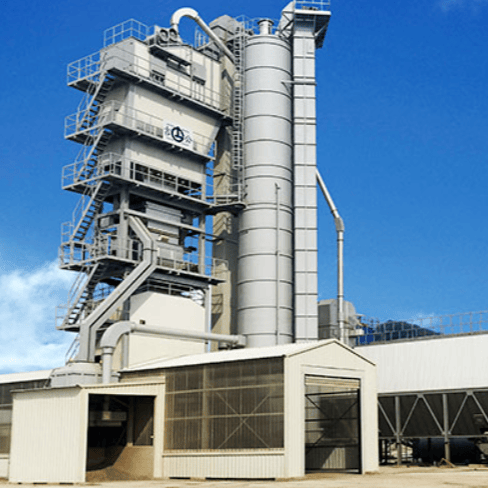
LBH4000 Batch Environmental Protection Asphalt Mixing Plant | Asphalt Batching Plant | Asphalt Mixing Plant
Jilin Province Road Construction Machinery Co., Ltd.


CAP1400 main feedwater flow nozzle flowmeter.
Jiangsu Hongda Instrument Technology Co., LTD.


Pneumatic high-pressure wear-resistant ball valve
Zhejiang Deca Control Valve Meter Co., Ltd.