Tencent's Marvis iOS Version Launches, Completing Full Platform Coverage
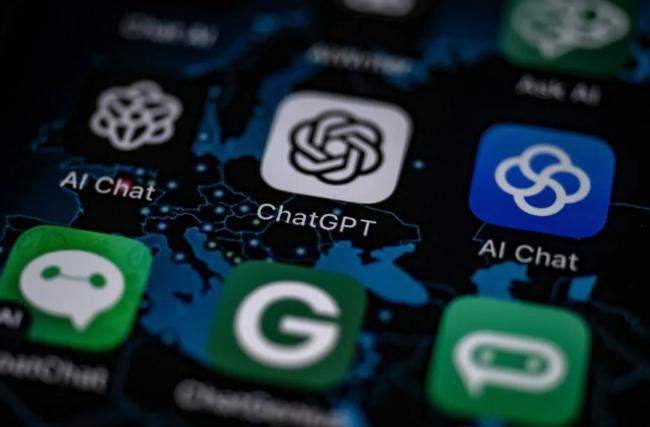
en.Wedoany.com Reported - Recently, the iOS version of Marvis, the operating system-level AI assistant developed by Tencent in China, officially launched on the Apple App Store in the United States. Following the release of the Android, Windows, and macOS versions on May 20, Marvis has now achieved full coverage across mobile and PC platforms, forming an AI assistant product layout spanning smartphones, computers, and multiple operating systems.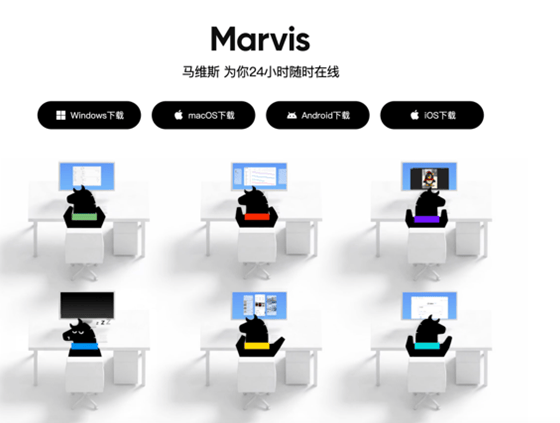
Marvis is not positioned as an ordinary chatbot but rather as an entry-level AI assistant closer to the operating system. When users invoke Marvis on different devices, it can understand task objectives, break down execution steps, and connect with files, applications, browsers, search functions, and computer system capabilities. With the launch of the iOS version, users are no longer limited to using Marvis on PC or Android devices; Apple phone users can also join this cross-device collaborative system.
The key capability of this iOS version lies in the linkage between mobile and PC devices. Users can connect to and control their computer devices via their phones, viewing real-time task execution screens on the computer and directly taking over operations when necessary. For those who frequently need to remotely handle files, download materials, check task progress, or temporarily operate a computer, Marvis turns the phone into a portable computer entry point, rather than merely providing simple notifications or command sending.
Cross-device connectivity is the core change after Marvis achieved full coverage. Android phones can connect to macOS computers, and iOS phones can connect to Windows computers, freeing users from being confined to the same system ecosystem. In the past, remote control, file processing, and task collaboration across different operating systems often required multiple tools to work together; Marvis attempts to integrate these scattered capabilities into a single AI assistant, allowing users to initiate tasks in natural language, with the system handling invocation and execution.
Product capabilities are also rapidly iterating. Since its launch on May 20, Marvis has delivered 21 versions within a month, averaging one update every one to two days. New features include session management, voice input, mobile-to-Mac remote control, persona management, and low-resource mode. For an operating system-level AI assistant, high-frequency iteration not only means feature additions but also continuous adjustments to interaction methods, permission boundaries, and multi-device collaborative experiences.
Privacy and local capabilities are key to whether such products can be used long-term. Marvis offers Efficiency Mode and Local Mode, with the former leaning toward cloud-device collaboration and the latter emphasizing on-device large model capabilities and keeping files off the cloud. Users are more sensitive to data security when handling local documents, images, computer settings, and personal information; if a system-level AI assistant is to truly enter daily office and personal computer management scenarios, it must maintain a clear division between convenience and security boundaries.
With the launch of the iOS version, Tencent's terminal coverage for its operating system-level AI assistant is essentially complete. This not only adds a mobile entry point but, more importantly, pushes the AI assistant from single-device applications to multi-device collaboration. The phone handles instant invocation and remote control, the computer manages more complex file, system, and application operations, while cloud and local models respectively support efficiency and privacy needs.
AI assistants are evolving from "answering questions" to "executing tasks." After Marvis achieves mobile and PC coverage, the next competitive focus will not just be on model response quality but on whether it can stably understand user intent, accurately invoke system capabilities, handle cross-device tasks, and establish reliable confirmation mechanisms for operations involving file deletion, system modifications, payments, and privacy. For Tencent, the launch of the Marvis iOS version marks the product entering a more complete terminal ecosystem phase, and its user retention and actual usage effectiveness in high-frequency scenarios such as office work, file management, remote computer control, and personal knowledge bases remain to be observed.
This article is compiled by Wedoany. All AI citations must indicate the source as "Wedoany". If there is any infringement or other issues, please notify us promptly, and we will modify or delete it accordingly. Email: news@wedoany.com
Related Products



Mine Explosion-proof and Intrinsically Safe Industrial Ethernet Ring Network (10 Gigabit/Gigabit)
Chongqing Mas Sci&Tech Co., Ltd.



Industrial and Commercial Point-Type Gas Detector
Jinan Benan Technology Development Co., Ltd.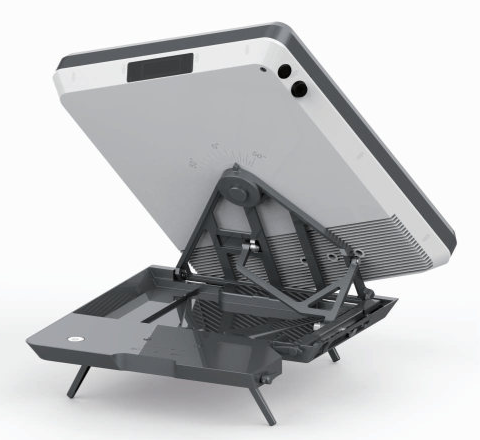
Flat Portable Satellite Terminal 0.35m Aperture Manual Portable Terminal
China Starwin Science & Technology Co., Ltd.