Apple's Mac high-end chip strategy shifts, pivoting to AI-focused M7
en.Wedoany.com Reported - On June 25, Apple is making a significant adjustment to its Mac chip roadmap. The next-generation high-end Mac processors will no longer follow the usual pattern of releasing M6 Pro and M6 Max versions, but will instead leap directly to the new M7 series designed for artificial intelligence computing. The base M6 processor is still planned for launch as early as this year, primarily for entry-level Mac products; the Pro and Max chips for high-end MacBook Pro, Mac mini, and Mac Studio models are expected to be introduced in 2027 as part of the M7 series.
This adjustment breaks the product cadence Apple has maintained since the launch of the M-series chips. Previously, from M1 to M5, each generation of base chips was typically followed by high-end versions such as Pro, Max, and Ultra, covering professional-grade laptops, workstations, and desktop devices. If the M6 retains only the base version, it means Apple will skip the high-end models of a chip generation for the first time, concentrating more R&D resources on the next-generation AI-oriented processing platform.
The base M6 will still handle the Mac product line refresh. This chip is expected to be used in entry-level MacBook Pro, Mac mini, iMac, as well as some iPad Pro and iPad Air models. Compared to the current M5, the M6 will improve memory bandwidth, graphics processing capabilities, and neural engine performance to support more local AI tasks, graphics rendering, and multimedia processing scenarios. For entry-level devices, the value of the M6 lies in maintaining the product update rhythm and providing higher baseline computing power for on-device AI applications.
The high-end chips directly pivot to the M7, with a focus on stronger computing, graphics, and on-device AI capabilities. The M7 series is expected to be redesigned around AI workloads, enhancing unified memory bandwidth, GPU parallel processing capabilities, and neural engine performance. As generative AI, image generation, video processing, code assistance, professional creation, and local large model inference enter the personal computer landscape, the competition for high-end Mac chips is no longer just about traditional CPU and GPU performance, but about the synergy between on-device AI capabilities and the software ecosystem.
For professional users, the Pro and Max chips handle more complex productivity tasks. Video editing, 3D modeling, software compilation, engineering design, graphics rendering, and AI inference all require higher memory bandwidth, more powerful GPU cores, and more stable energy efficiency. If Apple skips the M6 Pro and M6 Max, the update cycle for high-end Mac products may see phased changes, and some devices planned to feature new designs, new screens, or higher-performance chips may also be rescheduled according to the M7 timeline.
This adjustment also reflects how AI is changing the design logic of consumer-grade chips. In the past, Mac chip upgrades focused on CPU performance, GPU core count, energy efficiency, and process node iteration; now, on-device AI inference, model loading speed, memory bandwidth, neural accelerators, and system-level scheduling capabilities are becoming key competitive metrics. If Apple positions the M7 series as the core platform for next-generation high-end Mac chips, it indicates a desire to reserve greater performance headroom for AI applications in professional-grade computers.
Apple's in-house chip development system has always emphasized deep integration of hardware, system, and application ecosystem. After the Mac chip roadmap adjustment, the M6 may serve as a transitional base chip, while the M7 takes on the task of upgrading the high-end platform. This arrangement helps Apple concentrate more advanced AI computing power on professional devices, but it may also extend the waiting period for some high-end Mac users awaiting the next generation of Pro and Max chips.
Going forward, attention should be paid to the launch timing of M6-based Macs, the actual production schedule of the M7 Pro and M7 Max, and whether Apple will simultaneously adjust the product line plans for MacBook Pro, Mac Studio, and Mac mini. If the M7 series is delivered on schedule in 2027 to drive high-end Mac chip upgrades, Apple's Mac chip strategy will shift from conventional generational iteration to a more pronounced AI-first architecture upgrade.
This article is compiled by Wedoany. All AI citations must indicate the source as "Wedoany". If there is any infringement or other issues, please notify us promptly, and we will modify or delete it accordingly. Email: news@wedoany.com
Related Products




MUX Series Communication Interface Device for Security and Stability Control System
Nanjing NR Electric Co., Ltd.
Mine Explosion-proof and Intrinsically Safe Industrial Ethernet Ring Network (10 Gigabit/Gigabit)
Chongqing Mas Sci&Tech Co., Ltd.
G.652.D Wavelength-extended Non-dispersion Shifted Single-mode Optical Fiber
HONGAN GROUP CO., LTD.

Automatic Aiming Laser Remote Obstacle Removal Robot
Pinggao Group Weihai High-Voltage Apparatus Co., Ltd.
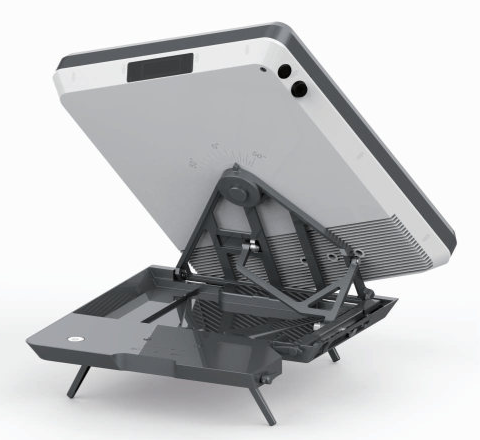
Flat Portable Satellite Terminal 0.35m Aperture Manual Portable Terminal
China Starwin Science & Technology Co., Ltd.

Industrial and Commercial Point-Type Gas Detector
Jinan Benan Technology Development Co., Ltd.