en.Wedoany.com Reported - Mexican President Claudia Sheinbaum and Federal Electricity Commission (CFE) Director Calleja announced the launch of a 21.377 billion peso rural electrification plan, aiming to build 45,182 infrastructure projects to supply power to 8,247 communities currently without grid access by 2028, raising the national electricity coverage rate to 99.99%. This construction scale is more than double the cumulative total of the previous two administrations.
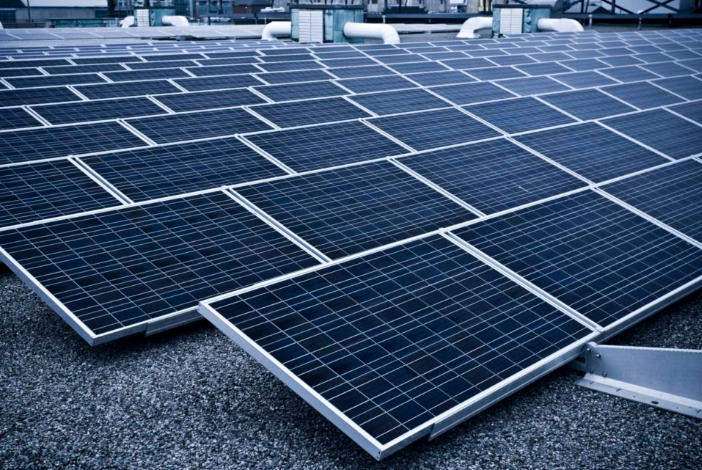
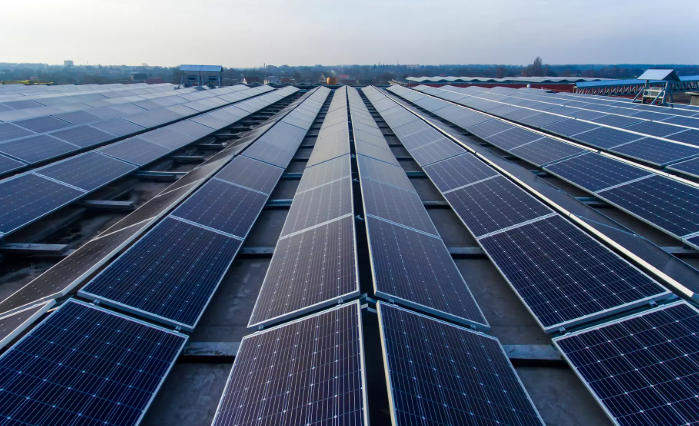
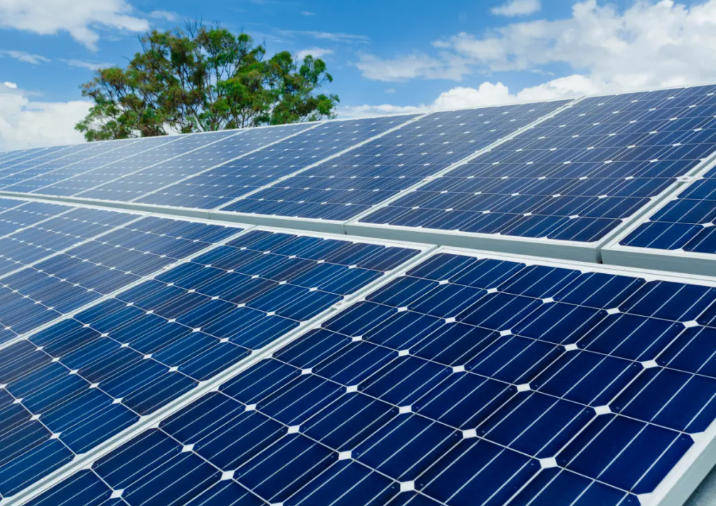
The plan is based on the 2024 constitutional reform, which for the first time recognizes "energy justice" as a legal right. Projects prioritize indigenous and remote communities in central and southern Mexico, utilizing photovoltaic panels and solar microgrids in areas where terrain prevents grid extension. Mexico's current electrification rate is 99.85%, with 50 million registered users. This 21.4 billion peso investment differs from CFE's broader 200 billion peso electricity investment plan, primarily addressing electricity access issues caused by distribution gaps rather than insufficient generation capacity.
URSUS Energy has signed a FEED-EPC framework agreement with Samsung E&A to develop the $2.1 billion Coatzacoalcos-PODEBIS LNG terminal in Veracruz state, with a designed annual capacity of 2.1 million tons and first export targeted for the end of 2029. Located within the PODEBIS Coatzacoalcos II industrial zone, this is the first project among 11 CIIT development poles to enter the construction phase. The feedstock gas is nitrogen-containing associated gas currently being flared or vented by Pemex, with Honeywell technology handling nitrogen pretreatment to convert the waste stream into an exportable commodity. The capital structure targets $1.2 billion in equity, of which approximately 70% is in substantive negotiations or has been committed. Bancomext has proposed a $450 million financing package for the first phase. Oppenheimer is managing the financing, which may include a green bond component.
The USMCA review has entered a critical phase, with Mexico's energy model becoming a core point of contention. U.S. and Mexican negotiators held a second round of bilateral talks in Washington on June 16, with a third round scheduled for July 20 in Mexico City. Former U.S. President Trump stated he "does not intend to renew" the agreement. The core energy conflict is structural: the U.S. and Canada demand competitive neutrality and non-discriminatory market access, while Mexico's 2025 constitutional reform stipulates CFE's generation share at 54%, priority dispatch rights, and at least 54% CFE equity in each private renewable energy project. These provisions are enshrined in the constitution and cannot be negotiated away at the trade table. Analysis outlines three possible scenarios: a difficult extension to the end of 2026, a series of annual reviews without a new agreement, or withdrawal from the agreement as a pressure tactic. Mexico relies on Texas pipelines for 80% of its natural gas imports, giving Washington commercial leverage beyond legal disputes. In this context, Mexican investment has already declined by approximately 10% year-on-year.
President Sheinbaum inaugurated the 745.4 MW González Ortega combined-cycle plant in Mexicali on June 21, adding a net 653 MW to the Northwest grid. Sheinbaum also announced that CFE will replace 4,000 aging wooden distribution poles in the city as part of a 73.9 billion peso infrastructure investment in Baja California. Sheinbaum confirmed that her government aims to increase CFE's generation share to 60%, above the constitutional minimum of 54%, through the construction of combined-cycle plants and a portfolio of 38 renewable energy projects awarded on June 5. With summer temperatures in Mexicali often exceeding 50 degrees Celsius, the National Energy Control Center (CENACE) had previously classified the Northwest grid as a high-risk point. This plant will provide a buffer for peak electricity demand in 2026.
Chevron has signed a 20-year agreement with Microsoft to develop Project Kilby, building behind-the-meter co-located natural gas generation facilities in the Permian Basin to directly power Microsoft data centers in West Texas starting in 2028, completely bypassing the regional utility grid. The project utilizes idle associated gas from oil production, converting a waste stream into dispatchable electricity. Microsoft's AI cloud revenue reached an annualized run rate of over $37 billion in the third quarter of 2026, up 123% year-on-year, with capital expenditures rising 84% to $30.88 billion. This model is seen as a direct template for Mexico's data center market, where the existing 279 MW of operational capacity is concentrated in states where CFE's transmission network is already near full capacity. Co-located on-site generation could provide a solution for reliability gaps.
An analysis by the German Association of Energy and Water Industries (bne) shows that the market-capitalization-weighted return on equity of the country's 18 largest distribution network operators reached 30.1% in 2024, double the previous year and nearly twice the average DAX return, driven primarily by EWE Netz (61%) and Westnetz (45%). However, grid connection waiting times are lengthening, digitalization lags, and renewable energy integration is slowing. The structural reason for this paradox is that regulated monopolies face no customer competition, and profitability does not automatically translate into investment. Germany's regulatory authority, the Federal Network Agency (BNetzA), is addressing this through the NEST reform, shortening the revenue cap cycle from five years to three. This situation shares similarities with Mexico: CFE holds a constitutionally protected monopoly over national transmission and distribution, but the problem is reversed—CFE is underfunded rather than overly profitable, with a real 16.7% cut in its 2026 capital budget, forcing CFE to rely on private capital through hybrid development plans to meet the grid expansion needed for demand growth.
This article is compiled by Wedoany. All AI citations must indicate the source as "Wedoany". If there is any infringement or other issues, please notify us promptly, and we will modify or delete it accordingly. Email: news@wedoany.com