U.S. Commerce Department Approves Anthropic to Restart Mitos 5 for Approximately 100 Companies
en.Wedoany.com Reported - The U.S. government has begun treating cutting-edge artificial intelligence models as national strategic assets, shifting to a government-led approach to control model access. On the 26th (local time), the U.S. Commerce Department approved Anthropic to restart its cybersecurity special mode "Mitos 5" service for a select group of trusted users. Commerce Secretary Howard Lutnick stated in a letter to Anthropic co-founder Tom Brown that the company has made significant progress in jointly developing risk mitigation standards with the government.
The restarted version of Mitos 5 was fully suspended by the U.S. government two weeks ago due to national security concerns. Its predecessor, Payble 5, posed risks of malicious exploitation due to its safety mechanisms' ability to automatically discover software vulnerabilities, leading Anthropic to cut off global user access to both models. Mitos 5 is offered through an invitation-only program called "Project Glass Wing," limited to cybersecurity and infrastructure companies. Participants include Apple, Google, Cisco, NVIDIA, Microsoft, as well as South Korea's SK Telecom, Samsung Electronics, and SK Hynix, totaling approximately 200 organizations.
According to CNBC, the Commerce Department's approval for restart covers about 100 companies and federal agencies. Payble 5 was the first Mitos-class model made publicly available, designed to avoid answering high-risk questions in areas like cybersecurity and biology, instead bypassing the lower-tier model Opus 4.8. Mitos 5 is a version with some safety mechanisms removed.
Competitor OpenAI announced on the same day that its new model, GPT-5.6, will first be released to a select group of government-approved partners. OpenAI stated that this restrictive measure is based on requests from the Trump administration. CEO Sam Altman described the government's phased release requirement as "bad news" but considered the approach of previewing the model to a subset of users as reasonable in itself.
Industry observers view these actions as the U.S. government acting as a "gatekeeper" to control the public release of AI models. Analysts suggest that the U.S. is extending its export control logic, previously applied to dual-use technologies like semiconductors under the guise of cybersecurity, to AI models. If this trend solidifies, it could raise the barriers for overseas companies and developers, including those in South Korea, to access cutting-edge U.S.-produced AI.
The fate of Payble 5 remains uncertain. According to Axios, the Trump administration may approve the resumption of Payble 5, which has been suspended for 15 days, as early as this week. This still requires final approval from the Department of Defense and the National Security Agency, but other relevant departments have already agreed to the restoration. Unlike Mitos 5, Payble 5 was previously open to the general public, and the conditions for its return are drawing significant attention. Anthropic has not yet decided whether to maintain free access after the restart or to introduce fees or identity verification procedures.
Both Anthropic and OpenAI have called on the U.S. government to establish legal and institutional frameworks for reviewing cutting-edge AI models before their public release. An executive order signed by President Trump requires the government to develop standards within 60 days, allowing for up to 30 days of pre-review before frontier models are made public.
This article is compiled by Wedoany. All AI citations must indicate the source as "Wedoany". If there is any infringement or other issues, please notify us promptly, and we will modify or delete it accordingly. Email: news@wedoany.com
Related Products


20 Inch 1600*900 Full HD 60Hz TFT LED Monitor with VGA and DP Interfaces for Desktop Computers-Business Use
Guangzhou Zanying Optoelectronics Technology Co., Ltd.

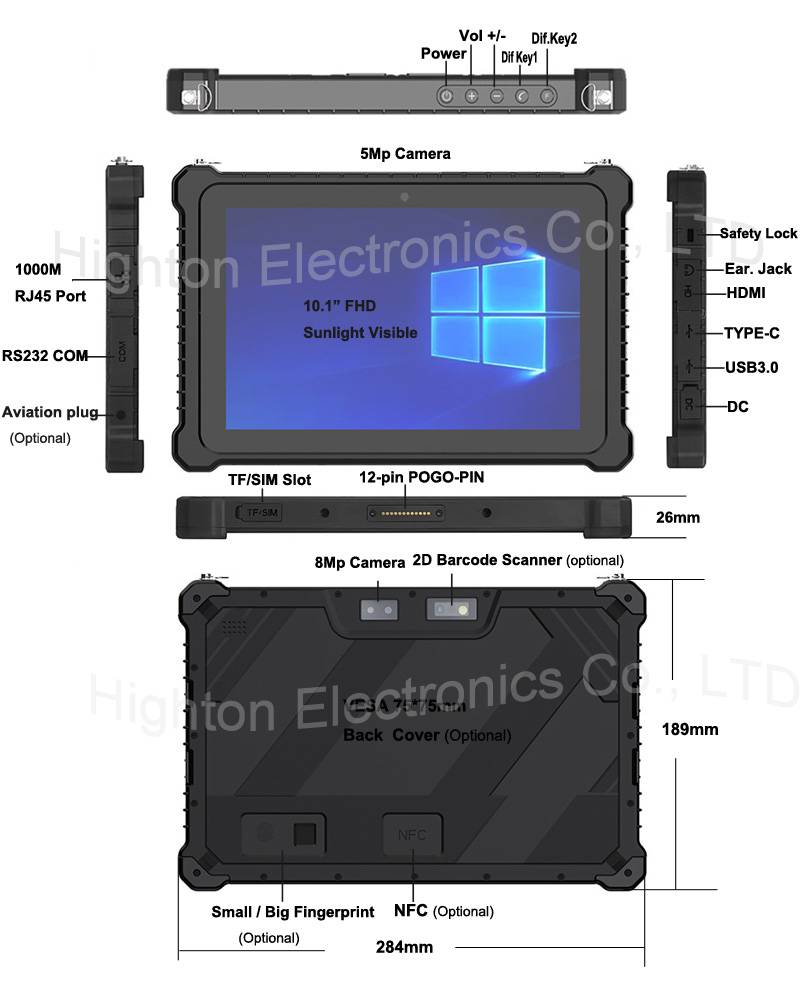
Hot Selling 10 Inch Intel N5100 I5 I7 FHD 8 +128GB 16+256GB Win10 Pro Win11 Pro 4G 5G Rugged Tablet PC Pad with NFC Barcode
Highton Electronics Co., Ltd.

Industrial and Commercial Point-Type Gas Detector
Jinan Benan Technology Development Co., Ltd.
Flat Portable Satellite Terminal 0.35m Aperture Manual Portable Terminal
China Starwin Science & Technology Co., Ltd.