AI from the Meiyi Team Successfully Reads Herculaneum Scroll Fragments for the First Time
en.Wedoany.com Reported - Artificial intelligence has, for the first time, successfully deciphered a complete scroll from among the 1,800 carbonized papyrus rolls discovered in the ruins of Herculaneum. This collection of papyri is the only ancient library to have survived intact. Carbonized during the eruption of Mount Vesuvius in 79 AD, they were rediscovered in the 18th century but had remained unreadable; attempts to unroll them only reduced them to dust. A method developed by Brent Seales, a computer scientist at the University of Kentucky, utilizes X-ray tomography and artificial intelligence to map the inner layers of compressed scrolls and reconstruct their flat surfaces without physical contact.
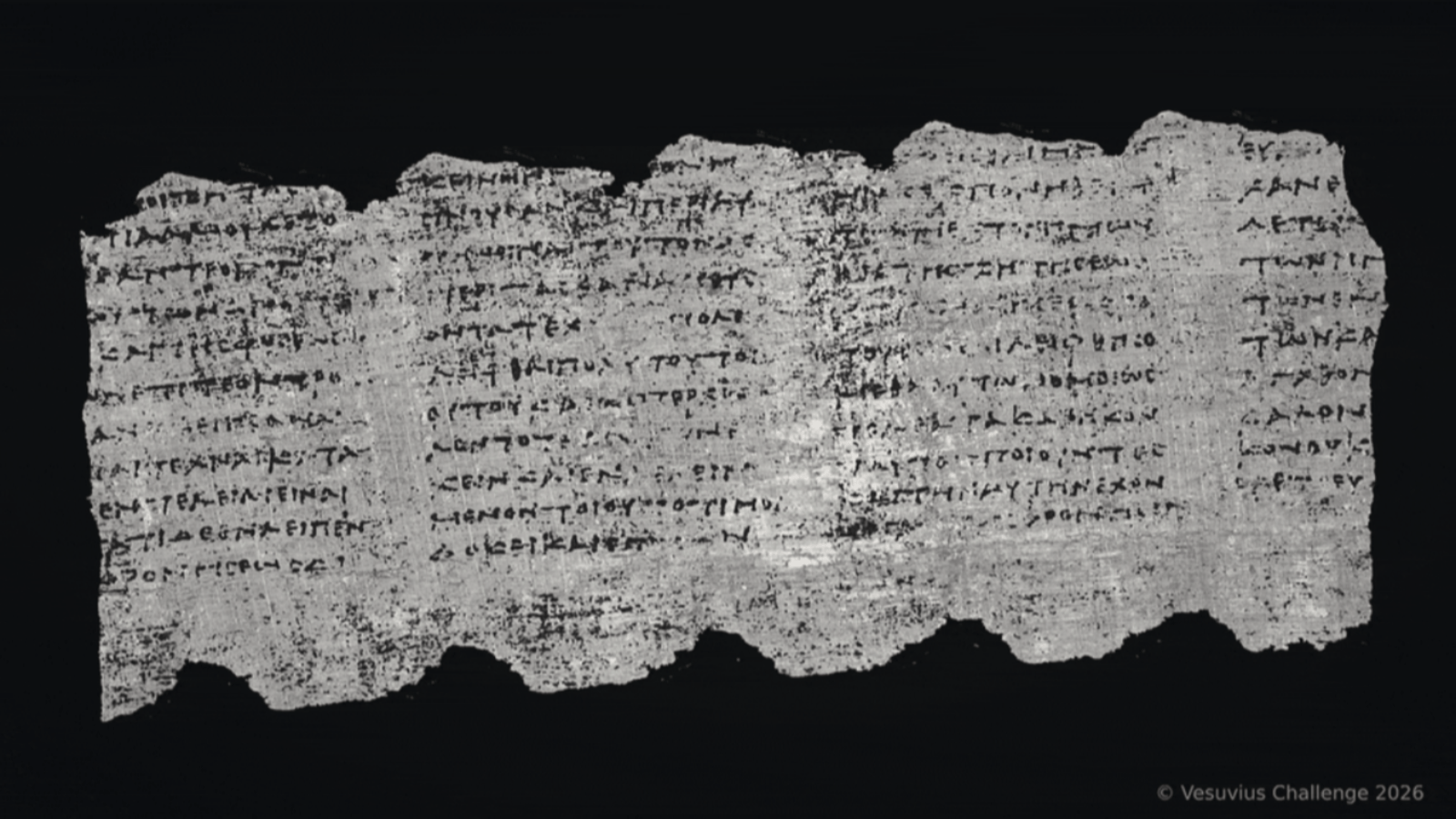
In 2023, Seales, along with investors Nat Friedman and Daniel Gross, founded the Vesuvius Challenge, an international competition with a $1 million prize, after having previously published results on unrolled scrolls. Two years later, the team attempted to read an unopened scroll and successfully deciphered a passage of ancient Greek from scroll number PHerc. 1667. The scroll originally had a diameter of 4.8 cm, but early attempts (scraping in the 19th century, fragment removal in the 1960s and 1980s) reduced its diameter to less than 2 cm and destroyed over half of the original text. Despite this, a fragment approximately 1.40 meters long, equivalent to 20 columns of ancient Greek, was preserved and is now readable for the first time in nearly two millennia.
Federica Nicolardi, chief papyrologist for the Vesuvius Challenge and associate professor at the University of Naples Federico II (Università di Napoli Federico II), dated the text to the 2nd or 3rd century BC, making it one of the oldest scrolls in the library. The title and author have been lost with the destroyed layers, but experts suspect the text comes from Chrysippus, a founding philosopher of Stoicism, whose works were previously known only through quotations by other authors. Thomas Coward, a classicist at the University of Bristol, believes that access to the original text, rather than quotations and summaries that may have been altered or interpreted by other authors, is highly significant.
Researchers also discovered a previously unknown title in scroll PHerc. 139: "Philodemus, On the Gods, Book VIII," revealing that a known historian's work actually comprised multiple volumes. A third scroll, PHerc. 172, provided over 70 additional columns from the same author, Philodemus, from his treatise "On Vices."
One year ago, Brent Seales, Vincent Christlein (head of the Computer Vision Group at Friedrich-Alexander University Erlangen-Nuremberg), and Federica Nicolardi received a Synergy grant from the European Research Council. The grant, amounting to €11.5 million, funds the project "UnLost: Uncovering Lost Knowledge from the Ancient Library of Herculaneum." This consortium brings together papyrologists and computer scientists to apply artificial intelligence methods to the entire collection. Seales stated at a press conference that the technology looks like magic, but it is not magic; it is an extraordinary means to achieve a higher goal. The Vesuvius Challenge now offers a €1 million prize to the first individual or team that can fully decipher an additional scroll by June 2027, with the method used required to be shared publicly.
This article is compiled by Wedoany. All AI citations must indicate the source as "Wedoany". If there is any infringement or other issues, please notify us promptly, and we will modify or delete it accordingly. Email: news@wedoany.com
Related Products

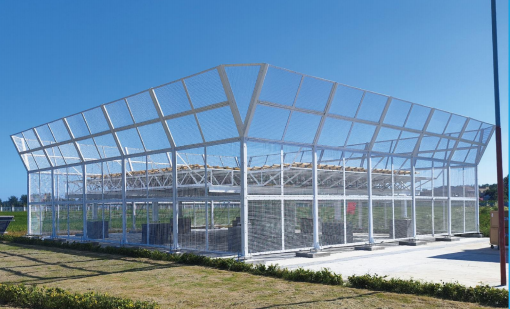
TWP16 P-Band Tropospheric Wind Profile Radar
China Huayun Meteorological Technology Group Co., Ltd.

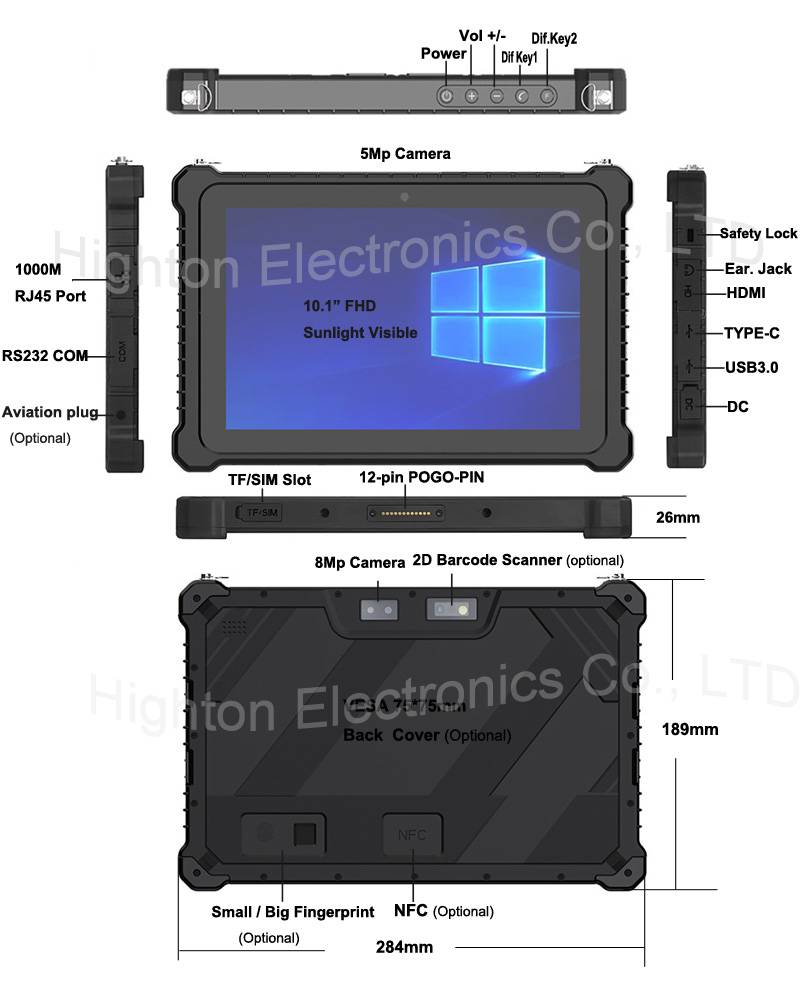
Hot Selling 10 Inch Intel N5100 I5 I7 FHD 8 +128GB 16+256GB Win10 Pro Win11 Pro 4G 5G Rugged Tablet PC Pad with NFC Barcode
Highton Electronics Co., Ltd.
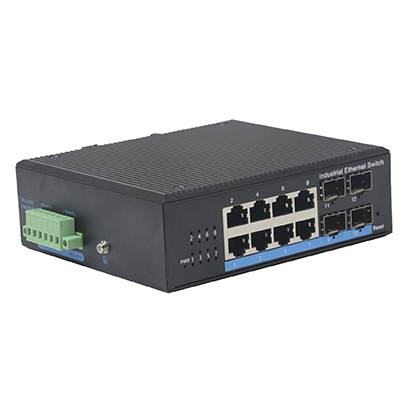

Mine Explosion-proof and Intrinsically Safe Industrial Ethernet Ring Network (10 Gigabit/Gigabit)
Chongqing Mas Sci&Tech Co., Ltd.

Multi-function Marine Monitoring Low-altitude Detection Radar Sea-air Boundary Ocean Dynamic Environment Measurement
Chengdu Dixin Technology Co., Ltd.