Turkish Defense Industry Agency Unveils 85-Item Quantum Technology Roadmap
en.Wedoany.com Reported - The Turkish Defense Industry Agency (SSB) published a roadmap in June 2026 titled the "Quantum Technology OTAĞ Outcome Report," outlining 85 specific technologies the country plans to advance across three main pillars: quantum computing, quantum sensing, and quantum communication. The document is an output of the SSB's OTAĞ (Focal Technology Network) project, aimed at developing technology roadmaps for priority areas. The quantum version of the OTAĞ activities commenced on December 25, 2024, and concluded on December 25, 2025.
The report states that the roadmap's development process brought together approximately 305 experts from 123 different institutions, including ministries, Turkey's Scientific and Technological Research Council (TÜBİTAK), universities, research institutes, and private enterprises. The launch event alone saw participation from around 300 people representing 14 public institutions, 64 universities and research centers, and 20 companies.
The roadmap candidly assesses Turkey's existing foundations and remaining shortcomings. In the computing domain, near-term priorities are quantum security and cryptography, with the report explicitly mentioning threats posed by algorithms such as Shor's and Grover's to classical encryption schemes like RSA and ECC, as well as the "harvest now, decrypt later" risk. The report believes Turkey's strong foundation in mathematics and computer science provides an early advantage in hardware-agnostic areas such as quantum algorithms, optimization, machine learning, hybrid software, and simulation. It also emphasizes the need to build a national quantum software library and notes increasingly restrictive access to open-source toolkits like IBM's Qiskit, Xanadu's PennyLane, and Google's Cirq.
In the sensing domain, this pillar is considered the most mature and closest to commercialization. Near-term focus is placed on quantum magnetometers, quantum imaging, inertial navigation systems, and atomic clocks. The report states that Turkey already possesses practical capabilities in metrology, atomic clocks, single-photon detectors, and NV center and atomic vapor cell magnetometers, while quantum radar, quantum lidar, and space-based quantum sensors are viewed as longer-term prototype development goals.
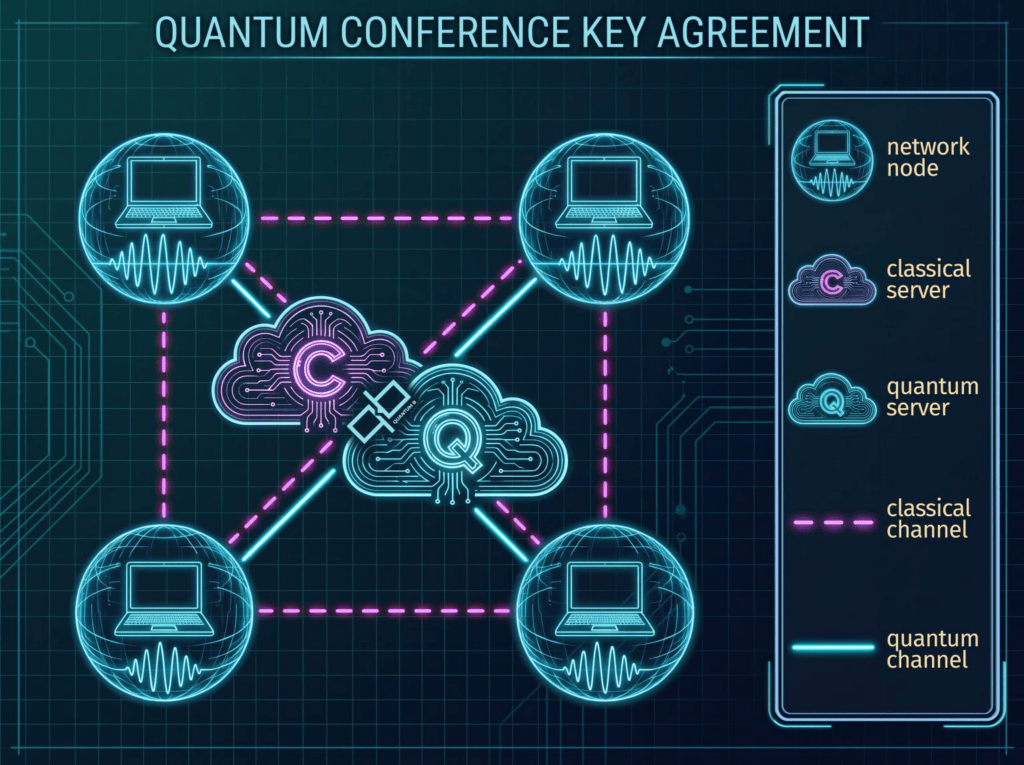
In the communication domain, near-term priorities revolve around secure quantum communication protocols and modules, hybrid security infrastructure combining Quantum Key Distribution (QKD) with Post-Quantum Cryptography (PQC), and cryptography resistant to quantum attacks. Longer-term goals involve challenges such as quantum repeaters, quantum-resistant internet protocols, and coherent quantum memories.
The roadmap situates Turkey's efforts within the context of accelerating global investment. Citing sources such as the European Commission's Joint Research Centre and McKinsey's "2025 Quantum Technology Monitor," the report estimates cumulative global public funding for quantum technologies at approximately $45 billion, with Japan accounting for about $7.4 billion and Australia committing roughly $550 million to PsiQuantum. Venture capital investment in 2025 was around $4.9 billion, bringing cumulative private investment to over $10 billion, with funds increasingly flowing to later-stage companies. The report also notes that countries are intensifying efforts to protect their quantum supply chains, and export controls on critical components are tightening. It warns that without domestic capabilities and sustainability, technological dependence and national security risks will increase, which is considered a driving factor behind Turkey's push for indigenous manufacturing of quantum devices and control electronics.
Beyond the roadmap itself, the report details supporting initiatives already undertaken. Turkey currently serves as the head of its national delegation, participating in the NATO Transatlantic Quantum Community established in 2024, and has launched a digital portal called "Turkey Quantum Platform." The SSB also announced the signing of a "Strategic Capability Development Cooperation Protocol" with 11 universities, including Boğaziçi, METU, Istanbul Technical, Koç, Sabancı, Bilkent, and Hacettepe, planned for late June 2026, and declared an international quantum algorithm competition in the same month. The report explicitly identifies talent as a major constraint, with final recommendations involving expanding interdisciplinary graduate programs in quantum engineering and hardware, funding international research and internship exchanges, attracting top researchers through competitive long-term support, and building critical shared infrastructure such as nanofabrication, cryogenic testing, and precision measurement facilities.
The work was divided into three focus groups. The quantum computing group, led by TÜBİTAK ULAKBİM and Turkish Aerospace Industries (TUSAŞ), had 170 registered participants and proposed 37 candidate topics. The quantum sensing group, with 183 registrants and co-led by Koç University and defense electronics company ASELSAN, generated 25 topics. The quantum communication group, led by Özyeğin University and state-owned telecom company ULAK Haberleşme, had 152 registered participants and proposed 23 topics. By placing ASELSAN, TUSAŞ, and ULAK Haberleşme alongside academic institutions, the SSB frames quantum technology as a matter of defense capability and technological sovereignty.
The report was not based solely on discussion; the SSB applied a structured decision-support methodology, combining three multi-criteria techniques: DEMATEL, AHP, and TOPSIS. Each of the 85 candidate technologies was scored against seven main criteria: infrastructure, dual-use potential, global maturity, human capital, criticality, project suitability, and supply risk, which were further broken down into 20 sub-attributes. This framework calculated a priority score and maturity timeline for each technology, ultimately categorizing the domain into 34 near-term objectives and 51 long-term objectives.
This article is compiled by Wedoany. All AI citations must indicate the source as "Wedoany". If there is any infringement or other issues, please notify us promptly, and we will modify or delete it accordingly. Email: news@wedoany.com
Related Products



TWP16 P-Band Tropospheric Wind Profile Radar
China Huayun Meteorological Technology Group Co., Ltd.
Mine Explosion-proof and Intrinsically Safe Industrial Ethernet Ring Network (10 Gigabit/Gigabit)
Chongqing Mas Sci&Tech Co., Ltd.

Hot Selling 10 Inch Intel N5100 I5 I7 FHD 8 +128GB 16+256GB Win10 Pro Win11 Pro 4G 5G Rugged Tablet PC Pad with NFC Barcode
Highton Electronics Co., Ltd.
One-Stop Steward Service for the Entire Logistics System Integration Chain
Zhongding Intelligent (Wuxi) Technology Co., Ltd.
20 Inch 1600*900 Full HD 60Hz TFT LED Monitor with VGA and DP Interfaces for Desktop Computers-Business Use
Guangzhou Zanying Optoelectronics Technology Co., Ltd.

MUX Series Communication Interface Device for Security and Stability Control System
Nanjing NR Electric Co., Ltd.