Ternary Lithium Battery Supply Chains Are Moving Toward Closed-Loop Recycling
en.Wedoany.com Reported - Ternary lithium-ion batteries depend on lithium, nickel, cobalt, manganese, graphite, copper, aluminium, and other processed materials. Their cost and availability are influenced by mining, refining, trade policy, geographic concentration, and environmental compliance.
The supply chain of a Ternary Lithium Battery is particularly sensitive to nickel and cobalt. Higher nickel content can reduce cobalt intensity, but it increases the requirement for high-purity nickel materials and tightly controlled manufacturing.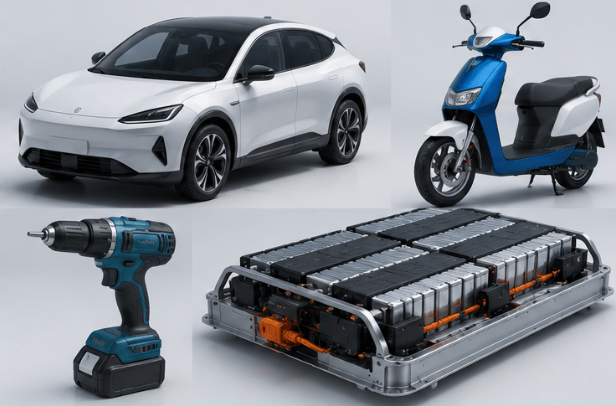
Reducing one material does not eliminate supply risk. It changes the balance of mineral demand, processing capacity, technology dependence, and quality requirements.
Battery procurement is therefore moving beyond price toward traceability. Manufacturers increasingly need information about mineral origin, refining location, carbon intensity, environmental conditions, social risk, and batch consistency.
Material prices also influence competition among battery chemistries. Lower nickel and cobalt prices can improve the cost position of ternary batteries, while supply disruption or concentrated processing capacity can increase volatility.
Recycling is an important route to greater resilience. End-of-life batteries contain lithium, nickel, cobalt, manganese, copper, aluminium, and other recoverable materials.
Hydrometallurgical recycling uses leaching, separation, and precipitation to recover metals. Pyrometallurgical routes use high-temperature processing, while direct recycling attempts to preserve more of the cathode material structure.
Direct recycling may reduce the need to break materials down completely and synthesize them again. It also requires effective battery identification, sorting, disassembly, contamination control, and chemistry-specific processing.
Ternary batteries can offer relatively strong recycling economics because nickel and cobalt have significant material value. Actual viability still depends on collection, transportation, safety handling, battery condition, process yield, and commodity prices.
Battery design influences end-of-life recovery. Extensive adhesives, complex joints, and highly integrated structures may support manufacturing and pack performance while making disassembly more difficult.
Future designs will increasingly need to balance structural efficiency with repairability, identification, and recyclability.
A resilient ternary battery supply chain will not be built only by developing more mines. It will also require longer battery life, efficient material use, verified sourcing, effective collection, and the return of recovered materials to qualified battery production.
This article is compiled by Wedoany. All AI citations must indicate the source as "Wedoany". If there is any infringement or other issues, please notify us promptly, and we will modify or delete it accordingly. Email: news@wedoany.com