Google Cloud Introduces SandboxAQ's Scientific AI Models
en.Wedoany.com Reported - On June 29, Alphabet's Google will offer SandboxAQ's Large Quantitative Models (LQMs) through Google Cloud Marketplace, providing professional scientific AI capabilities to enterprises and research institutions. This partnership will integrate SandboxAQ's models for materials discovery, drug development, and other fields into the Google Cloud Marketplace, allowing researchers to access relevant models in a cloud environment for catalyst screening, molecular binding analysis, candidate material evaluation, and scientific computing tasks. SandboxAQ stated that the first model to be launched will be AQCat, focused on materials and catalyst discovery, while the drug development model AQPotency will also be available on Google Cloud Marketplace.
These models address quantitative computing challenges in scientific research, focusing on experimental data, physical laws, chemical structures, and material properties. By integrating SandboxAQ models, Google Cloud enables research teams to access AI tools that more closely resemble professional laboratory settings through the cloud service platform.
SandboxAQ's Large Quantitative Models differ in application from general-purpose large language models. While general large models excel at text comprehension, document generation, code assistance, and knowledge Q&A, scientific research tasks such as drug screening, materials discovery, and semiconductor manufacturing-related computations require models to understand quantitative issues like molecular structures, energy changes, catalytic reactions, material surface adsorption, and candidate compound binding capabilities. AQCat targets materials and catalyst discovery, focusing on calculating the binding strength between molecules and catalyst surfaces to help researchers screen more promising candidate materials before full simulations and experimental validation. AQPotency is designed for drug development, enabling high-throughput evaluation of candidate molecules' binding potential with biological targets, helping pharmaceutical companies and research institutions shorten early screening timelines.
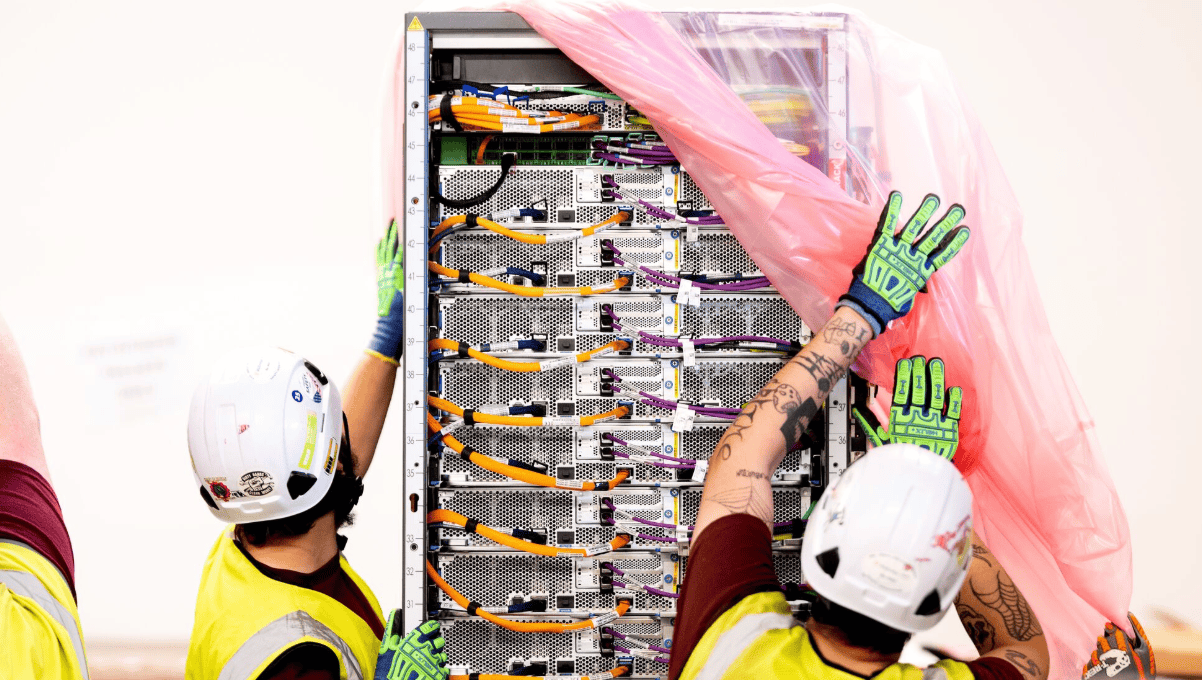
Google Cloud's role lies in providing computing power, a cloud marketplace, and enterprise-grade delivery channels. Scientific AI models that remain confined to a few laboratories have high usage barriers; by entering the cloud marketplace, enterprise R&D teams can access models through unified procurement, deployment, and invocation methods.
This collaboration also reflects the extension of cloud service competition into specialized scientific research scenarios. Drug development, materials science, chemical catalysis, energy materials, and semiconductor manufacturing are all high-value R&D fields characterized by long traditional experimental cycles, high trial-and-error costs, and strong demand for computational simulation and model screening. By offering SandboxAQ models through the Marketplace, Google Cloud can combine cloud computing power, AI capabilities like Gemini, and specialized scientific models, allowing researchers to complete literature understanding, experimental design, candidate screening, computational analysis, and result review within a single platform. SandboxAQ has previously established a partnership with Google Cloud, using Google Cloud infrastructure to develop its Large Quantitative Models and expanding enterprise customer deployment channels through Google Cloud Marketplace.
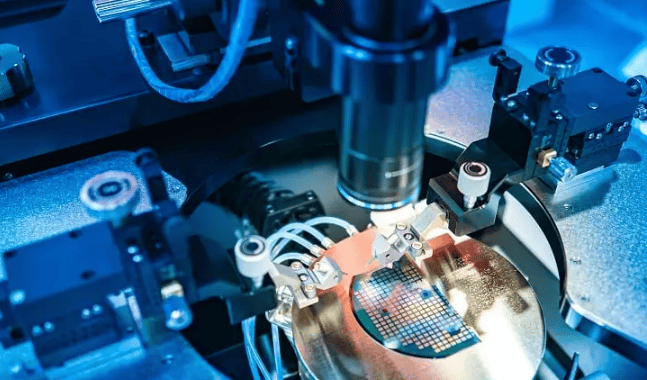
For semiconductor manufacturing, the value of specialized AI models lies in R&D stages related to materials, processes, and devices. Chip manufacturing involves thin-film materials, photoresists, etching gases, packaging materials, catalytic reactions, surface treatments, and reliability verification, many of which require material property calculations and experimental data analysis. With scientific AI models entering cloud platforms, semiconductor companies and research institutions can more quickly evaluate candidate materials, optimize experimental sequences, reduce low-value trials, and concentrate R&D resources on more promising solutions. By leveraging such specialized models to enhance scientific cloud services, Google Cloud can better serve customers in the pharmaceutical, chemical, energy, and chip industries.
The commercial significance of this collaboration lies in the fact that AI cloud services are no longer centered solely on chatbots, office assistants, and code tools. The AI scenarios where enterprises are truly willing to invest high costs often focus on R&D efficiency, drug candidate screening, new materials discovery, and complex manufacturing process optimization. By integrating SandboxAQ models, Google Cloud can offer more industry-specific AI capabilities to research institutions, pharmaceutical companies, materials firms, and semiconductor clients. The key going forward is whether these models can produce verifiable results in real-world R&D workflows, including improved screening hit rates, reduced experimental iterations, more accurate prioritization of candidate materials, and stable integration with enterprises' existing experimental data and computing platforms.
This article is compiled by Wedoany. All AI citations must indicate the source as "Wedoany". If there is any infringement or other issues, please notify us promptly, and we will modify or delete it accordingly. Email: news@wedoany.com
Related Products



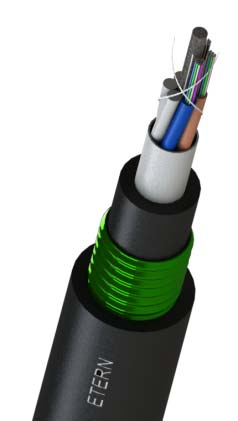
GYTA Type Non-Self-Supporting Aerial/Duct Optical Cable
TONGDING INTERCONNECTION INFORMATION CO., LTD.

Comprehensive Mining Automation Control System
Beijing Tianma Intelligent Control Technology Co., Ltd.

G.652.D Wavelength-extended Non-dispersion Shifted Single-mode Optical Fiber
HONGAN GROUP CO., LTD.
Industrial and Commercial Point-Type Gas Detector
Jinan Benan Technology Development Co., Ltd.


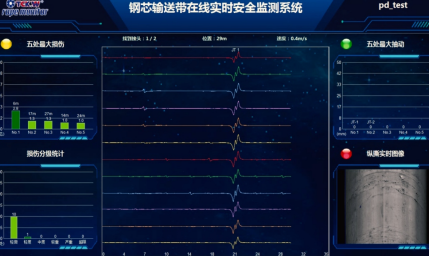
Conveyor Belt Intelligent Monitoring System
LUO YANG WIRE ROPE INSPECTION TECHNOLOGY CO., LTD.