en.Wedoany.com Reported - Databricks and Nvidia have jointly launched an open source project called Genesis Workbench, aimed at addressing the pain point in the life sciences field where AI models struggle to coordinate with enterprise data and computing infrastructure during deployment.
In drug discovery research, internal research data, laboratory results, and GPU resources are often scattered across independent environments, making collaboration and result reproducibility difficult. Meanwhile, the number of AI models continues to grow, and integrating these models with proprietary data and existing research workflows has become a practical challenge for pharmaceutical and biotechnology companies. Genesis Workbench does not introduce new models but instead integrates enterprise data, Nvidia's BioNeMo models, and GPU infrastructure into Databricks' unified environment, helping researchers shift from setting up AI workflows to practical applications.
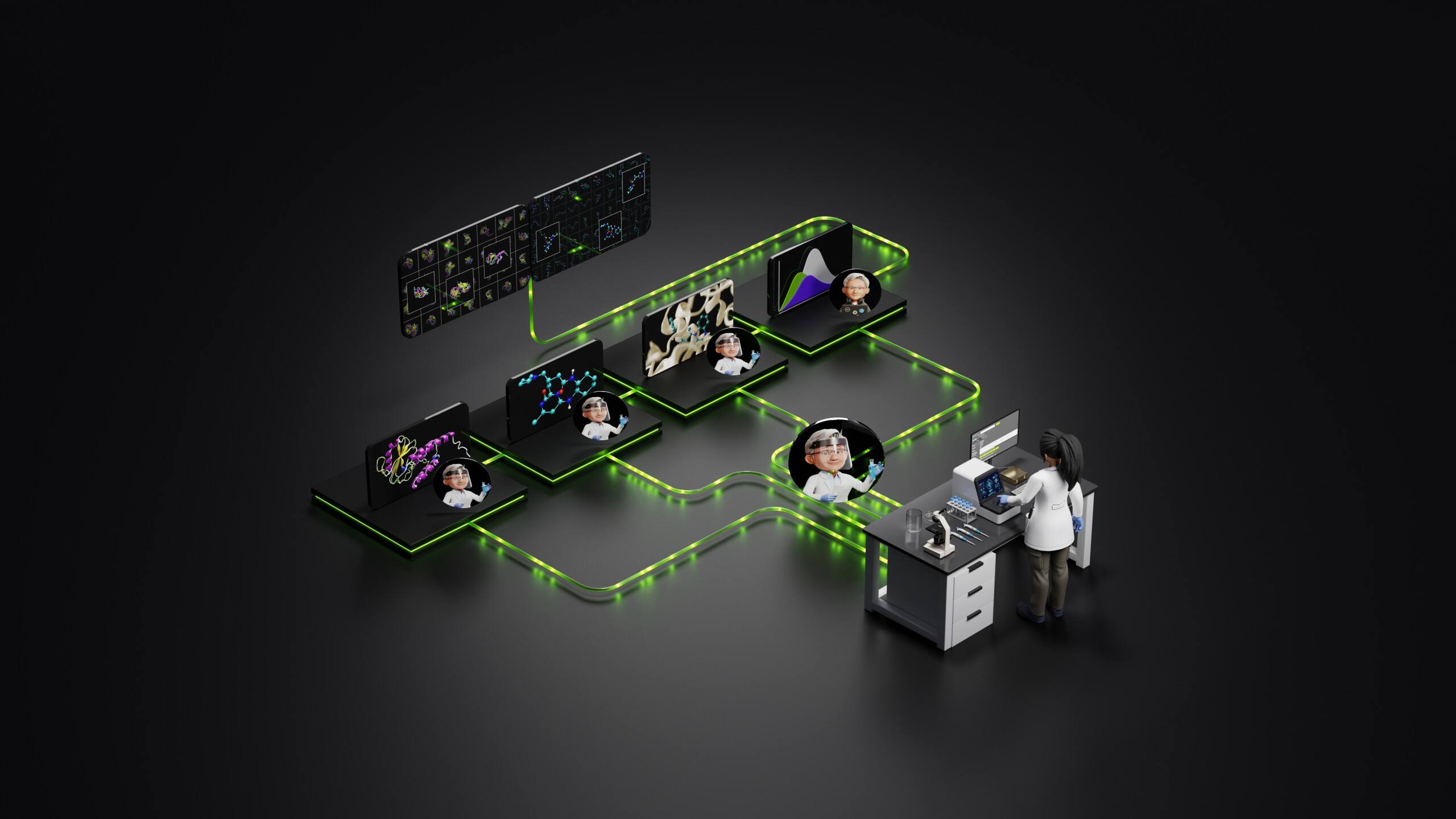
The platform focuses on the entire drug discovery process, bringing together tools for genomics, single-cell analysis, protein engineering, and small molecule design under a single platform, a single user interface, and a single governance model. According to Databricks, by using Databricks AI Search to centralize public and proprietary datasets, reliance on external APIs can be eliminated, enabling a smooth flow from genomics discovery to single-cell validation, target structure prediction, candidate docking, ADMET ranking, and other steps. The platform relies on open source models managed through Unity Catalog, uses MLflow to track experiments, and handles inference with GPU-supported model services. Nvidia contributes technologies such as the BioNeMo Agent Toolkit and Parabricks, as well as a portfolio of biology and chemistry models.
A notable feature of Genesis Workbench is that it runs entirely within the customer's Databricks environment, allowing organizations to keep sensitive research data within existing governance controls without sending it to third-party AI services. As biological AI evolves, the platform supports flexible scaling, enabling organizations to add or replace individual modules without rebuilding the entire research environment.

Life sciences research spans multiple disciplines including genomics, structural biology, chemistry, and clinical data, and involves handling highly regulated and proprietary data. Building AI applications in such an environment requires not only raw computing power but also secure data access and the flexibility to integrate new models. For Databricks, Genesis Workbench represents a case of deepening its move from analytics to lakehouse-based AI applications; for Nvidia, it positions BioNeMo and accelerated computing software at the center of enterprise drug discovery workflows.