UK's Asynt Launches New ColdCoil Mark III Temperature Control Module
en.Wedoany.com Reported - UK-based Asynt has launched the new ColdCoil (ColdCoil Mark III) temperature-controlled flow chemistry module, capable of providing stable reaction temperatures from -80°C to +150°C, supporting various flow chemistry processes including low-temperature organometallic reactions, photochemical method development, and continuous synthesis route optimization.
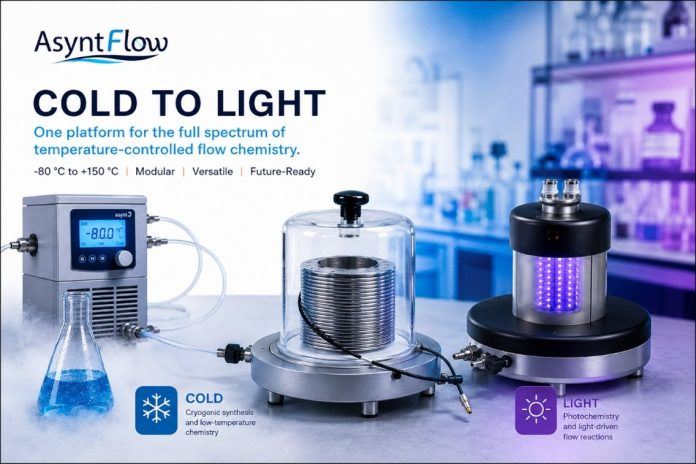
This module is an improvement on the earlier ColdCoil platform, enhancing modular design within a smaller laboratory footprint. Researchers can configure and scale flow chemistry workflows around a single temperature control platform without needing to invest in multiple dedicated temperature control modules for different applications.
The ColdCoil Mark III achieves temperature control by connecting to standard circulating heaters or chillers, supporting applications ranging from low-temperature synthesis and exothermic reactions to high-temperature continuous processing. By replacing consumable cooling media with a circulating temperature control system, the platform enables reliable long-term operation with reduced operator intervention, making it suitable for extended experiments and process development studies.
The system supports standard coil reactors, fixed-bed column chemistry, static mixing applications, and photochemical flow processes. Laboratories can quickly adjust configurations as projects progress, reducing equipment complexity while retaining the flexibility to explore new synthetic strategies. The module is compatible with all Asynt coil reactors, with capacities from 2 mL to 60 mL, supporting various reactor materials including PTFE, PFA, FEP, stainless steel, and Hastelloy.
A range of accessories expands the platform's capabilities: the HotColumn adapter enables temperature-controlled fixed-bed chemistry, the GSM adapter integrates a compact glass static mixer for efficient mixing, and the system can be integrated with PhotoSyn and Borealis photochemical reactors for temperature-controlled flow photochemistry.
In terms of automation integration, the ColdCoil Mark III is compatible with circulating heaters and chillers using standard communication protocols, and can be integrated into automated flow chemistry environments, automatic reaction optimization platforms, self-driving laboratory workflows, and digitally controlled experimental environments.
Andrew Mansfield, Asynt's flow chemistry expert, stated that researchers often start with simple reactor configurations before moving on to photochemistry, fixed-bed catalysis, automated optimization, or entirely new application areas. The ColdCoil Mark III is designed to provide a single, evolvable temperature control platform for these changing needs, helping chemists reduce equipment reconfiguration time.
Related Products



CAP1400 main feedwater flow nozzle flowmeter.
Jiangsu Hongda Instrument Technology Co., LTD.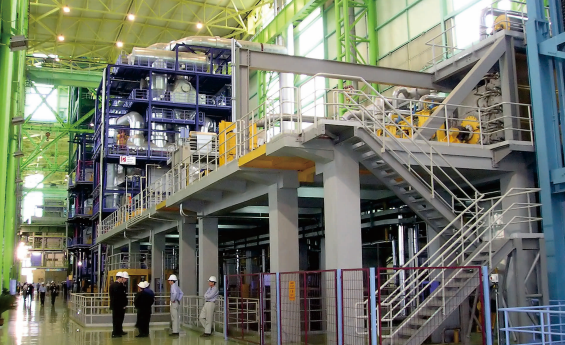
Strip Coating and Plating Production Line Equipment
MCC-SFRE HEAVY INDUSTRY EQUIPMENT CO., LTD.

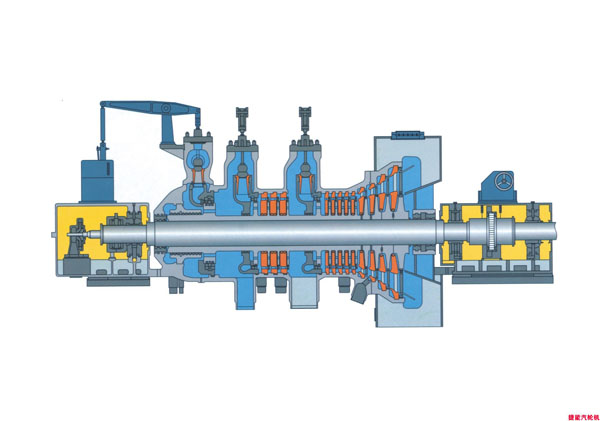

Industrial and Commercial Point-Type Gas Detector
Jinan Benan Technology Development Co., Ltd.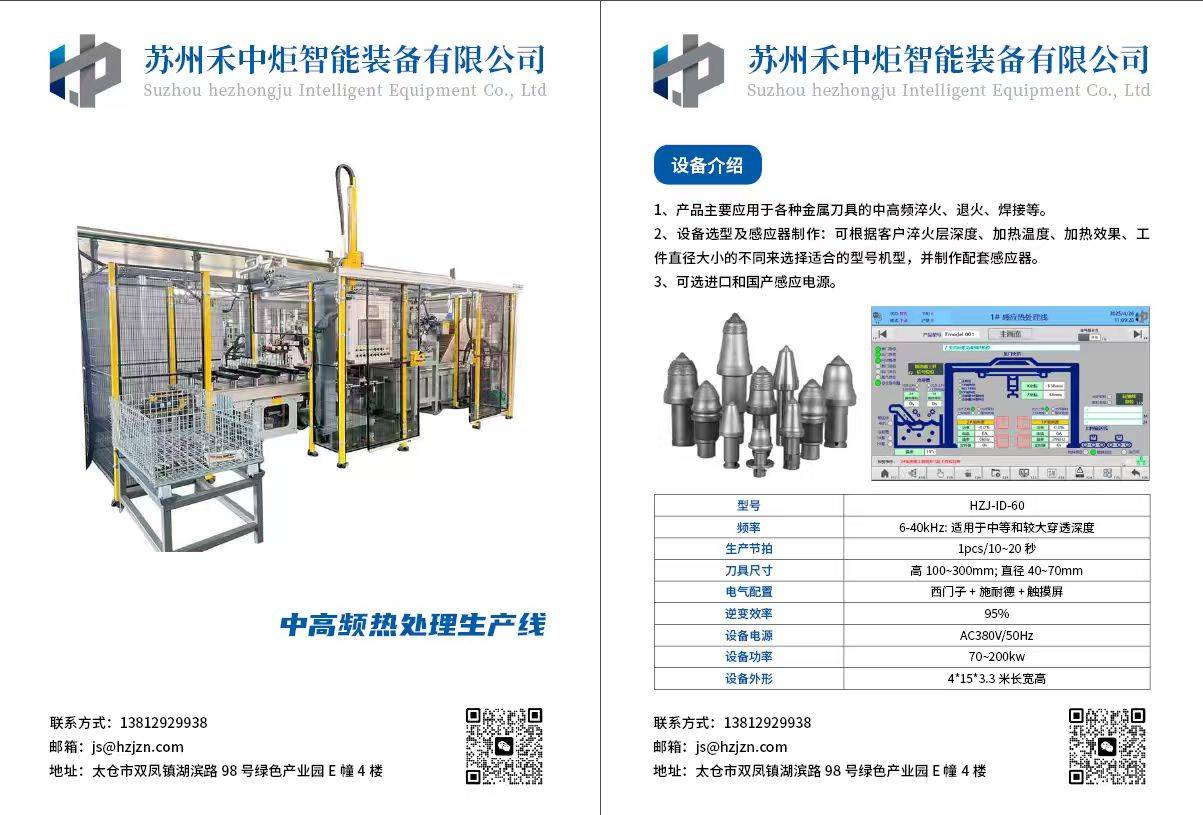
Excavator Bucket Teeth Heat Treatment Production Line
Suzhou Hezhongju Intelligent Equipment Co., Ltd.
Standard Nozzle Flowmeter
Jinggong Automatic Control Instrument Complete Technology Development Company