en.Wedoany.com Reported - On June 30, China's Longsys announced that its mSSD high-speed storage medium production capacity has reached a new milestone. The company has established a million-level monthly mSSD production capacity, achieving stable and scalable mass production and delivery conditions to meet incremental market demand. Future capacity still has room for continuous expansion and doubling. The first batch of mSSD samples successfully rolled off the production line at the Suzhou packaging and testing manufacturing base in October 2025. By June 2026, production line refinement, process optimization, and capacity ramp-up were completed, entering the million-level monthly production phase.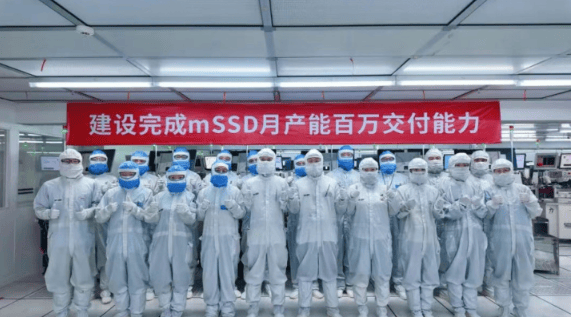
Longsys' mSSD adopts a wafer-level system-in-package (SiP) approach, integrating components such as the controller, NAND, and PMIC into a single package, reducing the complex steps of traditional PCBA SSDs in SMT, reflow soldering, and cross-factory transportation. This product form is primarily targeted at space-constrained scenarios such as M.2 2242 and M.2 2230.
With the completion of mSSD capacity construction, Longsys' delivery capabilities in edge AI, AI PCs, mobile terminals, and miniaturized computing devices have been strengthened. Edge AI devices require local model loading, multitasking, data read/write, and real-time response. The storage medium must maintain high-speed transmission while reducing size, lowering power consumption, and improving reliability. By shortening the manufacturing chain through integrated packaging, mSSD moves steps traditionally scattered across packaging testing, SMT, and final assembly to the packaging layer, reducing solder joints, lowering manufacturing complexity, and improving product consistency. Longsys previously stated that mSSD can reduce the nearly thousand solder joints of traditional PCBA SSDs to zero, more than doubling delivery efficiency and reducing overall additional costs by over 10%.
The transition from sample production to million-level monthly delivery indicates that mSSD has entered the industrialization and volume production phase. The adoption of storage products in AI PCs and thin-and-light terminals typically requires steps such as sample verification, customer testing, production line stabilization, yield optimization, and batch delivery.
Longsys has already collaborated with customers such as Lenovo and ASUS. The million-level monthly capacity will support mSSD's expansion from innovative products into larger-scale terminal supply chains. AI PCs, handheld consoles, thin-and-light laptops, edge computing devices, and high-performance mobile terminals are all compressing internal space while increasing local storage throughput demands. Traditional SSD board-level forms face constraints in size, reliability, and manufacturing cost. If mSSD continues to advance in customer validation, supply stability, and cost control, it will help terminal manufacturers configure higher-performance storage in small-form-factor devices, while opening a new growth entry point for Longsys in edge AI hardware.
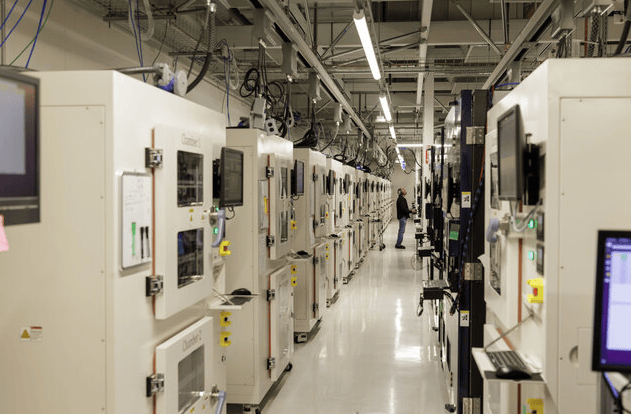
In recent years, Longsys has continuously strengthened its packaging, testing, manufacturing, and customized storage capabilities. According to the company's 2025 annual report, Longsys has integrated its own technology and testing capabilities with packaging and testing manufacturing capabilities, forming a manufacturing landscape that balances global and domestic capacity, and combines in-house and outsourced production. After the establishment of million-level monthly mSSD delivery capacity, the Suzhou packaging and testing manufacturing base's production line organization, process optimization, and batch delivery capabilities will continue to play a key role.
Following this capacity milestone, the next focus for mSSD will be on customer adoption speed, AI PC shipment pace, expansion of different capacity specifications, yield stability, and cost reduction. If terminal manufacturers continue to adopt integrated packaging storage solutions, mSSD is expected to expand from high-end thin-and-light devices to more edge AI hardware, driving the upgrade of high-speed storage media from traditional board-level manufacturing to higher-integration packaging forms.
Related Products


Flat Portable Satellite Terminal 0.35m Aperture Manual Portable Terminal
China Starwin Science & Technology Co., Ltd.
Mine Explosion-proof and Intrinsically Safe Industrial Ethernet Ring Network (10 Gigabit/Gigabit)
Chongqing Mas Sci&Tech Co., Ltd.


Conveyor Belt Intelligent Monitoring System
LUO YANG WIRE ROPE INSPECTION TECHNOLOGY CO., LTD.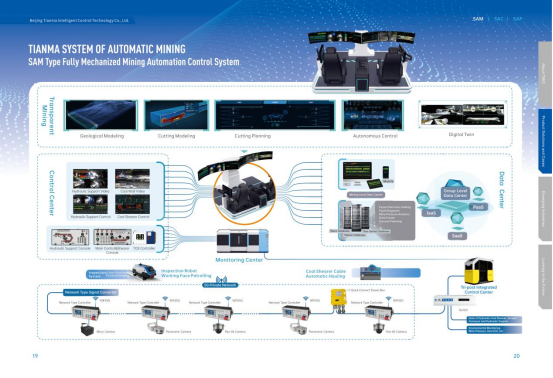
Comprehensive Mining Automation Control System
Beijing Tianma Intelligent Control Technology Co., Ltd.
GYTA Type Non-Self-Supporting Aerial/Duct Optical Cable
TONGDING INTERCONNECTION INFORMATION CO., LTD.

Industrial and Commercial Point-Type Gas Detector
Jinan Benan Technology Development Co., Ltd.
MUX Series Communication Interface Device for Security and Stability Control System
Nanjing NR Electric Co., Ltd.