China's Eight Departments Issue Opinions to Promote Synchronized Construction of Industrial Internet with Intelligent Computing and Supercomputing Facilities
en.Wedoany.com Reported - On June 30, eight Chinese departments, including the Ministry of Industry and Information Technology, issued the "Implementation Opinions on Promoting the High-Quality Development of the Industrial Internet," proposing to enhance computing power support levels and promote the integrated planning and synchronized construction of industrial internet infrastructure with computing power infrastructure such as intelligent computing facilities and supercomputing facilities. The document also proposes exploring the construction of an industrial computing power network system, strengthening the dynamic coordination of multi-level computing power at the end, edge, and cloud to meet the computing, networking, storage, and usage needs of enterprises, platforms, parks, and industry entities in their business operations.
This deployment places the construction of the industrial internet and computing power infrastructure within the same planning framework. In the past, the industrial internet emphasized device connectivity, platform access, identification and resolution, data collection, and system cloud migration. Now, industrial large models, industrial intelligent agents, digital twins, and the industrial metaverse are entering production sites. Relying solely on traditional network connections is no longer sufficient; manufacturing enterprises need intelligent computing power support closer to factories, equipment, and production lines.
The data types in industrial sites are complex, including equipment operating parameters, sensor time-series data, visual inspection images, process documents, quality records, as well as production scheduling, energy consumption data, supply chain data, and maintenance logs. Different data have varying requirements for computing power location, latency, bandwidth, and security. Some tasks are suitable for completion locally at the enterprise or at the edge, while others, such as model training and cross-factory analysis, require support from the cloud or intelligent computing centers. The eight departments' proposal for dynamic coordination of multi-level computing power at the end, edge, and cloud focuses on enabling on-site edge computing power, regional industrial clouds, intelligent computing facilities, and supercomputing resources to be combined and scheduled according to task requirements, reducing data transmission bottlenecks and improving the response speed and processing efficiency of industrial AI applications.
The explicit inclusion of an integrated computing power network in the tasks for high-quality development of the industrial internet indicates that industrial computing power is no longer solely the concern of data centers or cloud service enterprises. Industrial parks, leading manufacturing enterprises, industrial internet platforms, equipment vendors, and software service providers all need to redesign their infrastructure around computing power access, data circulation, model deployment, and application operation.
The document proposes leveraging the integrated computing power network to strengthen computing power interconnection and interoperability, enhance the matching supply of intelligent computing power and edge computing power, and improve the capability for high-speed processing and deep processing of massive heterogeneous data. This requirement directly addresses scenarios such as large model training in the industrial sector and real-time interaction in the industrial metaverse. Industrial large models require large amounts of industry data, process knowledge, and equipment status data for training and fine-tuning; the industrial metaverse requires real-time modeling, rendering, and interaction of equipment, production lines, workshops, logistics, and personnel operations. Both types of scenarios impose higher demands on computing, networking, storage, and security, and will also drive supporting demand for edge servers, industrial gateways, intelligent controllers, data collection equipment, high-performance storage, GPU servers, and industrial software platforms.
For manufacturing enterprises, the policy's focus is not merely on "building more computing power." More importantly, it is about placing computing power in the right locations and connecting data to models and applications in a usable, controllable, and traceable manner. High real-time tasks need to be processed near the production line, cross-factory optimization and model training require stronger centralized computing power, and quality analysis, predictive maintenance, and energy consumption optimization require a continuous data loop between the edge and the cloud. With the synchronized construction of industrial internet infrastructure and intelligent computing and supercomputing facilities, enterprise digital transformation will move from "device networking" towards "data that can be computed, models that can be used, and applications that can be implemented."
This opinion will also influence the construction direction of industrial internet platforms. In the future, platform enterprises need to possess the capabilities to connect devices, aggregate data, invoke computing power, deploy models, and host industry applications simultaneously, and cannot remain at the level of data dashboards and device management. As the industrial computing power network system gradually takes shape, industries such as steel, chemicals, automobiles, electronics, equipment manufacturing, energy, and mining can expect more stable underlying computing power support for model training, simulation verification, production optimization, and remote operation and maintenance.
Related Products


Automatic Aiming Laser Remote Obstacle Removal Robot
Pinggao Group Weihai High-Voltage Apparatus Co., Ltd.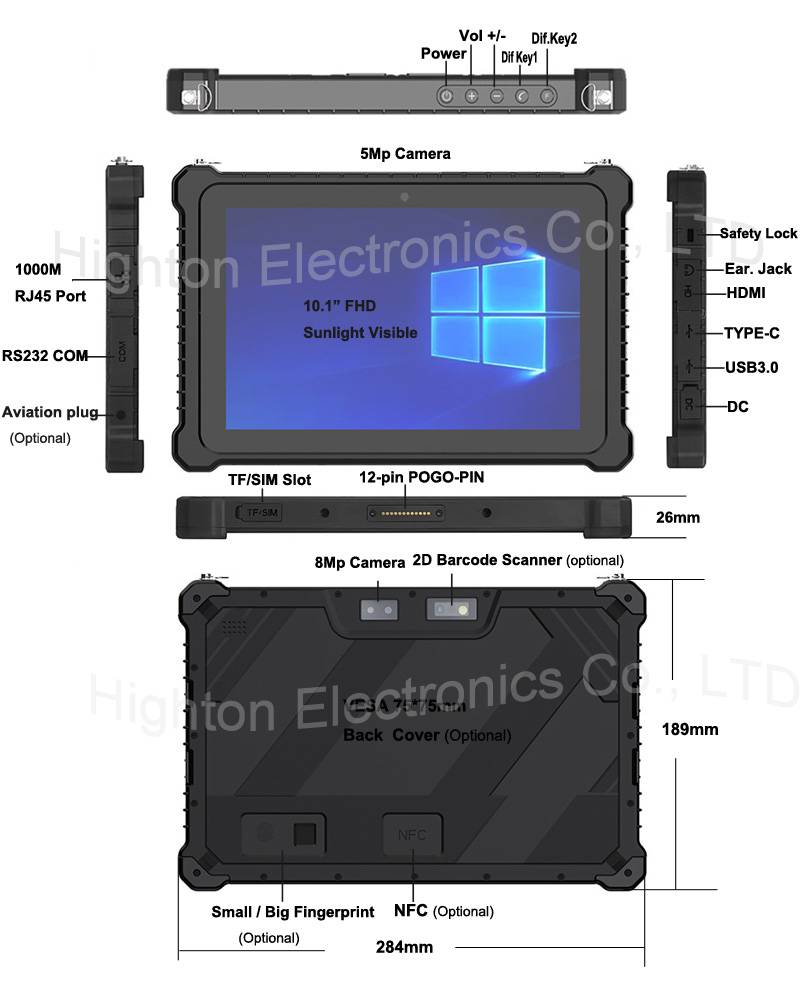
Hot Selling 10 Inch Intel N5100 I5 I7 FHD 8 +128GB 16+256GB Win10 Pro Win11 Pro 4G 5G Rugged Tablet PC Pad with NFC Barcode
Highton Electronics Co., Ltd.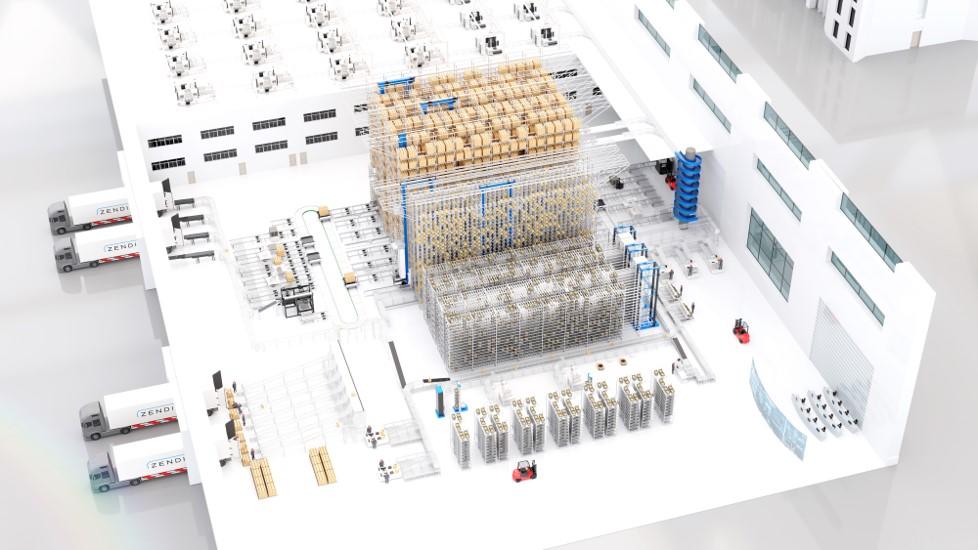
One-Stop Steward Service for the Entire Logistics System Integration Chain
Zhongding Intelligent (Wuxi) Technology Co., Ltd.