Brazil's Benner Invests 50 Million Reais to Enter the Autonomous Agent Field
en.Wedoany.com Reported - Benner recently announced a new strategy to guide the application of artificial intelligence in its solutions and customer operations. The company has invested approximately 50 million reais in AI, introducing it into the corporate environment in a governed, secure, and measurable manner, serving critical business processes.
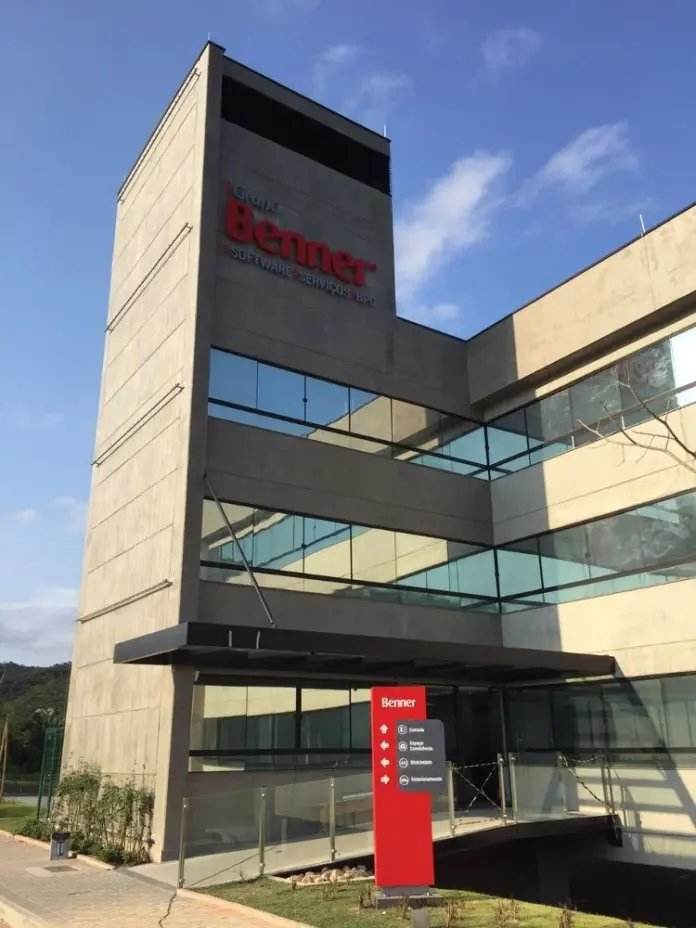
According to José Guilherme Merchiori, Director of Technology and Innovation, this investment has been converted into ready-to-use products. He stated that any enterprise is adopting AI, but the difference lies in governance; each agent must operate under rules, permissions, audit trails, and cost monitoring defined by the client's technology department to ensure operational security.
Regarding the evolution of management software, Merchiori predicts a change in how users interact with systems. He believes users will no longer need to navigate dozens of screens or execute multiple commands to complete a task, as AI has fundamentally transformed this experience. Benner's investments, tests, learning, and partnerships are all focused on business sustainability.
This strategy is embodied in two operational solutions: Atelier, an AI agent factory, and Elos, an integration and agent management hub. Atelier allows business units to create and operate AI agents without programming, enabling users to describe goals, autonomy levels, and authorization sources in natural language. The entire process is traceable, and leadership can track execution, pending items, approvals, and costs in a single view. Elos orchestrates data and service exchanges between systems, partners, suppliers, and legacy applications, accelerating the creation of new message exchange processes in a configurable manner, with transaction and error monitoring capabilities to build more secure processes. Agent pricing will be based on transaction volume or generated results, including cloud and token consumption costs.
According to Merchiori, Elos will also serve as a registration platform for proprietary or third-party AI agents. He stated that Benner has created a secure track for managing agents within the system, including permission controls and transaction logs. Before allowing AI to perform tasks, standardized and observable APIs, data, and processes are necessary, and Elos supports this. With integration projects supported by this solution, implementation time can be reduced by up to 80%, and each agent will become a user with predefined functions.
Severino Benner, CEO of Benner, stated that autonomous agents operate only within guardrails, approval policies, and permission controls, with end-to-end traceability. This approach addresses corporate concerns about speed, auditing, compliance, and cost predictability when adopting generative AI. He explained that generative AI is an assistant for individuals (CPF), while agents are robots that execute professional activities, handling data input, analysis, and changes, and therefore cannot be deployed autonomously without control.
The first agent systems to adopt the new technology are applied in the legal field, supporting tasks such as information updates, document analysis, deadline tracking, and litigation information organization. In the healthcare sector, the company provides agents for analyzing documents, exams, and reports when applying for medical procedure guidelines. This guideline analysis function can automate up to 90% of pre-authorization assessments.
According to Severino, this choice serves as a proof of concept, and Benner plans to gradually expand it to other verticals. To accelerate internal adoption of generative AI, the company has established a multidisciplinary AI committee and provides employees with enterprise licenses for tools such as Anthropic Claude, Microsoft Copilot, and Manus, focusing on secure, structured, and managed usage. He concluded that the goal is to become a large AI agent factory, accelerating the digitization of customer processes and prioritizing interventions in critical business operations.
Related Products

Conveyor Belt Intelligent Monitoring System
LUO YANG WIRE ROPE INSPECTION TECHNOLOGY CO., LTD.

20 Inch 1600*900 Full HD 60Hz TFT LED Monitor with VGA and DP Interfaces for Desktop Computers-Business Use
Guangzhou Zanying Optoelectronics Technology Co., Ltd.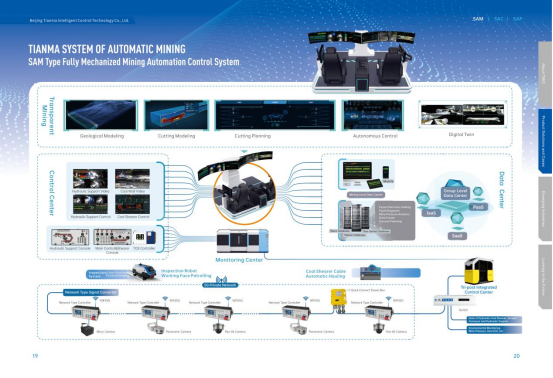
Comprehensive Mining Automation Control System
Beijing Tianma Intelligent Control Technology Co., Ltd.
TWP16 P-Band Tropospheric Wind Profile Radar
China Huayun Meteorological Technology Group Co., Ltd.

Industrial and Commercial Point-Type Gas Detector
Jinan Benan Technology Development Co., Ltd.